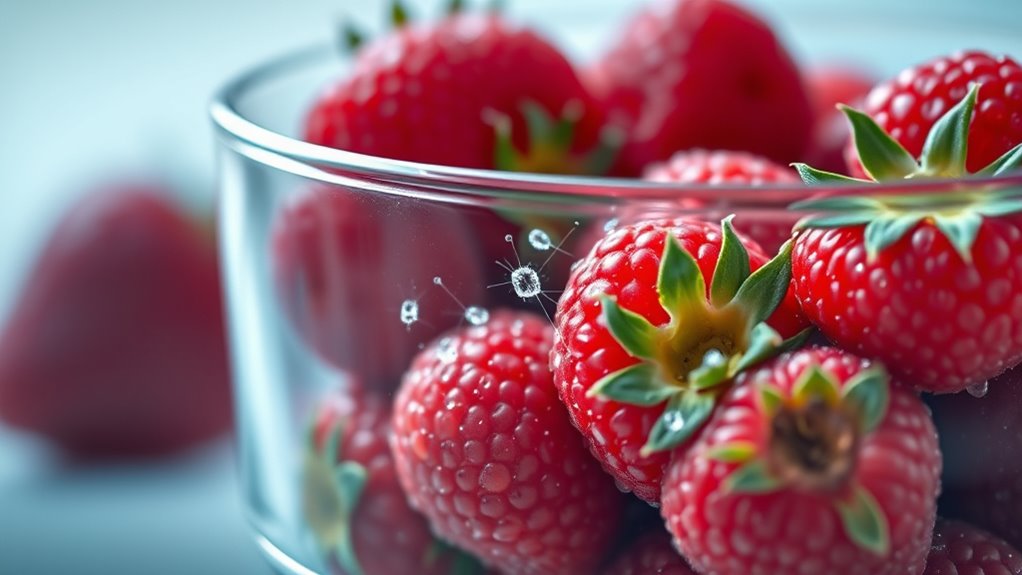

Nanotechnology for food preservation uses nanoscale coatings and sensors to keep your food fresh longer. These ultra-thin coatings act as barriers against moisture, oxygen, and bacteria, reducing spoilage without altering appearance or taste. Smart packaging with nanosensors can monitor environmental conditions and alert you to spoilage instantly. This innovative approach minimizes waste, improves safety, and promotes sustainability. If you want to discover how these advances are transforming your food experience, keep exploring the details.
Key Takeaways
- Nano coatings create ultra-thin barriers that extend food shelf life by preventing moisture, oxygen, and microbial contamination.
- Smart packaging with nanosensors monitors environmental conditions and detects spoilage indicators in real-time.
- Nano-enabled packaging reduces the need for chemical preservatives and excess packaging materials.
- Nanotechnology enhances food safety by limiting microbial growth and early detecting contamination.
- The use of nanotech in food preservation supports sustainability and reduces food waste through improved freshness maintenance.
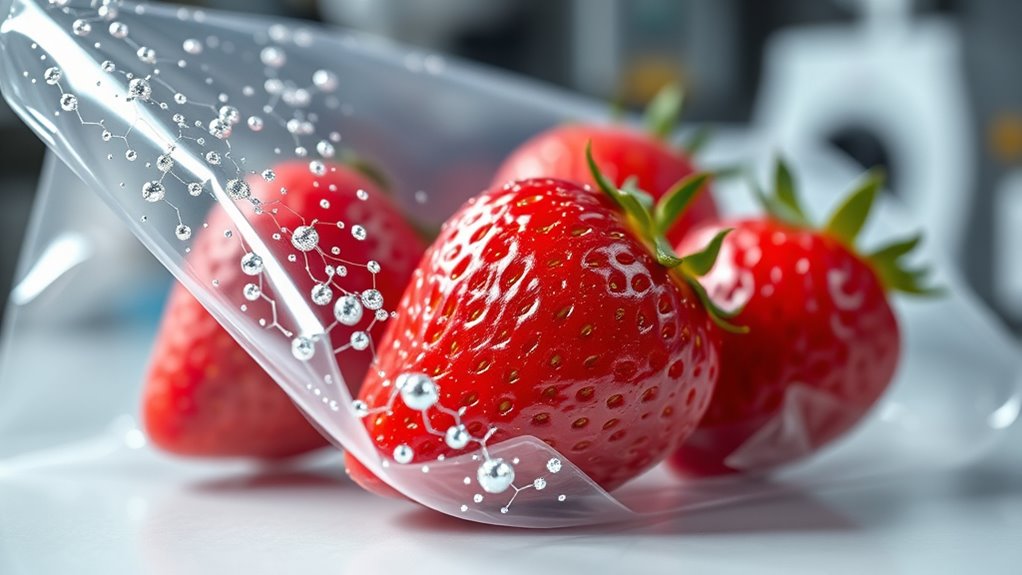
Have you ever wondered how nanotechnology is transforming the way we keep our food fresh? One of the most exciting advancements is the development of nano coatings and smart packaging. These innovations are changing the game by extending shelf life, reducing waste, and ensuring food safety. Nano coatings are ultra-thin layers made from nanoparticles that you can apply directly onto food surfaces or packaging materials. They act as a barrier, preventing moisture, oxygen, and bacteria from reaching the food, which helps slow down spoilage. Because these coatings are so tiny, they create a seamless, even protective layer without altering the food’s appearance or texture. This means your fruits, vegetables, or meats stay fresher longer without the need for chemical preservatives or excessive packaging.
Nano coatings create seamless, protective layers that keep food fresh longer without altering appearance or texture.
Smart packaging takes this a step further by incorporating nanosensors that detect changes in the food’s environment. These sensors can monitor temperature, humidity, or even the presence of spoilage bacteria, providing real-time information about the food’s freshness. Imagine packaging that glows or changes color when the food starts to go bad, alerting you immediately rather than relying on expiration dates. This technology not only improves food safety but also reduces unnecessary waste, as you get accurate, up-to-date details about your food’s condition. Plus, smart packaging can communicate with smartphones, giving you instant updates and helping you make better choices about when to consume or discard products.
The combination of nano coatings and smart packaging also benefits manufacturers by reducing packaging waste and lowering costs. Since nano coatings are so effective at preserving food, they can minimize the need for bulky packaging or chemical preservatives. Similarly, smart packaging can help streamline supply chains by providing precise data on storage conditions, ensuring products stay fresh from farm to table. This integration of nanotechnology into food packaging isn’t just innovative—it’s practical, addressing common issues like spoilage, contamination, and environmental impact.
In the end, these nanotechnology-based solutions empower you to enjoy fresher, safer food while also supporting sustainability efforts. With nano coatings protecting food from spoilage and smart packaging offering real-time freshness updates, you’re better equipped to make informed decisions. As these technologies continue to evolve, they promise to revolutionize how we preserve, store, and consume our food, making your everyday experience more convenient and reliable. Nanotechnology isn’t just a scientific breakthrough; it’s transforming the way you keep your food fresh.
nano food preservation coatings
As an affiliate, we earn on qualifying purchases.
As an affiliate, we earn on qualifying purchases.
Frequently Asked Questions
Are Nanomaterials Safe for Human Consumption Long-Term?
You might wonder if nanomaterials are safe for long-term human consumption. While research on nanomaterial toxicity is ongoing, current evidence isn’t conclusive. You should stay cautious, as long-term safety isn’t fully established yet. Scientists are working to understand their effects better, but until then, it’s wise to monitor potential risks and regulatory updates. Your health depends on careful evaluation of nanomaterial safety for sustained consumption.
How Cost-Effective Is Nanotechnology for Small-Scale Food Producers?
Think of nanotechnology as a double-edged sword—cost-effective in some ways, but not always a smooth ride. For small-scale food producers, it can reduce costs through improved preservation and shelf life, but scalability challenges may drive expenses up. While initial investments might seem steep, long-term savings and market advantages can make it worth the effort. Still, careful planning is essential to balance cost reduction with practical implementation.
Can Nanotechnology Replace Traditional Food Preservation Methods Entirely?
Nanotech can’t entirely replace traditional food preservation methods yet because of its limitations, like potential safety concerns and high costs. You might find that consumer acceptance also influences its widespread use, as some people remain wary of nanomaterials in food. While nanotechnology offers promising benefits, it currently works best alongside conventional techniques rather than replacing them completely. Ongoing research will determine how much more it can contribute in the future.
What Are the Environmental Impacts of Nanomaterial Disposal?
You should be aware that disposing of nanomaterials can increase environmental pollution if waste management isn’t handled properly. These tiny particles may persist in ecosystems, potentially harming wildlife and contaminating water sources. Proper waste management practices are essential to minimize these risks. By ensuring safe disposal methods, you help reduce environmental impacts, protecting ecosystems from potential nanomaterial-related pollution and promoting sustainable practices.
How Do Regulations Vary Globally for Nanotechnology in Food?
You’ll find that regulations for nanotechnology in food vary widely across countries, making regulatory harmonization challenging. Some nations have strict rules, while others lack specific guidelines, which can hinder international trade. Efforts are underway to develop international standards to guarantee safety and consistency. Staying informed about these differing regulations helps you navigate compliance issues and supports the global adoption of safe nanotech food preservation methods.
smart food packaging with nanosensors
As an affiliate, we earn on qualifying purchases.
As an affiliate, we earn on qualifying purchases.
Conclusion
Just like a skilled chef uses the perfect spice to enhance a dish, nanotechnology adds a tiny but powerful touch to food preservation, keeping your food fresh longer. Imagine your favorite berries staying plump and vibrant for weeks—that’s the magic nanotech can bring. As scientists develop these tiny solutions, they’re crafting a future where spoilage is a thing of the past. Embrace this microscopic revolution, and enjoy fresher, safer food every day.
food freshness monitoring devices
As an affiliate, we earn on qualifying purchases.
As an affiliate, we earn on qualifying purchases.
nanotechnology food storage solutions
As an affiliate, we earn on qualifying purchases.
As an affiliate, we earn on qualifying purchases.