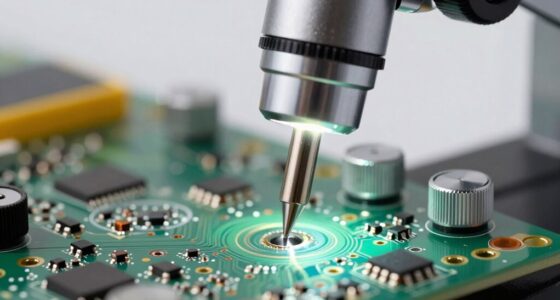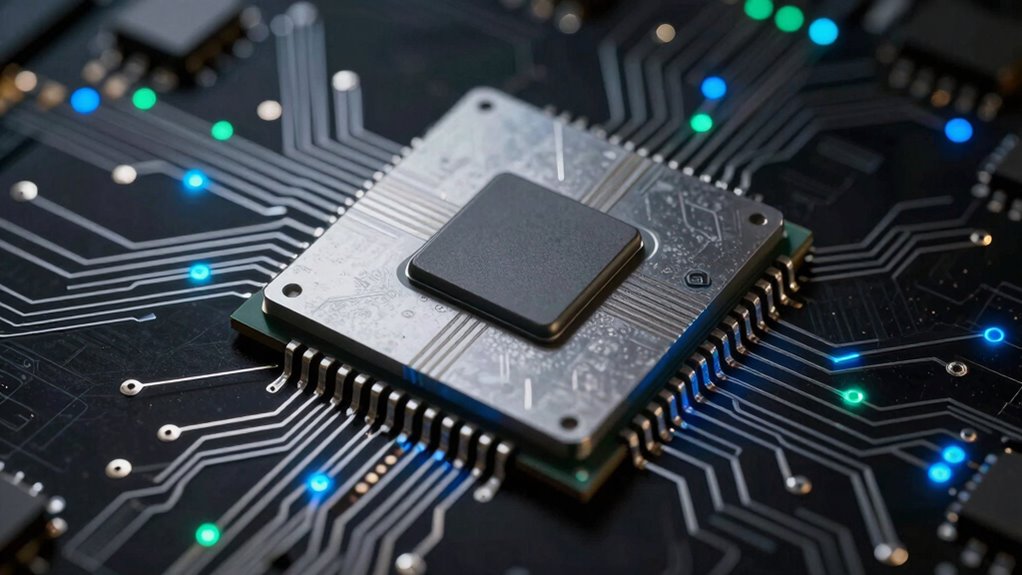

Nanoelectronics is essential for making devices smaller because it allows you to harness quantum effects like tunneling, which enables faster, more efficient components at tiny scales. As devices shrink, traditional parts hit limits, but nanoelectronics uses advanced nanomaterials and fabrication techniques to overcome these barriers. Understanding these phenomena helps you create reliable, high-performance electronics that keep pace with miniaturization. Keep exploring to discover how these innovations are shaping the future of smaller, smarter devices.

Get the latest gadgets delivered free — and shop member deals
- Fast, free delivery on millions of items
- Access to Prime Big Deal Days deals on October 6–7
- Prime Video, Amazon Music and more included
Key Takeaways
- Nanoelectronics enable further device miniaturization by managing quantum effects like tunneling that limit traditional scaling.
- They improve device performance through high electron mobility and advanced material properties at nanoscale dimensions.
- Nanofabrication techniques allow precise creation of smaller, more efficient components essential for compact devices.
- Incorporating nanomaterials enhances stability, durability, and energy efficiency in increasingly smaller electronic devices.
- Understanding quantum phenomena at the nanoscale is crucial for developing innovative, high-performance nanoelectronic components.
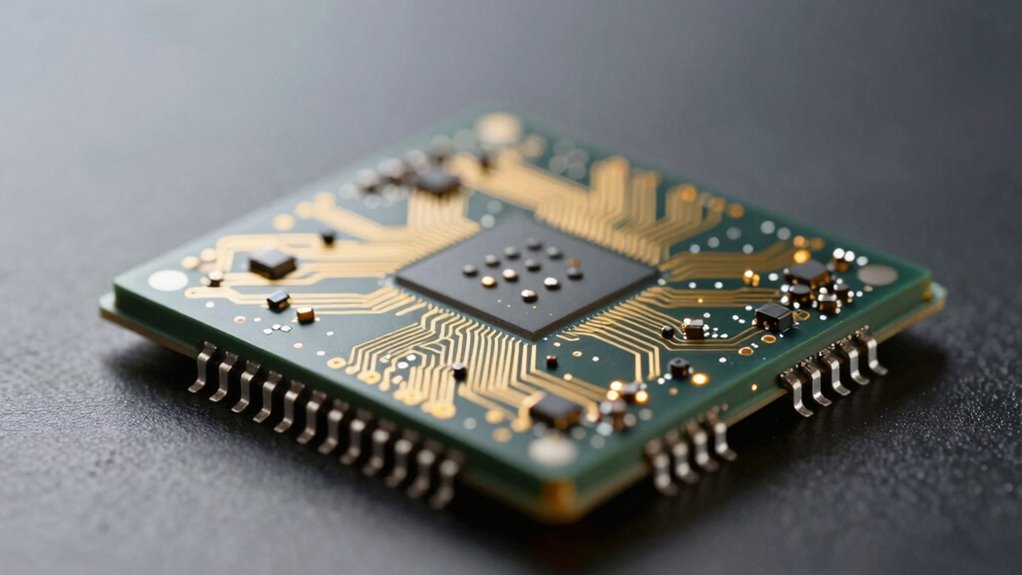
As electronic devices continue to shrink, nanoelectronics has become essential in pushing the boundaries of miniaturization. You might wonder how this tiny scale impacts your gadgets. The answer lies in understanding how electrons behave at such small dimensions. In nanoelectronics, phenomena like quantum tunneling start to play a significant role. Unlike in larger devices, where electrons move predictably through materials, at the nanoscale, they can pass through barriers they normally wouldn’t crossing, thanks to quantum tunneling. This effect can be both a challenge and an opportunity. While it can cause leakage currents that reduce device efficiency, it also enables the development of new types of components, like tunneling transistors, that operate faster and with less power. This is why traditional scaling methods hit a limit—because as devices become smaller, controlling quantum effects becomes crucial to maintaining performance.
Moreover, electron mobility, a measure of how quickly electrons can move through a material, is essential in nanoelectronic devices. High electron mobility means faster switching speeds and better overall performance. In larger devices, materials like silicon provide good mobility, but as we shrink components down to the nanometer level, maintaining or enhancing this mobility becomes more complex. Engineers now focus on developing materials and structures that preserve high electron mobility despite the miniaturization. This guarantees that your devices can process data swiftly without overheating or losing efficiency. When electron mobility drops, devices slow down, and power consumption increases, which defeats the purpose of making smaller, more powerful gadgets. Additionally, material properties at the nanoscale significantly influence device performance and energy efficiency. Advances in nanofabrication techniques are crucial for overcoming these challenges and ensuring the reliable operation of smaller electronics. Understanding the quantum phenomena involved is vital for designing future devices that harness these effects rather than being hindered by them. Furthermore, integrating novel nanomaterials can improve the overall stability and durability of nanoelectronic components. Recognizing how quantum effects influence material behavior is key to innovating in this rapidly evolving field.
As an affiliate, we earn on qualifying purchases.
Frequently Asked Questions
How Does Nanoelectronics Improve Device Energy Efficiency?
Nanoelectronics improves your device’s energy efficiency by reducing power consumption through precise control of electron flow. Quantum tunneling allows components to operate at lower voltages, minimizing energy loss. Additionally, nano-scale structures enhance charge retention, preventing unnecessary energy drain. As a result, your device runs longer on less power, making it more efficient and sustainable, all while maintaining high performance.
What Are the Main Challenges in Manufacturing Nanoelectronic Components?
You face significant challenges in manufacturing nanoelectronic components, primarily due to fabrication complexity. Precise control at nanoscale is tough, and issues like quantum tunneling can cause current leakage, affecting performance. Achieving uniformity and reproducibility requires advanced techniques and equipment. Overcoming these hurdles is essential to produce reliable, efficient nanoelectronics, but it demands innovation in materials, processes, and quality control to handle the intricacies of nanoscale fabrication.
How Does Nanoelectronics Impact Device Durability and Lifespan?
Imagine tiny bridges of nanoelectronics seamlessly integrated into your device, strengthening its structure. Nanoelectronics integration improves durability by enhancing material miniaturization, reducing wear and tear. This precision minimizes overheating and electrical failures, extending your device’s lifespan. As components shrink, they become more resilient and efficient. With nanoelectronics, your device gains robustness, ensuring it withstands daily use longer, delivering consistent performance while maintaining a sleek, compact design.
Are Nanoelectronic Devices More Environmentally Friendly?
Yes, nanoelectronic devices are generally more environmentally friendly because they use eco-friendly materials and promote sustainable manufacturing practices. Smaller sizes mean less material consumption and reduced waste, while energy efficiency cuts down on power use and emissions. By integrating eco-conscious design and manufacturing, nanoelectronics help minimize environmental impact, making them a greener choice for the future of technology and supporting global sustainability efforts.
What Future Innovations Are Expected in Nanoelectronics Technology?
You’re on the cusp of exciting nanoelectronics innovations. Expect breakthroughs like quantum tunneling control, enabling faster, more efficient devices, and atomic precision manufacturing, which will push miniaturization to new heights. These advances will liberate smarter, more powerful gadgets that fit in the palm of your hand. As technology evolves, you’ll see nanoelectronics becoming increasingly crucial, transforming how you interact with everything from healthcare to communication systems.
As an affiliate, we earn on qualifying purchases.
Conclusion
As you explore the world of nanoelectronics, you realize it’s not just about making devices smaller, but smarter and more efficient. Some say that at such tiny scales, quantum effects could disrupt this progress, but history shows innovation always finds a way. So, don’t doubt the importance of nanoelectronics—you’re witnessing the future unfold, where smaller truly means better, pushing boundaries you never imagined possible. It’s a thrilling ride toward tech that’s truly miniature and mighty.
As an affiliate, we earn on qualifying purchases.
high electron mobility semiconductor
As an affiliate, we earn on qualifying purchases.
As an affiliate, we earn on qualifying purchases.
Fall Picks
fall essentials
As an affiliate, we earn on qualifying purchases.