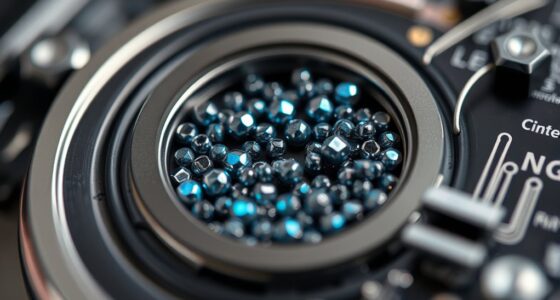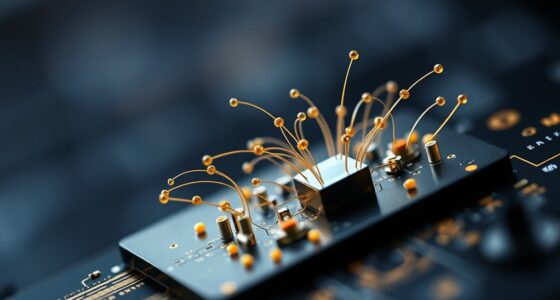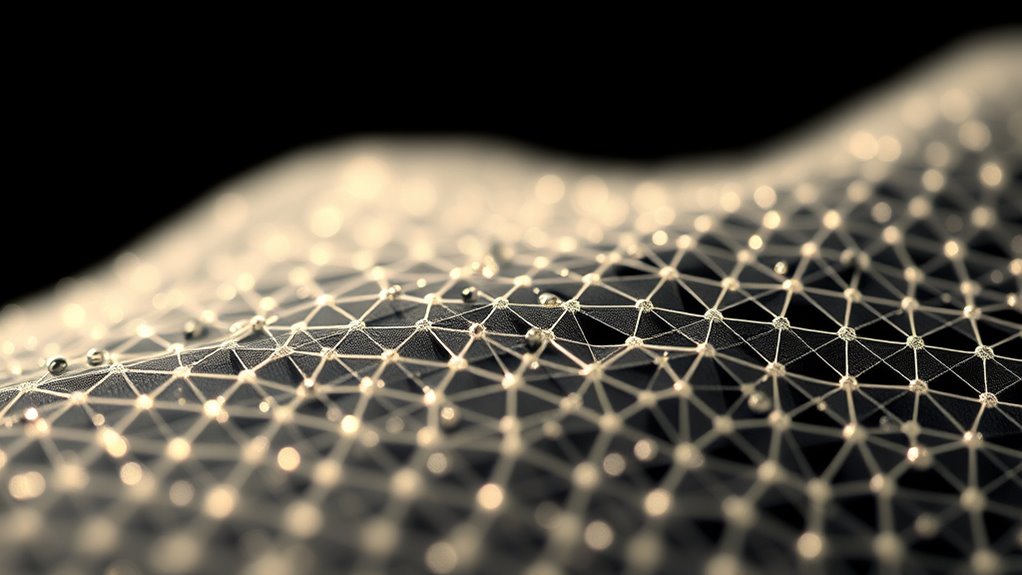

Graphene-based nanomachines harness graphene’s remarkable electrical conductivity, strength, and flexibility to create highly efficient, lightweight devices at the atomic scale. These nanomachines can improve energy storage, enable ultra-fast charging, and make batteries more flexible and durable. They also reduce energy loss and enhance performance in fuel cells and solar tech. As research advances, you’ll discover how these innovations could revolutionize industries and everyday life—keep exploring to uncover more exciting details.

Get the latest gadgets delivered free with Prime
- Fast, free delivery on millions of items
- Prime Video, Amazon Music and more included
- Member-only deals all year
Key Takeaways
- Graphene’s exceptional electrical conductivity and strength make it ideal for constructing atomic-scale nanomachines.
- Integration of graphene enhances energy storage devices, enabling ultra-fast charging and increased capacity.
- Graphene-based nanomachines can improve energy conversion efficiency in fuel cells and solar systems.
- Ongoing research explores coupling graphene with other materials to unlock new functionalities and performance.
- These nanomachines have potential applications in smart energy systems, wearable tech, and sustainable power solutions.
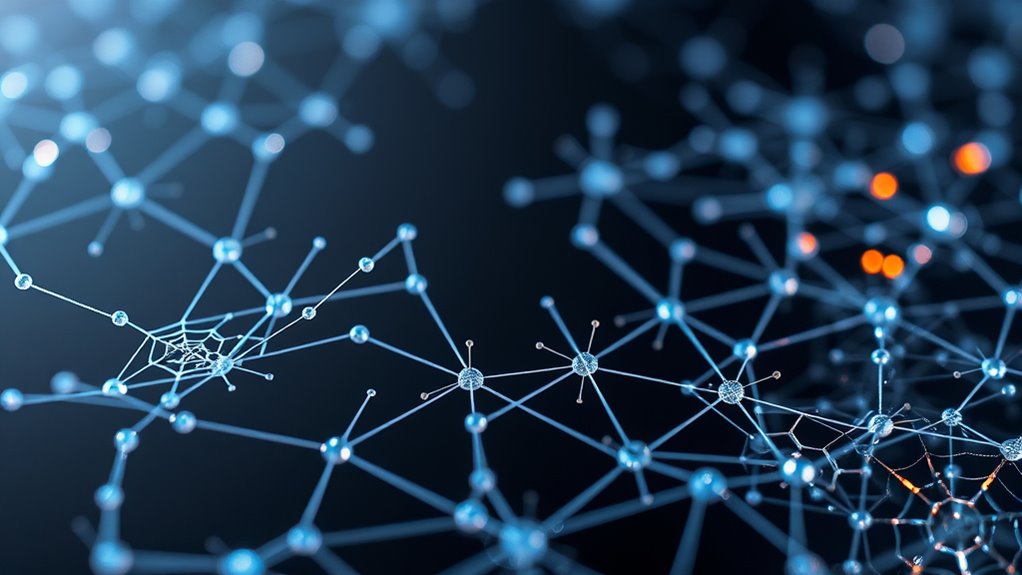
Graphene-based nanomachines represent a groundbreaking advancement in nanotechnology, leveraging the extraordinary properties of graphene to create devices at an atomic scale. This innovation opens up a wide range of nanotechnology applications, especially in fields like medicine, electronics, and energy. One of the most promising areas is energy storage, where these nanomachines could revolutionize how we store and manage power. Because graphene is incredibly conductive, lightweight, and strong, it offers an ideal foundation for developing batteries and supercapacitors with enhanced capacity and faster charge times. Imagine energy storage devices that are not only more efficient but also thinner, more flexible, and durable enough to fit into a variety of applications, from wearable tech to large-scale power grids. These nanomachines can be engineered to control ion flow at an atomic level, resulting in batteries that charge in seconds rather than hours, and with a lifespan that surpasses current technologies.
Graphene nanomachines revolutionize energy storage with ultra-fast charging, flexibility, and enhanced capacity at an atomic scale.
You can harness the unique electrical properties of graphene to design nanomachines that precisely manipulate energy at an atomic level, making energy storage more efficient than ever before. For example, by integrating graphene-based nanomachines into existing energy storage systems, you could markedly reduce energy loss during charging and discharging cycles. Their high surface area and conductivity enable them to hold more charge, which directly translates to increased storage capacity. In addition, because graphene is flexible and lightweight, these nanomachines could be embedded into flexible devices or integrated into portable power sources, making them ideal for mobile applications.
Furthermore, these nanomachines can be tailored to optimize energy conversion processes, such as in fuel cells or solar energy devices, by improving the efficiency of charge transfer. As a result, energy storage becomes more sustainable and cost-effective, supporting the shift toward renewable energy sources. You might also find these nanomachines useful in developing smart energy systems that dynamically adapt to demand, balancing loads and reducing waste. The ability to precisely control energy at the nanoscale means that you could create highly responsive, miniaturized energy storage solutions that work seamlessly in complex environments.
In essence, graphene-based nanomachines are set to transform energy storage by making devices more powerful, efficient, and adaptable. Their application in nanotechnology promises a future where energy management is smarter, faster, and more sustainable—paving the way for innovations across industries and daily life. As research advances, you’ll see these tiny yet mighty machines become integral to next-generation energy systems, radically changing how we generate, store, and use power. Additionally, ongoing studies into coupling with other advanced materials promise to further enhance their capabilities and unlock new functionalities.
graphene-based flexible batteries
As an affiliate, we earn on qualifying purchases.
As an affiliate, we earn on qualifying purchases.
Frequently Asked Questions
What Are Potential Environmental Impacts of Graphene Nanomachines?
You should consider that graphene nanomachines might cause environmental toxicity if they leak into ecosystems, potentially harming wildlife and plants. Their small size and high reactivity could lead to ecosystem disruption, affecting nutrient cycles and habitats. While they offer promising technological benefits, you must also evaluate and manage these risks carefully to prevent unintended environmental damage, ensuring that their deployment remains safe and sustainable for ecosystems.
How Do Graphene Nanomachines Compare in Cost to Traditional Devices?
You’ll find that graphene nanomachines tend to be more cost-efficient than traditional devices overall, mainly because of their manufacturing expenses. Although the initial development costs can be high due to advanced technology requirements, mass production considerably reduces costs over time. As a result, their potential for scalable, affordable solutions makes them attractive, especially for applications where cost efficiency is a priority.
Are There Existing Commercial Applications of Graphene Nanomachines?
Right now, the commercialization of graphene nanomachines is just beginning, and you’re witnessing the dawn of a revolution! Market adoption is slow but promising as companies explore tiny, powerful devices for medicine, electronics, and energy. While widespread commercial use isn’t here yet, innovative startups are pushing boundaries, turning science fiction into reality. Soon, you’ll see these nanomachines transforming industries, making your world smarter, safer, and more efficient than ever imagined!
What Are the Main Challenges in Manufacturing Graphene-Based Nanomachines?
You face main challenges in manufacturing graphene-based nanomachines, especially with scalability issues and material stability. Scaling up production while maintaining quality is difficult, as precise control over atomic structures is required. Additionally, ensuring the stability of graphene at the nanoscale under various conditions is tough, which can affect performance and durability. Overcoming these hurdles is essential for shifting from research to practical, commercial applications.
How Safe Are Graphene Nanomachines for Human Health?
You should be aware that the safety of graphene nanomachines depends on biocompatibility concerns and thorough toxicity assessments. While some studies show they can be safe, others highlight potential risks like inflammation or cellular damage. Researchers are actively working to evaluate their toxicity and improve biocompatibility. Until extensive safety data is available, it’s wise to approach their use cautiously, especially in medical or human-related applications.
ultra-fast charging supercapacitors
As an affiliate, we earn on qualifying purchases.
As an affiliate, we earn on qualifying purchases.
Conclusion
You’ve seen how graphene’s greatness grants groundbreaking gadgets. By harnessing its heralded hardness and flexibility, you can craft countless clever creations. As science swiftly shifts, so should your curiosity soar, seeking new nanoscale nuances. Embrace the exciting evolution of graphene-based nanomachines, where wonder and innovation weave wonderfully. With your willingness to wonder, you’ll walk the winding way toward a world where tiny tech transforms tomorrow. Let your imagination ignite, and the future will follow!
nanotechnology energy storage devices
As an affiliate, we earn on qualifying purchases.
As an affiliate, we earn on qualifying purchases.
graphene energy storage solutions
As an affiliate, we earn on qualifying purchases.
As an affiliate, we earn on qualifying purchases.
Columbus Day / Indigenous Peoples' Day Picks
long weekend sales
As an affiliate, we earn on qualifying purchases.