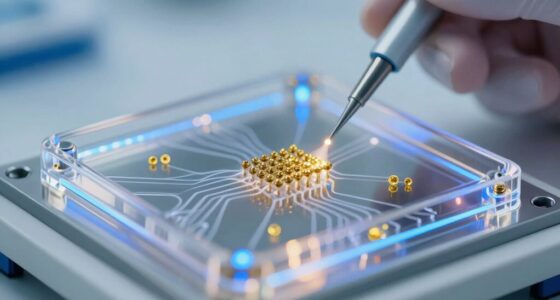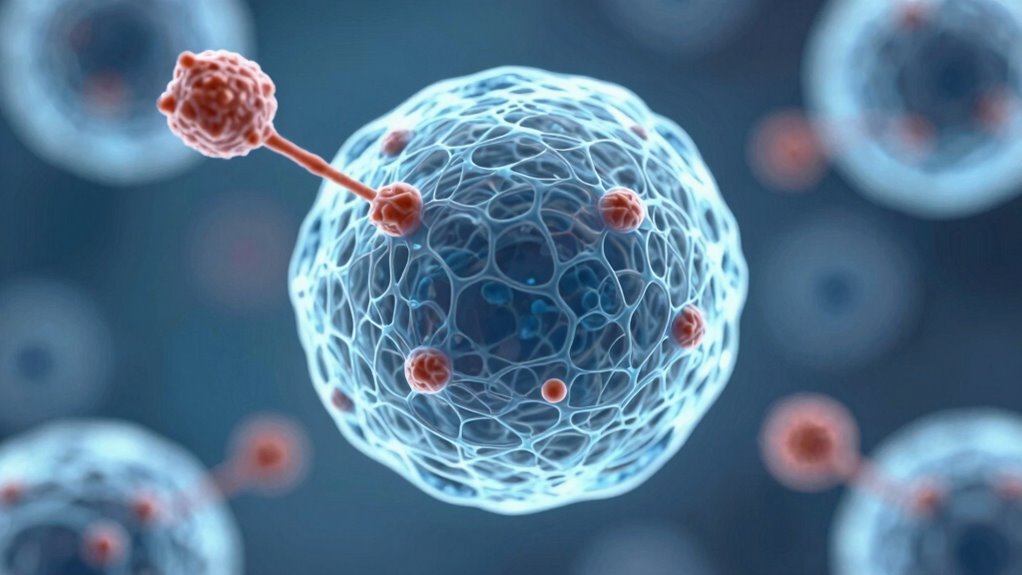

To improve targeting, nano drug carriers are designed with surface modifications like PEG coating to evade immune detection and ligand attachments such as antibodies or peptides to recognize specific cell receptors. They also incorporate smart release mechanisms that respond to environmental cues like pH or enzymes to release drugs precisely where needed. Balancing stability with controlled release helps guarantee the therapeutic payload reaches its target effectively. Keep exploring to discover how these strategies work together for ideal results.

Get the latest gadgets delivered free with Prime
- Fast, free delivery on millions of items
- Prime Video, Amazon Music and more included
- Member-only deals all year
Key Takeaways
- Surface modification with ligands like antibodies or peptides enables specific recognition of target cells.
- Incorporating stimuli-responsive materials allows controlled drug release at the target site.
- PEGylation creates hydrophilic layers that reduce immune detection and prolong circulation time.
- Balancing stability and release ensures nanocarriers deliver drugs effectively without premature leakage.
- Combining targeting ligands with smart release mechanisms optimizes precision and treatment efficacy.
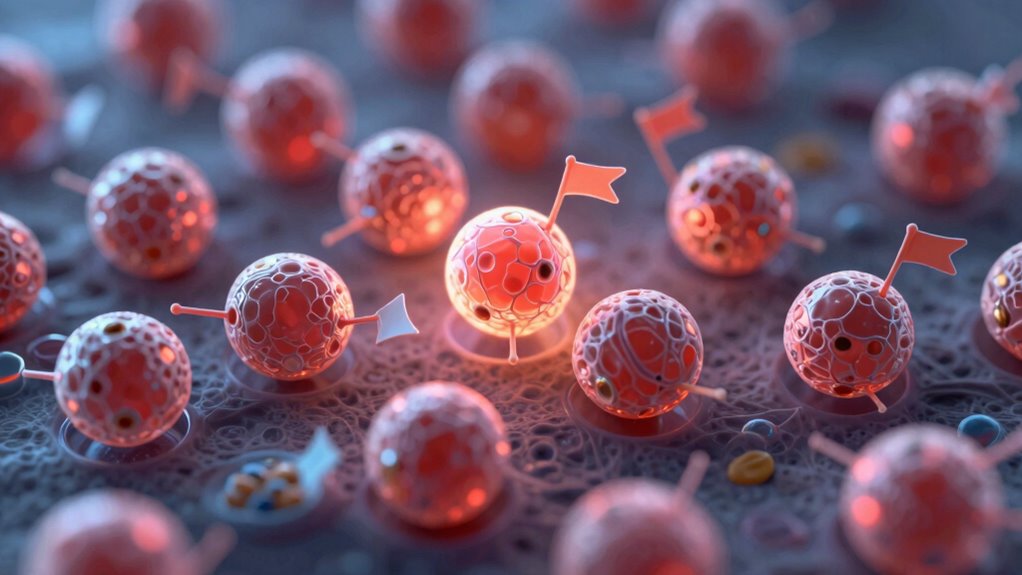
Have you ever wondered how tiny particles can deliver drugs directly to target cells with precision? It’s a fascinating process that hinges on careful design and engineering of nano drug carriers. One critical aspect of this design involves nanoparticle surface modification. By altering the surface properties, you can make these carriers more compatible with the biological environment, evade immune detection, and even target specific cells. For instance, attaching polyethylene glycol (PEG) molecules creates a hydrophilic layer that reduces protein binding, prolonging circulation time. Alternatively, attaching ligands like antibodies or peptides enables the nanoparticles to recognize and bind to particular cell receptors, ensuring that the drug is released exactly where it’s needed. This customization is crucial for increasing treatment efficacy and minimizing side effects. Additionally, surface modification techniques are often tailored based on the specific content formats used to optimize interactions within the biological landscape. Understanding drug release mechanisms is equally important. Once the nanoparticle reaches its target, you want the drug to be released at the right time and rate. Different strategies are employed here. Some nanoparticles are designed to respond to specific stimuli, like pH changes or enzymes present in diseased tissues. For example, in acidic tumor environments, pH-sensitive nanoparticles break down, releasing their payload precisely where cancer cells thrive. Others utilize biodegradable materials that slowly degrade over time, providing a sustained release. Interestingly, surface modification can also influence the immune response to the nanoparticles, helping to prevent unintended clearance by the immune system. The choice of material and trigger depends on the therapeutic goal and the nature of the disease. Designing nano drug carriers also involves balancing stability and release. You want the carrier stable enough to survive in the bloodstream without premature drug leakage, yet capable of releasing the drug once it reaches the target environment. Surface modification plays a role here too, with coatings that prevent premature release or degradation. The drug release mechanisms are fine-tuned by controlling the properties of the nanoparticle core, surface chemistry, and the surrounding environment. This control over release timing enhances the effectiveness of treatments, especially for diseases requiring sustained or targeted drug delivery. In essence, designing nano drug carriers for better targeting combines surface modification techniques with smart drug release mechanisms. You’re creating a delivery system that can navigate the complex biological landscape, recognize specific cells, and release its therapeutic payload exactly when and where it’s needed. This intricate engineering allows for more precise, efficient, and safer treatments, transforming how we approach disease management at the microscopic level.
PEGylated nanoparticle drug delivery system
As an affiliate, we earn on qualifying purchases.
As an affiliate, we earn on qualifying purchases.
Frequently Asked Questions
How Do Nano Carriers Avoid Immune System Detection?
You can help nano carriers avoid immune system detection through immune evasion techniques like surface modification. By coating the nano carriers with biocompatible materials such as polyethylene glycol (PEG), you make their surfaces less recognizable to immune cells. This surface modification reduces immune responses, prolonging circulation time and improving targeted delivery. fundamentally, these strategies help nano carriers slip past immune defenses, ensuring your therapeutic agents reach their intended sites effectively.
Can Nano Drug Carriers Target Multiple Disease Sites Simultaneously?
Yes, nano drug carriers can achieve multi-site targeting by designing them with disease specificity, allowing them to recognize different markers across various disease sites. You can modify their surface properties to attach multiple ligands, enabling simultaneous targeting of multiple tissues or organs. This approach enhances treatment efficiency, reduces side effects, and offers a promising strategy for managing complex diseases that affect multiple areas within the body.
What Are the Long-Term Safety Concerns of Nano Carriers?
You might worry that nano carriers could cause catastrophic toxicity concerns or devastate the environment in ways we can’t yet fully predict. Long-term safety risks include potential accumulation in body tissues, unknown immune responses, and environmental impact from manufacturing and disposal. These issues could lead to unforeseen health problems or ecological damage, making it essential for scientists to thoroughly study and regulate nano carriers before widespread use, ensuring they’re safe now and in the future.
How Is the Stability of Nano Drug Carriers Maintained?
You maintain nanocarrier stability through careful nanocarrier fabrication, guaranteeing particles are uniformly sized and properly assembled. Surface modification plays a crucial role by adding stabilizing agents or coatings that prevent aggregation and degradation. These modifications enhance biocompatibility and protect the nanocarriers from environmental factors, consequently maintaining their integrity during circulation. Regular testing and optimization of fabrication processes help guarantee consistent stability for effective drug delivery.
Are Nano Carriers Effective Against Multidrug-Resistant Cancers?
Yes, nano carriers show promise against multidrug-resistant cancers. Through clever nanoparticle engineering, scientists craft carriers that can circumvent traditional resistance mechanisms. These advanced drug delivery mechanisms deliver drugs directly into resistant cancer cells, enhancing effectiveness and minimizing side effects. By targeting tumors precisely, you can potentially overcome resistance, making nano carriers powerful tools in the fight against stubborn, resistant cancers.
targeted antibody ligand nanoparticles
As an affiliate, we earn on qualifying purchases.
As an affiliate, we earn on qualifying purchases.
Conclusion
By understanding how nano drug carriers are designed for precise targeting, you can appreciate their potential to revolutionize medicine. Did you know that over 50% of new cancer treatments in clinical trials now involve nanotechnology? This statistic highlights how these tiny carriers are becoming essential in delivering drugs directly to diseased cells, minimizing side effects. As research advances, you’ll see even more innovative solutions that make treatments safer and more effective for everyone.
As an affiliate, we earn on qualifying purchases.
stimuli-responsive nano drug carriers
As an affiliate, we earn on qualifying purchases.
As an affiliate, we earn on qualifying purchases.
Columbus Day / Indigenous Peoples' Day Picks
long weekend sales
As an affiliate, we earn on qualifying purchases.