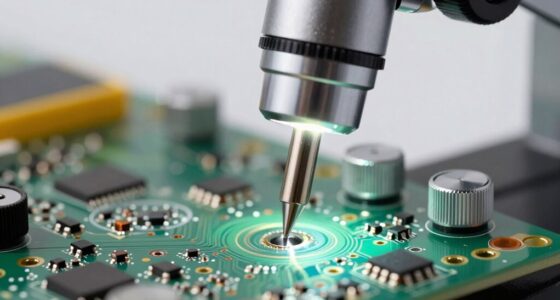

Nanotech plays a vital role in next-gen sensors because it enables you to achieve unprecedented sensitivity, precision, and selectivity. Using nanomaterials like graphene and quantum dots, you can detect even the tiniest signals, improving medical, environmental, and security applications. Plus, advances in manufacturing make scalable production possible, bringing these innovative sensors closer to reality. If you’re curious about how these breakthroughs work together, keep exploring the exciting possibilities ahead.

Get the latest gadgets delivered free with Prime
- Fast, free delivery on millions of items
- Prime Video, Amazon Music and more included
- Member-only deals all year
Key Takeaways
- Nanomaterials like graphene and quantum dots enable highly sensitive, durable sensors with enhanced electrical, optical, and mechanical properties.
- Quantum effects such as superposition and entanglement improve sensor sensitivity, allowing detection of previously undetectable signals.
- Scalable manufacturing processes are essential to translate nanotech sensor innovations from lab to real-world applications.
- Nanotechnology enhances the ability to differentiate signals, reducing false positives and increasing sensor reliability.
- Combining nanomaterials and quantum phenomena paves the way for next-generation sensors with unprecedented precision and application scope.
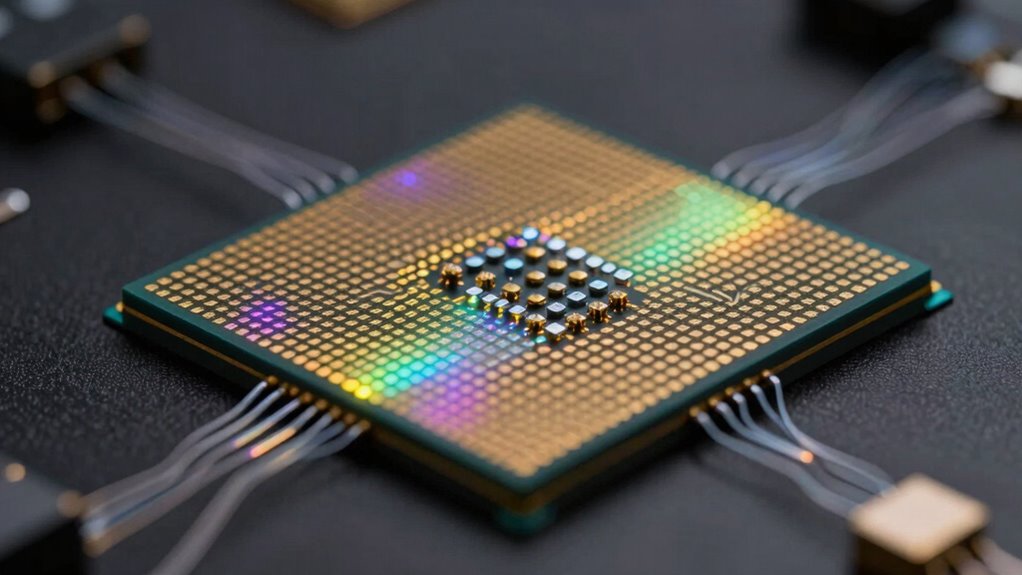
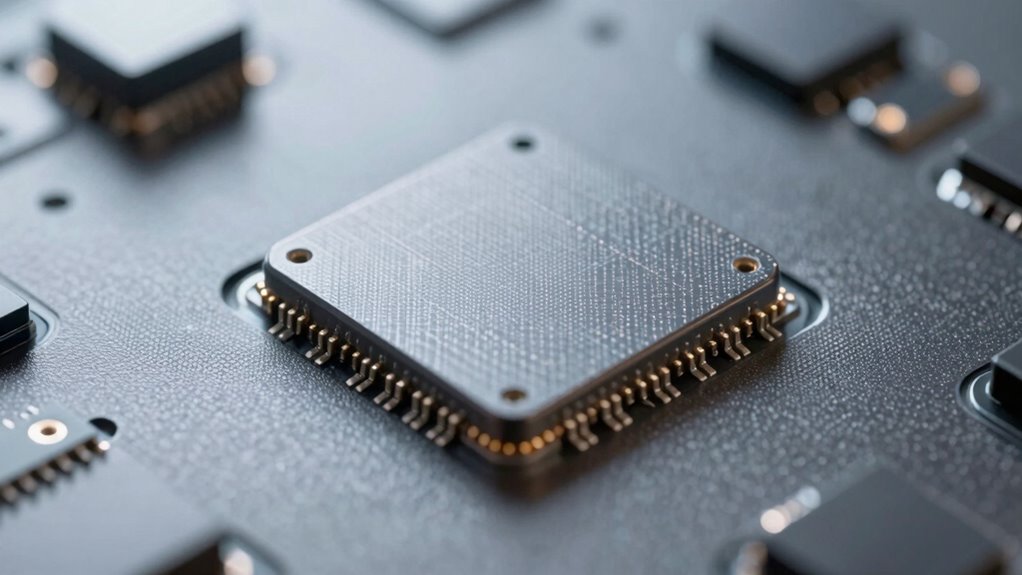
Nanotechnology is revolutionizing the development of next-generation sensors, enabling them to detect incredibly small signals with unprecedented precision. This leap forward hinges on the ability to manipulate materials at the atomic and molecular levels, harnessing quantum effects that enhance sensor performance in ways previously thought impossible. With quantum effects, you can leverage phenomena such as superposition and entanglement, which allow sensors to achieve extreme sensitivity and selectivity. These effects enable you to detect minute changes in physical, chemical, or biological environments, making sensors capable of identifying signals that were once undetectable. The precision offered by quantum effects is especially vital in applications like medical diagnostics, environmental monitoring, and security, where detecting faint signals can be life-saving or essential for safety. Advances in nanofabrication techniques now make it possible to produce materials like graphene, carbon nanotubes, and quantum dots at scale, offering consistent quality and functionality. These materials exhibit remarkable electrical, optical, and mechanical properties, which you can harness to develop sensors that are not only highly sensitive but also durable and reliable. The ability to scale up production is fundamental to translating laboratory breakthroughs into real-world applications. Additionally, ongoing research into material scalability** reveals that overcoming manufacturing challenges is key to unlocking the full potential of nanotech-enabled sensors. Incorporating nanomaterials with tailored quantum effects and scalable manufacturing processes means you’re setting the stage for sensors that surpass traditional limitations. Furthermore, advanced fabrication techniques are increasingly enabling the precise control needed for designing highly specialized nanomaterials. Advances in detection capabilities demonstrate that integrating advanced nanomaterials can significantly improve the ability to differentiate between similar signals, reducing false positives and enhancing overall sensor performance. Moreover, innovations in nanomaterial synthesis are accelerating the development of custom-designed materials tailored for specific sensing needs. The integration of nanotech ensures you can design sensors that respond to specific stimuli with high precision, reducing false positives and improving overall reliability. As you continue to explore the intersection of quantum effects and material scalability, you’ll find that the potential for next-generation sensors becomes almost limitless. This fusion of cutting-edge science and practical manufacturing is what makes nanotechnology so vital in shaping the future of sensing technology,** promising devices that can detect the tiniest signals with unmatched accuracy and consistency.
As an affiliate, we earn on qualifying purchases.
Frequently Asked Questions
How Does Nanotech Improve Sensor Sensitivity?
Nanotech improves sensor sensitivity through quantum enhancement and surface modification. Quantum enhancement boosts detection capabilities by exploiting quantum effects at the nanoscale, making sensors more precise. Surface modification involves altering the sensor’s surface to increase its interaction with target molecules, leading to higher sensitivity. By combining these techniques, you can develop sensors that detect even the tiniest changes, making them invaluable for medical diagnostics, environmental monitoring, and other critical applications.
Are Nanotech Sensors More Durable Than Traditional Sensors?
You might say, “A chain is only as strong as its weakest link,” and nanotech sensors often surpass traditional ones in durability. Their material resilience stems from advanced nanomaterials that withstand harsh environments better. While durability varies by design, nanotech sensors generally offer a superior durability comparison due to their enhanced strength and flexibility, making them more reliable over time and better suited for demanding conditions.
What Are the Cost Implications of Nanotech Sensors?
Nanotech sensors may have higher initial costs due to manufacturing complexity, but they often lead to significant cost reduction over time. You can benefit from their enhanced sensitivity and efficiency, which reduce the need for frequent replacements and maintenance. As production methods improve and scale up, the overall costs decrease, making nanotech sensors more economically viable for various applications, ultimately offering long-term savings despite the upfront investment.
Can Nanotech Sensors Be Integrated Into Existing Systems Easily?
You can usually integrate nanotech sensors into existing systems, but it’s not always a walk in the park. Compatibility challenges may arise, requiring adjustments to hardware or software. Manufacturing scalability is another hurdle, as producing these tiny sensors consistently at large volumes demands advanced techniques. However, with proper planning and innovation, you can overcome these obstacles and seamlessly incorporate nanotech sensors into your current setups.
What Are Potential Environmental Impacts of Nanotech Sensor Production?
You should consider that nanotech sensor production might pose environmental toxicity risks, especially if harmful nanoparticles are released into ecosystems. Waste management becomes essential to prevent contamination, as improper disposal could lead to long-term environmental damage. To mitigate these impacts, you need to develop sustainable manufacturing practices, improve waste treatment methods, and enforce regulations that minimize nanoparticle release, ensuring the environmental safety of nanotech sensor technology.
As an affiliate, we earn on qualifying purchases.
Conclusion
Embracing nanotech for next-gen sensors opens exciting possibilities, guiding us toward smarter, more responsive technologies. While the journey may have its gentle hurdles, your curiosity and innovation will help navigate these subtle shifts. As you explore this tiny yet powerful world, remember that every small step brings us closer to a future where our devices are more intuitive and helpful. Keep dreaming big—sometimes, the tiniest changes make the biggest difference.
nanoscale sensor manufacturing equipment
As an affiliate, we earn on qualifying purchases.
As an affiliate, we earn on qualifying purchases.
next-generation nanotech sensors
As an affiliate, we earn on qualifying purchases.
As an affiliate, we earn on qualifying purchases.
Halloween Picks
halloween
As an affiliate, we earn on qualifying purchases.