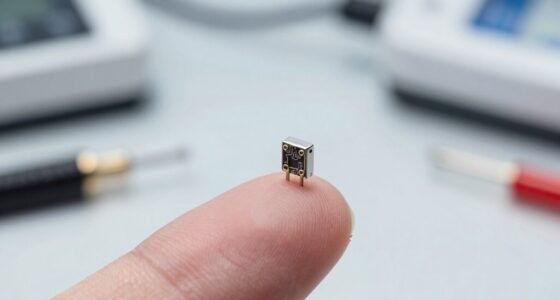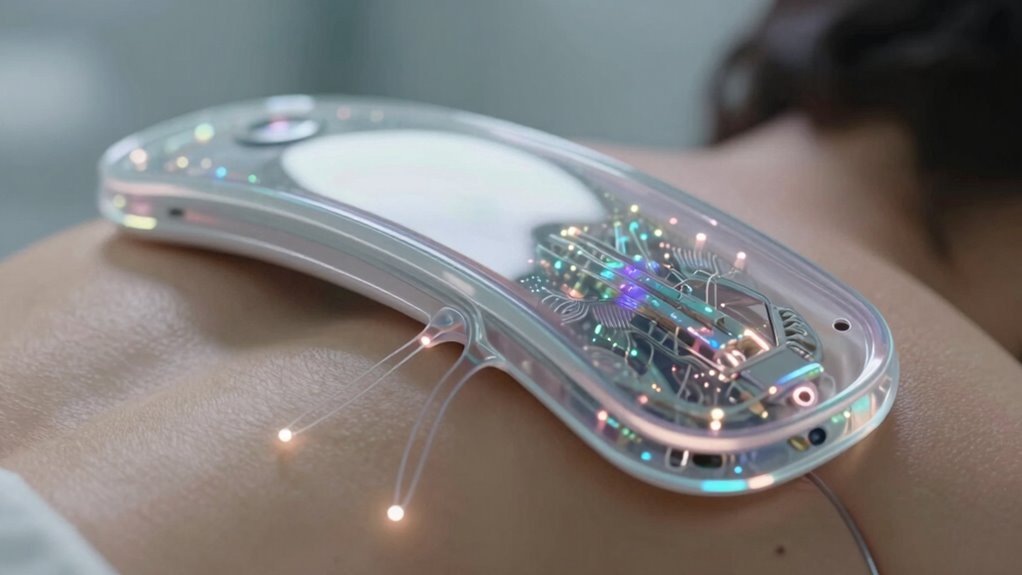

Nanomaterials could improve your future medical wearables by making them more durable, flexible, and lightweight. They operate at tiny scales, which boosts sensitivity for more accurate health monitoring and allows devices to seamlessly conform to your body for comfort. Additionally, nanomaterials enhance energy efficiency, meaning longer use between charges. Their resilience and stability guarantee devices last longer with less maintenance. If you want to discover how these innovations could change your health tech experience, keep exploring further.

Get the latest gadgets delivered free with Prime
- Fast, free delivery on millions of items
- Prime Video, Amazon Music and more included
- Member-only deals all year
Key Takeaways
- Nanomaterials enhance device durability and chemical stability, extending the lifespan of medical wearables.
- Their small size improves sensor sensitivity for more accurate health monitoring.
- Flexible, conformable nanomaterials enable comfortable, unobtrusive wearable designs.
- Miniaturization with nanomaterials creates lightweight, less invasive devices for continuous use.
- High energy efficiency of nanomaterials supports longer battery life and sustainable operation.
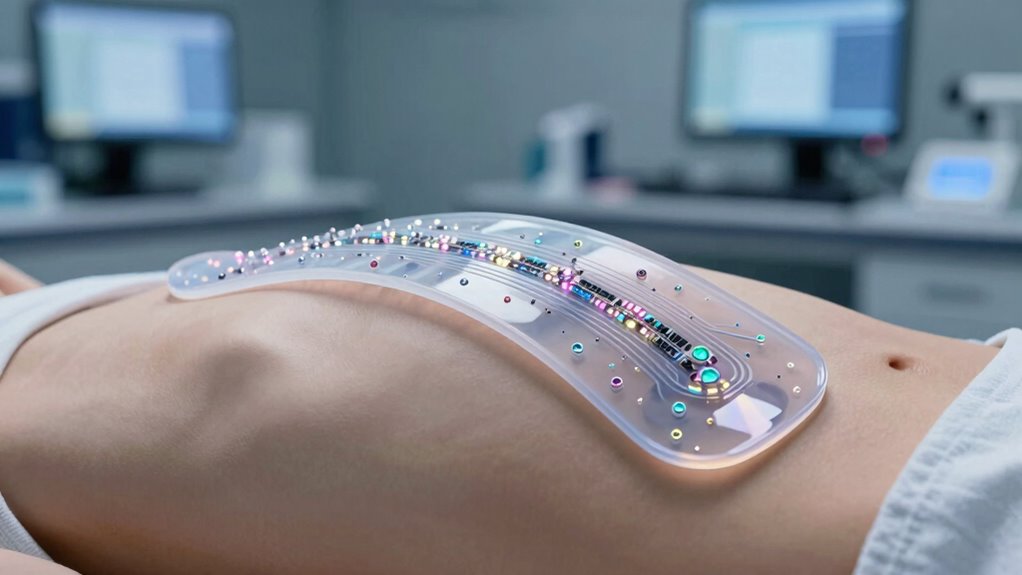
Nanomaterials are revolutionizing medical wearables by enabling devices that are smaller, more efficient, and highly responsive. As you explore the future of health monitoring, you’ll notice that the integration of nanomaterials makes a significant difference in how these devices perform. One key aspect is nanomaterial durability. Because these materials operate at an atomic or molecular level, they tend to be more resilient against wear and tear, ensuring your wearable remains reliable over extended periods. Unlike traditional materials that may degrade with constant use, nanomaterials can withstand environmental stresses, such as moisture, temperature fluctuations, and mechanical strain. This durability translates into longer-lasting devices that require less maintenance and fewer replacements, making them more cost-effective and sustainable. Additionally, nanomaterials often exhibit enhanced chemical stability, further contributing to their longevity in various conditions. This property is especially important for devices exposed to diverse environments during daily use. Advances in nanotechnology also allow for customizable surface properties, enabling tailored interactions with biological systems that improve device performance.
Nanomaterials’ atomic-level resilience ensures durable, long-lasting, and sustainable medical wearable devices.
Sensor integration is another area where nanomaterials shine. Because they are incredibly tiny, nanomaterials can be seamlessly incorporated into sensors without adding bulk. This means your wearable device can incorporate a multitude of sensors that are more sensitive and precise. With enhanced sensor integration, you’ll get more accurate readings of vital signs like heart rate, blood glucose, oxygen levels, and even biochemical markers. The increased sensitivity of nanomaterial-based sensors allows for early detection of health issues, providing you with timely insights that can be critical for effective treatment. Additionally, these sensors can be embedded directly into flexible, stretchable materials, giving you a comfortable, unobtrusive experience while still capturing comprehensive health data. The flexibility enabled by nanomaterials also makes it easier to design wearables that conform to the body’s natural contours, enhancing comfort and compliance. The ability of nanomaterials to facilitate such flexible electronics is transforming wearable technology into more adaptable health solutions.
The unique properties of nanomaterials also facilitate the development of devices that are lightweight and conformable, which is essential for wearables designed for continuous monitoring. Because they allow for the miniaturization of components, your wearable can be less invasive and more adaptable to your daily activities. This miniaturization not only improves comfort but also opens the door for innovative form factors that integrate seamlessly into clothing or even skin patches. This miniaturization is driven by the ability of nanomaterials to enable more compact electronic components, which was previously limited by traditional materials. Moreover, the high energy efficiency enabled by nanomaterials is crucial for ensuring long-lasting device operation without frequent recharging. The combination of these properties highlights how nanomaterials are key to developing smarter, more user-friendly medical wearables.
nanomaterial medical wearable sensors
As an affiliate, we earn on qualifying purchases.
As an affiliate, we earn on qualifying purchases.
Frequently Asked Questions
How Do Nanomaterials Enhance the Sensitivity of Medical Wearables?
Nanomaterials enhance the sensitivity of medical wearables by enabling sensor miniaturization, which allows for more precise detection of biological signals. Their durability guarantees the sensors can withstand daily wear and tear, maintaining consistent performance. With their tiny size, nanomaterials facilitate faster, more accurate readings, improving overall device responsiveness. This combination of durability and miniaturization makes your wearable more reliable and capable of detecting subtle health changes effectively.
Are Nanomaterials Safe for Long-Term Use in Humans?
You might wonder if nanomaterials are safe long-term. While they offer promising benefits, concerns around long term toxicity remain, as their small size could cause unforeseen issues in the body over time. Regulatory hurdles also complicate their widespread adoption, requiring extensive testing and approval processes. Careful research and regulation will be essential to guarantee nanomaterials are truly safe for long-term human use in medical wearables.
What Challenges Exist in Integrating Nanomaterials Into Wearable Devices?
You’ll face challenges like regulatory hurdles, which slow down approval processes due to safety and ethical concerns. Manufacturing scalability is another issue, as producing nanomaterials consistently and cost-effectively remains complex. Integrating these tiny materials into devices demands precise control and advanced technology. Overcoming these obstacles requires collaboration between scientists, engineers, and regulators to develop standards, verify safety, and scale production for widespread medical wearable use.
How Cost-Effective Are Nanomaterial-Based Medical Wearables?
Like a delicate thread weaving through a tapestry, nanomaterials promise cost-effective solutions for medical wearables. You find that as manufacturing scales up, cost reductions become more achievable, making these advanced devices more accessible. While initial investments may be high, the potential for mass production and improved efficiency helps lower overall expenses, bringing innovative, nanomaterial-based wearables within reach for many, ultimately transforming healthcare affordability and accessibility.
Can Nanomaterials Be Used to Monitor Multiple Health Parameters Simultaneously?
Yes, nanomaterials integration makes it possible to monitor multiple health parameters simultaneously. Their unique properties, like high surface area and excellent conductivity, enable the development of advanced sensors capable of multi-parameter monitoring. You can expect future wearables to leverage nanomaterials for real-time, all-encompassing health data, improving diagnosis and personalized treatment. This integration enhances device sensitivity and accuracy, making multi-parameter monitoring more feasible and efficient than ever before.
flexible lightweight health monitoring devices
As an affiliate, we earn on qualifying purchases.
As an affiliate, we earn on qualifying purchases.
Conclusion
Imagine a future where your medical wearables are lighter, smarter, and more accurate thanks to nanomaterials. These tiny innovations could revolutionize health monitoring, making it seamless and personalized. Don’t you want to experience a world where you’ll always be in control of your health? With nanomaterials leading the way, that future is closer than you think. Embrace the possibilities—they might just change the way you live and care for yourself.
durable nanomaterial fitness tracker
As an affiliate, we earn on qualifying purchases.
As an affiliate, we earn on qualifying purchases.
high sensitivity biosensors nanomaterials
As an affiliate, we earn on qualifying purchases.
As an affiliate, we earn on qualifying purchases.
Columbus Day / Indigenous Peoples' Day Picks
long weekend sales
As an affiliate, we earn on qualifying purchases.