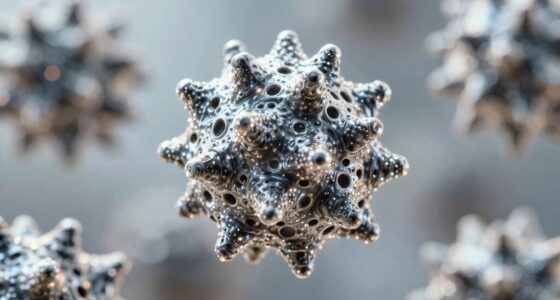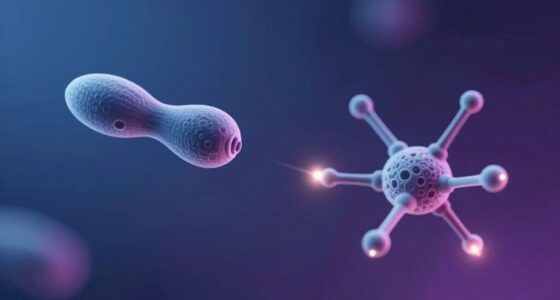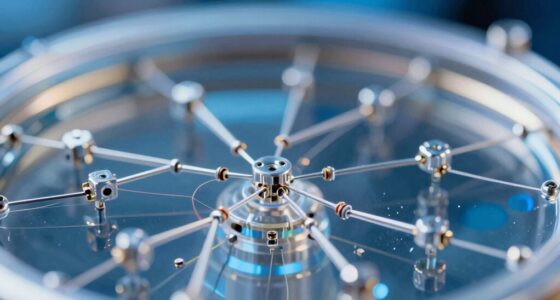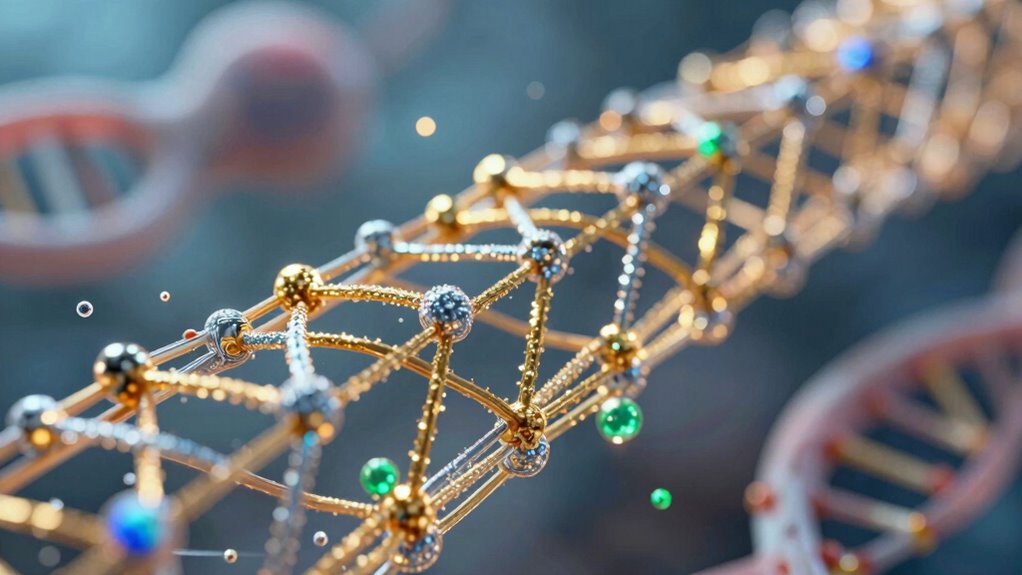

Nanotech is a crossroads of physics and biology because it uses principles from both fields to manipulate matter at the nanoscale. You can control atoms and molecules precisely, mimicking natural cellular structures or creating nanoscale machines. Quantum effects influence how particles behave and interact, enhancing the efficiency of biological applications like drug delivery. By exploring this intersection, you’ll discover how physical laws guide biological processes and how innovations can revolutionize medicine and technology. Stay tuned to learn more.
Open a free Amazon Business account
Business pricing, bulk buying and tax-exempt orders.
As an affiliate, we earn on qualifying purchases.
Key Takeaways
- Nanotech involves manipulating matter at the atomic and molecular levels, integrating principles from both physics and biology.
- Quantum effects influence nanoscale interactions, enabling advanced biological applications like sensing and drug delivery.
- The design of nanostructures draws on physical laws to mimic and interact seamlessly with biological systems.
- Interdisciplinary approaches combine physics’ understanding of energy and stability with biology’s complexity.
- Nanotech innovations leverage quantum mechanics to enhance medical diagnostics, treatments, and biomimetic devices.
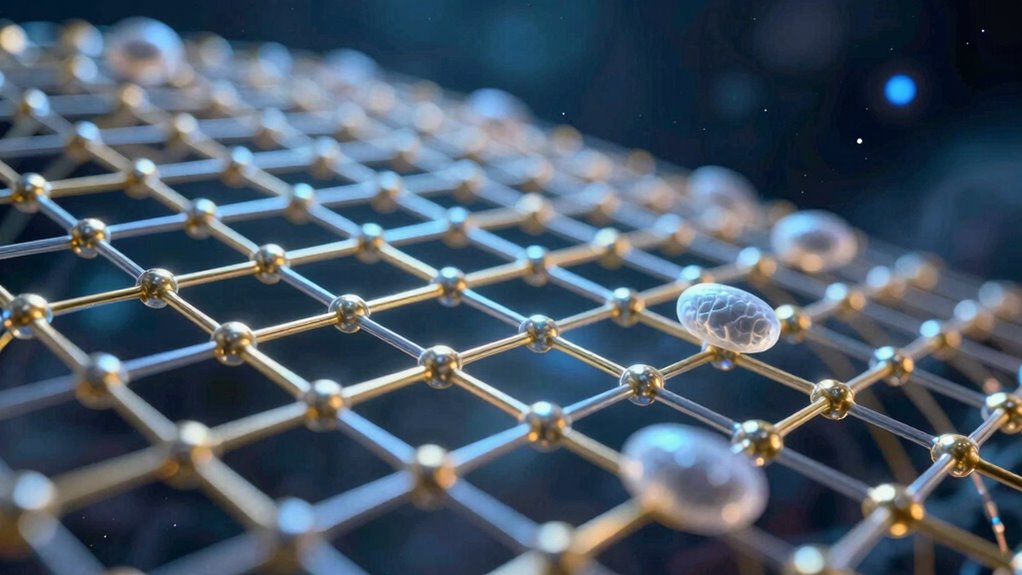
Nanotechnology stands at a fascinating intersection where the principles of physics meet the complexities of biology. It’s a domain where tiny structures, often measured in billionths of a meter, can manipulate matter at the molecular level. Here, you’re exploring how molecular assembly — the process of arranging atoms and molecules into specific structures — becomes a powerful tool for understanding and recreating biological systems. As you explore this field, you realize that quantum effects aren’t just abstract phenomena; they influence how particles behave at these minuscule scales. These effects can alter how molecules interact, bond, and transfer energy, giving you new ways to control and optimize biological functions.
You understand that in nanotech, the boundaries between physics and biology blur. You might design nanostructures that mimic natural cellular components, facilitating targeted drug delivery or gene editing. The ability to precisely assemble molecules enables you to create nanoscale machines or sensors that can operate inside living organisms. Quantum effects come into play here, impacting how these nanodevices function, especially when you’re working with particles that exhibit wave-like behaviors or tunnel through barriers. This interface allows you to harness quantum phenomena to improve sensitivity, speed, and efficiency in biological applications, such as detecting diseases at their earliest stages. Additionally, the interdisciplinary nature of nanotech encourages innovation by integrating concepts from both physics and biology to develop novel solutions.
Furthermore, you see that the principles of physics guide your understanding of stability and energy transfer within biological systems. Molecular assembly at the nanoscale isn’t just about putting things together; it’s about doing it with atomic precision, ensuring that each component interacts correctly. Quantum effects influence these interactions, sometimes enabling phenomena like superposition or entanglement, which can be exploited for advanced computing or imaging techniques in biology. You realize that this synergy opens up possibilities for designing intelligent nanodevices capable of performing complex tasks within living tissues, all while respecting the delicate balance of biological environments. Recognizing the role of quantum mechanics further enhances your capability to develop innovative solutions in this interdisciplinary field. Moreover, the ongoing research in quantum biology reveals how these effects naturally occur in biological processes, inspiring new biomimetic designs.
In addition, understanding the body’s natural healing mechanisms can help guide the development of nanotechnologies that work harmoniously with biological systems, reducing potential adverse effects. You also acknowledge that the ongoing exploration of molecular interactions at the quantum level reveals new insights into how biological molecules function, which can be harnessed for more precise medical interventions. In essence, what makes nanotech a crossroads of physics and biology is your ability to manipulate matter at the smallest scales, guided by the laws of physics and informed by biological complexity. The integration of molecular assembly techniques with an understanding of quantum effects allows you to innovate in medicine, materials science, and beyond. You’re not just observing these phenomena—you’re actively shaping them, creating tools that can revolutionize how we diagnose, treat, and understand life itself. This convergence of disciplines pushes the boundaries of what’s possible, positioning nanotech as a transformative frontier where physics and biology come together seamlessly.
As an affiliate, we earn on qualifying purchases.
Frequently Asked Questions
How Does Nanotechnology Improve Drug Delivery Systems?
Nanotechnology improves drug delivery systems through targeted therapy and innovative nanocarrier design. You can create nanocarriers that precisely deliver drugs to specific cells, reducing side effects and increasing effectiveness. By customizing nanostructures, you enhance their ability to penetrate biological barriers and release medication where needed. This advancement makes treatments more efficient, personalized, and less invasive, ultimately transforming how you approach complex medical conditions.
What Are the Ethical Concerns Surrounding Nanotech in Biology?
You worry about the ethical concerns of nanotech in biology, especially around genetic privacy and environmental impact. As nanotechnology advances, it could potentially manipulate genes or escape into ecosystems, causing unforeseen consequences. You must consider safeguarding personal genetic data and minimizing environmental harm. Responsible research and regulation are essential to guarantee nanotech benefits society without jeopardizing privacy or damaging the environment.
Can Nanotech Help in Repairing Genetic Mutations?
Nanotech can considerably help in repairing genetic mutations through advanced gene editing and cellular repair techniques. By manipulating nanomaterials at a molecular level, you can target mutated genes with high precision, minimizing unintended effects. This allows for more effective correction of genetic disorders. As you harness nanotech, you enable more efficient cellular repair, opening new possibilities for personalized medicine and potentially curing previously untreatable genetic conditions.
How Does Quantum Physics Influence Nanotech Biological Applications?
Quantum physics influences nanotech biological applications through phenomena like quantum entanglement and particle tunneling. You see, entanglement enables ultra-secure communication and precise measurement at the molecular level, while tunneling allows particles to pass through barriers, facilitating drug delivery and imaging. By harnessing these effects, you can develop advanced nanodevices that interact with biological systems more effectively, opening new frontiers in medicine, diagnostics, and bioengineering.
What Are the Future Research Directions for Nanotechnology in Medicine?
You should focus on advancing nanotech in medicine by addressing safety concerns and regulatory challenges. Future research will likely explore developing safer nanomaterials, ensuring biocompatibility, and establishing clear standards for clinical use. Collaboration between scientists and regulators is essential to navigate safety protocols. By prioritizing these areas, you can help accelerate the responsible integration of nanotech into healthcare, improving diagnostics, targeted drug delivery, and personalized treatments.
nanoscale sensors for biological research
As an affiliate, we earn on qualifying purchases.
As an affiliate, we earn on qualifying purchases.
Conclusion
So, as you see, nanotech is a dynamic dance between physics and biology, blending brilliance with biology’s beauty. By bridging these boundaries, you can harness the hidden harmony of tiny technologies to transform medicine, materials, and more. Embrace this exciting intersection, where science and society collide, creating countless countless possibilities. Plunge into, discover, and develop at this fascinating frontier—because the future of science is shaped at the stunning crossroads of nanotech, physics, and biology.
As an affiliate, we earn on qualifying purchases.
As an affiliate, we earn on qualifying purchases.
NFL season / tailgating Picks
team gear
As an affiliate, we earn on qualifying purchases.