
🔍 Read the full analysis: How High Refresh Gaming Monitors Can Make Play Feel More Responsive on ThorstenMeyerAI.com

Get the latest gadgets delivered free with Prime
- Fast, free delivery on millions of items
- Prime Video, Amazon Music and more included
- Member-only deals all year
TL;DR
A ThorstenMeyerAI.com buying guide compares 10 gaming monitors, from 240Hz QHD models to 144Hz Full HD and ultrawide options. Higher refresh rates can make motion look smoother, but the benefit depends on a system producing enough frames and on the buyer’s preferred resolution, screen size and format.
ThorstenMeyerAI.com has published a buying guide to 10 high-refresh gaming monitors, comparing models that range from 240Hz QHD displays to a compact 144Hz Full HD screen. The guide says high refresh rates can make fast motion appear smoother, but stresses that the right choice depends on a PC’s frame-rate capability, resolution needs, screen size and preferred format—not the headline refresh-rate figure alone.
The guide names the Acer Nitro XV272U W2bmiiprx its strongest all-around option, citing its 27-inch QHD IPS display and 240Hz refresh rate. It also lists the AOC Q27G41ZE with QHD, IPS and 240Hz specifications, while noting that the shared core specifications do not by themselves settle which monitor is the better fit.
For players prioritizing high frame rates over additional pixel detail, the guide points to the Dell SE2426HG and ASUS TUF Gaming VG259QM5A, both described as 240Hz Full HD options. The Acer Nitro KG271U and Samsung Odyssey G5 are presented as 180Hz QHD alternatives. The list also includes curved SANSUI monitors, a 34-inch Sceptre ultrawide and the 22-inch Sceptre E225W-FW144G, a 144Hz Full HD option.
The publisher says its ranking considered refresh rate, resolution, panel type where specified, size and format. It advises buyers to verify features not established in the guide, including connectivity, stand adjustments and adaptive-sync support, for the exact model before purchase. The supplied material does not provide prices, independent test results or a publication date.
The 10 picks
- 1
 SANSUI 32-Inch Curved 240Hz FHD Gaming MonitorView on Amazon →
- 2
 New! Sceptre Curved 34-inch Prime Gaming Monitor 3440 x 1440 up to 240Hz 1500…View on Amazon →
- 3
 SANSUI 27-Inch Curved FHD 240Hz Gaming MonitorView on Amazon →
- 4
 Samsung 32-inch Odyssey G5 QHD 180Hz Gaming MonitorView on Amazon →
- 5
 Acer Nitro XV272U W2bmiiprx 27-Inch QHD 240Hz IPS Gaming MonitorView on Amazon →
- 6
 AOC 27" Gaming Monitor QHD 240Hz Overclocked IPS NVIDIA G‑Sync Q27G41ZEView on Amazon →
- 7
 ASUS TUF Gaming VG259QM5A 24.5-Inch 1080p 240Hz Gaming MonitorView on Amazon →
- 8
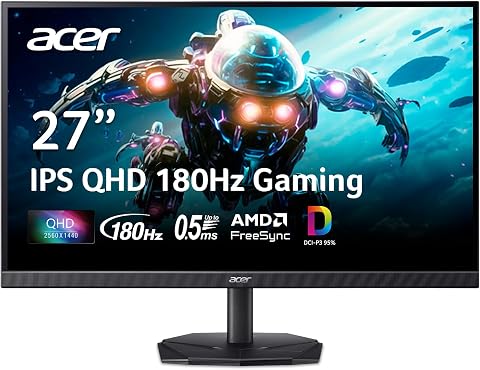 Acer Nitro KG271U 27-Inch QHD IPS Gaming Monitor, 180HzView on Amazon →
- 9
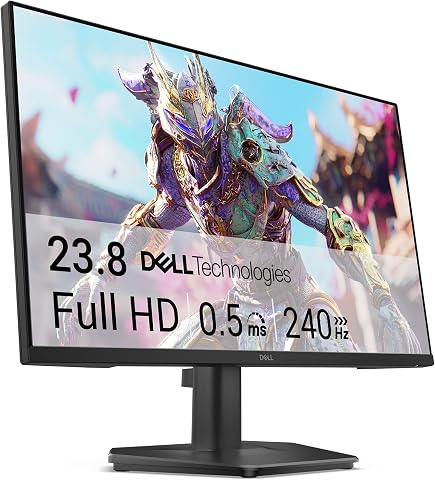 Dell 24 240Hz Gaming Monitor – SE2426HG – 23.8-inch FHD (1920×1080) 240Hz Dis…View on Amazon →
- 10
 Sceptre E225W-FW144 22-Inch FHD 144Hz Gaming MonitorView on Amazon →
Choosing Speed That Your PC Can Use
The buying decision matters because a monitor’s maximum refresh rate is useful only when the game and computer can deliver a high enough frame rate. A 240Hz display may suit players running less demanding or competitive games at high frame rates, while a system that falls well below that level may not make full use of the screen’s stated capability.
Resolution brings a related tradeoff. QHD provides more detail than Full HD, but rendering games at that resolution generally places more demand on graphics hardware. The guide’s range of 240Hz, 180Hz and 144Hz choices gives buyers alternatives rather than suggesting that one specification fits every system. It does not establish measured response-time or motion-clarity results, so the listed refresh rates should not be read as a complete assessment of responsiveness.
Popular right now

De'Longhi La Specialista Opera Espresso Machine with Coffee Grinder

Vitamix Touch & Go Advance 32-Ounce Bar Blender, White

Shark HydroVac Reveal Cordless Wet-Dry Vacuum and Mop, Lilac, WD321
As an affiliate, we earn on qualifying purchases.
How the 10 Models Differ
The guide organizes its picks around common gaming setups: QHD at 27 inches for a balance of detail and speed, Full HD at 240Hz for frame-rate-focused play, and 180Hz QHD for buyers who do not require a 240Hz maximum. Its curved and ultrawide choices serve different preferences for screen shape and horizontal space; the compact 144Hz model offers a smaller-screen alternative.
Those formats involve practical compromises. The guide notes that an ultrawide’s aspect ratio may not be supported consistently across games, and a larger display needs suitable desk space and viewing distance. It also cautions that advertised maximum refresh rates can depend on the connection and resolution in use. No independent benchmarks or detailed testing methodology are included in the supplied source material, so its rankings are best understood as the publisher’s buying assessment.
“A high refresh rate matters most when a gaming PC or console can deliver enough frames, while resolution affects clarity and the load placed on the graphics card.”
— ThorstenMeyerAI.com buying guide
What the Guide Does Not Establish
The source material does not state when the guide was published, whether the listed models are currently available, or what they cost. It also does not provide independent measurements comparing response times, input lag, motion clarity, brightness or color performance. The ranking is attributed to the guide’s own criteria and should not be treated as a lab-tested verdict.
Exact connectivity, supported refresh rates at particular resolutions, adaptive-sync compatibility and stand features are not supplied for every model. Buyers should check the manufacturer’s specifications for the specific product and configuration. It is also unclear which graphics cards or game settings the guide assumes when describing frame-rate suitability.
Checks Before Choosing a Monitor
The guide offers no announced follow-up or testing schedule. For buyers, the next step is to compare the exact model specifications with their computer or console, the games they play and their desk setup. Confirm the connection needed to reach the advertised refresh rate at the intended resolution, and check current price, availability, return terms and independent measurements before purchasing.
Players should also compare expected in-game frame rates with the monitor’s refresh rate. That check can help determine whether a 240Hz model, a 180Hz QHD option or a lower-refresh compact display best matches the system, without assuming that the largest number on the box guarantees a more responsive experience.
Key Questions
Does a 240Hz monitor automatically make games feel more responsive?
No. The guide says the computer and game must deliver enough frames to use a high refresh rate. It does not provide test results showing that every 240Hz model feels more responsive than lower-refresh alternatives.
Which monitor does the guide rank first?
ThorstenMeyerAI.com names the Acer Nitro XV272U W2bmiiprx its strongest all-around pick, citing a 27-inch QHD IPS display and 240Hz refresh rate. That ranking reflects the publisher’s stated assessment, not an independent lab comparison.
Should I choose QHD or Full HD?
The guide frames this as a tradeoff between detail and graphics-card demand. QHD offers more resolution, while Full HD can be a practical choice for systems focused on high frame rates. The best fit depends on the games, hardware and screen size.
What should I verify before buying one of these monitors?
Check the exact model’s price, availability, connection requirements and supported refresh rate at your chosen resolution. The guide also advises checking stand adjustments and adaptive-sync support, which are not established for every model in its list.
Source: ThorstenMeyerAI.com