

📊 Full opportunity report: The Neocloud Cartel: How the AI Industry Started Renting Compute From Itself on ThorstenMeyerAI.com — validation score, market gap, and execution plan.
TL;DR
The AI industry increasingly rents compute from a small, interconnected cartel led by Nvidia, with companies like xAI, Anthropic, and OpenAI now leasing hardware instead of owning it. This shift creates a power concentration that could be fragile.
In 2026, the AI industry has shifted toward a model where companies do not own their hardware but instead lease compute from a small, interconnected cartel of GPU providers and financiers. This development marks a significant change in how AI infrastructure is controlled, with Nvidia at the center of the network.
The core of this shift is the rise of the ‘neocloud’—a category of AI-focused hyperscalers that rent GPU resources without owning legacy cloud infrastructure. Major players like CoreWeave, Meta, and OpenAI have contracts worth tens of billions of dollars, all relying on Nvidia hardware.
In May 2026, xAI leased its supercomputer to competitors Anthropic and Google, paying over $26 billion annually, despite sitting at only 11% utilization. This move signals that AI firms are increasingly acting as landlords, renting out their capacity rather than owning it outright.
Financial flows reveal a circular pattern: Nvidia has invested heavily in many of these firms, including a $100 billion commitment to OpenAI, and holds equity stakes in multiple companies. The funding structure effectively concentrates control in a handful of firms, with Nvidia’s role as the primary gatekeeper of GPU supply giving it outsized influence over the entire ecosystem.
The Neocloud Cartel
Almost no one racing to build AI owns the machine it runs on. They rent — increasingly from each other — and the money loops back to one chip maker that’s also an investor in nearly everyone at the table.
The cartel isn’t a conspiracy — it’s the endpoint of extreme capital intensity, real scarcity, and one dominant supplier. But the same circularity that makes it powerful makes it a fuse: each cancelled order is someone else’s missing revenue. Don’t be a price-taker at the bottom of a loop you don’t control — own your inference, keep an open-weight fallback, diversify silicon.
Implications of the AI Hardware Rental Cartel
This emerging cartel centralizes power among a few firms, notably Nvidia, which controls GPU supply and financing. Such concentration could lead to increased market leverage, pricing power, and potential fragility if supply chains or relationships break down. It also shifts the industry from ownership to rent-based access, affecting innovation, competition, and strategic independence of AI labs.

Linux Hardware Mastery: Drivers, Firmware, GPUs, Wi-Fi, and Making Any PC Work (The Modern Linux Mastery Series)
As an affiliate, we earn on qualifying purchases.
As an affiliate, we earn on qualifying purchases.
Rise of the AI Compute Rental Model
Over the past three years, the AI industry has transitioned from owning hardware to leasing compute resources from specialized providers. The GPU shortage of 2024–25 accelerated this trend, pushing firms to rent instead of build their own infrastructure. Major investments from companies like Meta, OpenAI, and others have cemented this model, with Nvidia emerging as the dominant supplier and financier.
In 2026, this pattern deepened as firms like xAI began leasing their supercomputers to rivals, blurring the lines between supplier and customer. The circular financing and leasing arrangements have created a tightly knit network that concentrates control over AI compute resources.
“A gigawatt of AI data center capacity costs roughly $50 billion, with Nvidia capturing the majority of that value.”
— Jensen Huang, Nvidia CEO
AI hardware leasing services
As an affiliate, we earn on qualifying purchases.
As an affiliate, we earn on qualifying purchases.
What Risks and Instabilities Exist in the Cartel Model
It remains unclear how fragile this tightly interconnected cartel will prove if supply chains are disrupted or if regulatory pressures increase. The dependence on Nvidia’s hardware and financing could pose risks if relationships sour or if Nvidia’s supply is constrained further.
Additionally, the long-term sustainability of a rent-based model versus ownership is still uncertain, especially as AI firms seek more independence and control.
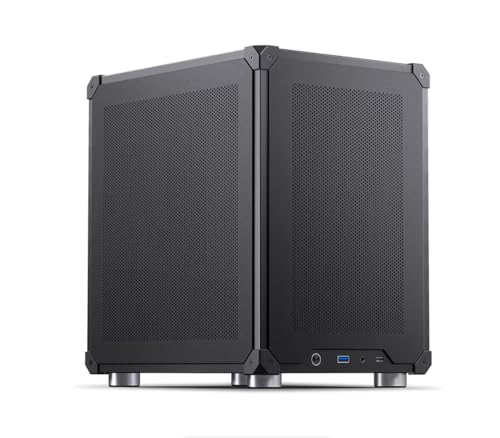
Compact Local AI Server, AI Mini PC,Serve Local LLM Models Right Out of Box, 30+ Tokens/Second, Pre-Installed Ubuntu Linux, Qwen3, LLama3, RAG, OCR, vLLM, TensorRT LLM, NVIDIA RTX 5060 Ti (16GB)
Based on Ubuntu 24.0 Linux, This local AI server is ready to Serve Local LLM Models directly out…
As an affiliate, we earn on qualifying purchases.
As an affiliate, we earn on qualifying purchases.
Potential Developments and Industry Responses
Next steps include monitoring whether other chipmakers or cloud providers challenge Nvidia’s dominance, and whether AI firms attempt to diversify their supply sources. Regulatory scrutiny may also increase if the concentration of control raises antitrust concerns. Further, the industry might see innovation in alternative hardware or leasing models to reduce reliance on a small group of suppliers.

AI Data Center Infrastructure Engineering: Power Distribution, Liquid Cooling, High-Density Networking, and Energy Efficiency for GPU Training … Hardware & Compiler Engineering Series)
As an affiliate, we earn on qualifying purchases.
As an affiliate, we earn on qualifying purchases.
Key Questions
Why are AI companies renting compute instead of owning hardware?
Due to supply shortages and the high costs of building infrastructure, many companies find it more feasible to rent compute resources from specialized providers, allowing faster scaling and flexibility.
What role does Nvidia play in this emerging cartel?
Nvidia is the primary supplier of GPUs, invests heavily in key firms, and controls chip allocation, giving it significant influence over the AI compute market.
Could this cartel structure lead to market manipulation?
The concentration of control could enable price setting or supply restrictions, raising concerns about monopolistic practices, though regulatory responses are still uncertain.
Is this model sustainable long-term?
It is unclear whether the rent-based, cartel-like structure can endure without disruption, especially if AI firms seek more independence or if supply chains face shocks.
What might disrupt this current arrangement?
Potential disruptions include regulatory crackdowns, technological breakthroughs reducing hardware dependence, or new entrants offering alternative supply chains.
Source: ThorstenMeyerAI.com