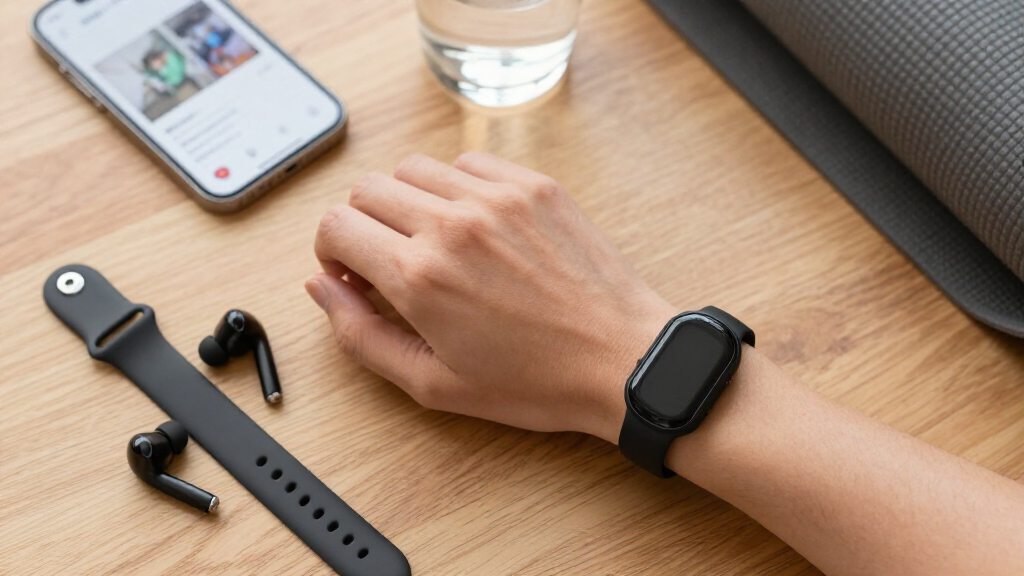
Wearable health tech devices now span everything from screenless bracelets under $40 to clinical-grade smart rings, and the right pick depends on whether you want passive 24/7 monitoring, a visible display, or medical-style metrics like ECG. The Oura Ring 5 earns my best overall spot for combining discreet all-day wear with the most detailed sleep and recovery data in this lineup, while the Withings ScanWatch 2 stands out for buyers who want a classic watch face with genuine heart-health features, and the WHOOP 5.0 wins for serious training load tracking. The main tradeoff you’ll face is subscription cost versus upfront price, followed closely by screen versus no screen. Cheaper trackers promise blood pressure and HRV readings, but accuracy at that price tier is a real gamble. Keep reading for the full breakdown of all 11 devices.
Complete the kit


Key Takeaways
- Smart rings (Oura Ring 5, RingConn Gen 2 Air) dominated sleep and recovery accuracy, but only Oura and WHOOP lock their best insights behind monthly memberships.
- Every sub-$50 tracker in this lineup (FITVII, Zeacool, the generic smart bracelet) advertised blood pressure monitoring, but none of them are validated medical devices — treat those readings as trends, not diagnoses.
- Screenless designs (FITVII Screenless, the no-screen smart bracelet, WHOOP 5.0) consistently delivered the longest battery life, ranging from 14 days to 60 days per charge.
- The Withings ScanWatch 2 was the only device here with FDA-cleared ECG capability, making it the clear choice for heart-rhythm concerns rather than general fitness.
- Battery life and data depth proved to be the core tradeoff: the more metrics a device captures per night, the more often it needs charging — the Oura Ring 5 sacrifices a screen entirely to buy its accuracy.
| Oura Ring 5 Smart Ring – Silver – Size 10 |  | Best Overall Health Tracker | Material: Titanium | Size: 10 (Silver) | Battery Life: 6–9 days | VIEW LATEST PRICE | See Our Full Breakdown |
| Withings ScanWatch 2 – Hybrid Smart Watch |  | Best Premium Smartwatch Pick | Battery Life: Up to 35 days | Health Monitoring: ECG, heart rate, sleep, activity | Compatibility: Android and iOS | VIEW LATEST PRICE | See Our Full Breakdown |
| FITVII Screenless Fitness Tracker for Women and Men |  | Best Budget Screenless Option | Display: None (screenless) | Battery Life: 3–5 days normal use; 1–3 days with sports modes | Waterproof Rating: IP68 | VIEW LATEST PRICE | See Our Full Breakdown |
| Smart Bracelet Fitness Tracker with 170+ Sports Modes and 60-Day Battery Life |  | Best Battery Life | Battery Life: Up to 60 days | Charging Time: 1.5 hours | Sports Modes: 170+ | VIEW LATEST PRICE | See Our Full Breakdown |
| Zeacool Fitness Tracker with AMOLED Display |  | Best Display for the Price | Display: 1.10-inch AMOLED HD touchscreen | Battery Life: 10–14 days regular use; 30 days standby | Water Resistance: 5 ATM | VIEW LATEST PRICE | See Our Full Breakdown |
| FITVII Slim Fitness Tracker for Women and Men |  | Best Budget All-Rounder | Display: 1.47″ HD touch screen | Health Monitoring: Heart rate, blood oxygen, blood pressure, sleep | Compatibility: Android 7.0+, iOS 13.0+ | VIEW LATEST PRICE | See Our Full Breakdown |
| Screenless Health Fitness Tracker for Men Women |  | Best Distraction-Free Tracker | Display: None (app-based) | Monitoring: Heart rate, HRV, blood pressure, blood oxygen, stress | Sleep Tracking: Light, deep, and REM stages | VIEW LATEST PRICE | See Our Full Breakdown |
| Smart Ring for Women and Men, Sleep Tracker, 12 Sports Modes |  | Best Entry-Level Smart Ring | Size: 10 | Weight: 3.8g | Metrics: Heart rate, blood oxygen, sleep, activity, stress, menstrual cycle | VIEW LATEST PRICE | See Our Full Breakdown |
| WHOOP 5.0/MG Activity Tracker with 12-Month Membership |  | Best for Serious Recovery Tracking | Device Type: Screenless wrist band | Battery Life: 14+ days | Membership: 12 months included | VIEW LATEST PRICE | See Our Full Breakdown |
| Smart Watch Fitness Tracker with Heart Rate, Blood Oxygen, Blood Pressure, Sleep Monitoring |  | Best Feature-Rich Display Pick | Display: 1.58-inch high-resolution | Health Monitoring: Heart rate, blood pressure, blood oxygen, sleep stages | Exercise Modes: 120+ | VIEW LATEST PRICE | See Our Full Breakdown |
| RingConn Gen 2 Air Ultra-Thin Smart Ring (Size 10, Galaxy Silver) |  | Best Ring for Battery Life | Weight: 2.5 g | Material: Titanium, Silicone | Water Resistance: IP68, up to 100 m / 328 ft | VIEW LATEST PRICE | See Our Full Breakdown |
| wearable health tech device | Battery Life | Compatibility |
|---|---|---|
| Oura Ring 5 Smart Ring | 6–9 days | — |
| Withings ScanWatch 2 | Up to 35 days | Android and iOS |
| FITVII Screenless Fitness Trac | 3–5 days normal use; 1–3 days with sports modes | Android 7 / iOS 13.0+, Bluetooth 5.0 |
| Smart Bracelet Fitness Tracker | Up to 60 days | iOS and Android |
| Zeacool Fitness Tracker with A | 10–14 days regular use; 30 days standby | iPhone and Android |
| FITVII Slim Fitness Tracker fo | — | Android 7.0+, iOS 13.0+ |
| Screenless Health Fitness Trac | 25-30 days | Android 5.0+, iOS 10.0+ |
| Smart Ring for Women and Men | 3-5 days | Android 5.1+, iOS 9.0+ |
| WHOOP 5.0/MG Activity Tracker | 14+ days | — |
| Smart Watch Fitness Tracker wi | — | Android 4.4+, iOS 8.4+ |
| RingConn Gen 2 Air Ultra-Thin | Up to 10 days | — |
More Details on Our Top Picks
Oura Ring 5 Smart Ring – Silver – Size 10
Among every wearable here, the Oura Ring 5 delivers the most complete health picture in the least intrusive form. Tracking over 50 metrics with research-grade accuracy, it outclasses the FITVII and Zeacool trackers on data depth, while its titanium build makes the plastic-band options feel like toys. The 6–9 day battery easily beats any screen-equipped rival, though it falls short of the screenless 60-day bracelet. The real tradeoff is cost: after the first month, a $5.99/month membership is required to unlock insights, and buyers must order a separate sizing kit — this is not a grab-and-go purchase like the FITVII. For buyers who want sleep, recovery, and long-term trends rather than glanceable stats, this pick makes the most sense.
Pros:- Research-grade tracking of 50+ health metrics
- Ultra-light titanium design comfortable for 24/7 wear
- 6–9 day battery life far exceeds most smartwatches
- Integrates with 40+ health apps and is HSA/FSA eligible
Cons:- Requires a $5.99/month membership after the first month
- Separate sizing kit needed before purchase; non-standard sizing
Best for: Health-focused buyers who want deep sleep and recovery analytics in a discreet, jewelry-like form and don’t mind a subscription
Not ideal for: Budget-conscious or casual users — the upfront price plus ongoing membership and sizing-kit process adds up quickly
- Material:Titanium
- Size:10 (Silver)
- Battery Life:6–9 days
- Health Metrics:50+
- Connectivity:App integration with 40+ apps
- Membership:First month included, $5.99/month after
- HSA/FSA Eligible:Yes
Our verdict“The best choice for serious wellness tracking if you’re willing to pay recurring fees for the deepest data set in the lineup.”
Withings ScanWatch 2 – Hybrid Smart Watch
The ScanWatch 2 takes a different philosophy than everything else here: analog hands on the outside, serious medical-adjacent tech inside. It’s the only device in this batch with a built-in ECG, something even the Oura Ring 5 can’t do, plus VO₂ max and cycle tracking. Its 35-day battery demolishes the Zeacool’s 10–14 days and makes nightly charging a non-issue. Compared with the Oura, this model suits buyers who want a traditional watch aesthetic plus a small display for glanceable data. The compromise is the hybrid design itself — there’s no full touchscreen interface, so detailed insights live entirely in the app, and customization trails true smartwatches. You’re paying premium money for stainless steel and sapphire glass rather than raw feature count.
Pros:- Built-in ECG alongside heart rate, sleep, and activity tracking
- Exceptional 35-day battery life
- Premium stainless steel case with sapphire glass
- Full compatibility with both Android and iOS
Cons:- Hybrid design lacks full smartwatch features and customization
- Detailed insights require navigating the companion app
Best for: Professionals who want a classic-looking watch with medical-grade ECG and heart monitoring without smartwatch charging anxiety
Not ideal for: Tech-forward users who expect app notifications, customizable watch faces, and full smartwatch functionality on the wrist
- Battery Life:Up to 35 days
- Health Monitoring:ECG, heart rate, sleep, activity
- Compatibility:Android and iOS
- Materials:Stainless steel case, sapphire glass
- Features:Cycle tracker, sleep monitoring, GPS, VO₂ max, sports modes
Our verdict“The pick for buyers who prioritize battery life, ECG capability, and a dress-watch look over smartwatch versatility.”
FITVII Screenless Fitness Tracker for Women and Men
For buyers dipping a toe into health tracking without a big spend, the FITVII screenless tracker covers the essentials: heart rate, blood pressure, blood oxygen, sleep, steps, and calories — with no subscription, unlike the Oura Ring 5. Its no-display design means zero distraction and a slimmer profile than the Zeacool, appealing to anyone who found smartwatches annoying. Compared with the 60-day battery bracelet, its 3–5 day runtime looks weak, but the FITVII wins on simplicity and included S/L strap options for a secure fit. The obvious tradeoff is that you can’t check anything on your wrist — every data point requires opening the app. And like all budget trackers here, its readings are wellness-oriented, not medically validated the way the Withings ScanWatch 2’s ECG is.
Pros:- No subscription fees for full health tracking
- Discreet, slim design with adjustable S and L straps
- IP68 waterproof for everyday activities
- Covers heart rate, blood pressure, SpO₂, sleep, and steps
Cons:- No display means all data checking happens in the app
- Battery drops to 1–3 days when sports modes are active
- Not suitable for medical use
Best for: Budget buyers who want discreet, subscription-free 24/7 monitoring and don’t need to see data on their wrist
Not ideal for: Anyone who wants instant stats glanceably, or medical-grade accuracy — the screenless design and consumer sensors won’t deliver either
- Display:None (screenless)
- Battery Life:3–5 days normal use; 1–3 days with sports modes
- Waterproof Rating:IP68
- Compatibility:Android 7 / iOS 13.0+, Bluetooth 5.0
- Bands Included:S and L adjustable straps
- Tracking:Heart rate, blood pressure, blood oxygen, sleep, steps, calories, distance
Our verdict“A low-commitment entry point for background health tracking, as long as you’re comfortable reading everything on your phone.”
Smart Bracelet Fitness Tracker with 170+ Sports Modes and 60-Day Battery Life
Nothing else in this roundup comes close on endurance: this screenless bracelet runs for up to 60 days per charge — roughly ten times the FITVII and four times the Zeacool. That makes it the natural choice for people who hate charging, whether that’s a forgetful teen, an older parent, or a frequent traveler. It also monitors more than you’d expect at this price, adding HRV and stress tracking on top of the standard heart rate, blood pressure, and SpO₂ spread, plus an eye-popping 170+ sport modes. The catches mirror other screenless picks: no on-wrist interaction, full dependence on the free QWatch Pro app, and consumer-grade sensors that aren’t diagnostic tools. If the Oura Ring 5 is the analyst’s choice, this is the set-it-and-forget-it option.
Pros:- Up to 60 days of battery life, best in this roundup
- 170+ sports modes for versatile activity logging
- Continuous HRV, stress, sleep-stage, and vitals monitoring
- IP68 + 1ATM water resistance good to 10 meters
Cons:- No screen limits any on-the-wrist interaction
- Requires the QWatch Pro app for nearly all functionality
- Not intended for medical diagnosis
Best for: Anyone who wants zero-maintenance continuous monitoring — travelers, elderly relatives, or anyone tired of weekly charging
Not ideal for: Data-driven athletes who want real-time pace and heart readings mid-workout — screenless designs can’t show them
- Battery Life:Up to 60 days
- Charging Time:1.5 hours
- Sports Modes:170+
- Water Resistance:IP68 + 1ATM (up to 10 meters)
- Compatibility:iOS and Android
- Weight:0.05–0.06 lbs
- Tracking:Heart rate, blood pressure, SpO₂, HRV, stress, sleep stages
Our verdict“The clear winner on charging frequency and sensor breadth for the price, provided a screenless experience works for you.”
Zeacool Fitness Tracker with AMOLED Display
If the screenless FITVII and 60-day bracelet leave you feeling blind, the Zeacool is the affordable antidote. Its 1.10-inch AMOLED touchscreen is brighter and sharper than typical budget trackers, putting real-time heart rate, SpO₂, and sleep data actually on your wrist — something only the Withings ScanWatch 2 also offers here, at several times the price. Battery life lands in the middle at 10–14 days: far better than the FITVII’s 3–5 days, well short of the screenless bracelet’s 60. It adds conveniences the others skip, like temperature monitoring, remote camera control, and weather display, and its 5 ATM rating handles swimming and showers. The downsides: no built-in GPS (you’ll carry your phone), and the feature list can overwhelm first-timers who just want step counts.
Pros:- Bright 1.10-inch AMOLED touchscreen with customizable faces
- 5 ATM waterproofing suitable for swimming and showering
- 10–14 day battery with fast magnetic charging
- Broad tracking: heart rate, SpO₂, blood pressure, sleep, temperature
Cons:- No built-in GPS; depends on phone connection
- Feature-dense interface can overwhelm casual users
- Requires the app to unlock full functionality
Best for: First-time tracker buyers who want a vivid screen, swim-proofing, and long battery without premium pricing
Not ideal for: Runners and cyclists who need standalone GPS — this relies entirely on a connected phone
- Display:1.10-inch AMOLED HD touchscreen
- Battery Life:10–14 days regular use; 30 days standby
- Water Resistance:5 ATM
- Sport Modes:25
- Compatibility:iPhone and Android
- Features:Heart rate, SpO₂, blood pressure, sleep, temperature tracking, remote photography, weather, reminders
Our verdict“The best budget pick if you insist on seeing your stats on-wrist — just pair it with your phone for workouts.”
FITVII Slim Fitness Tracker for Women and Men
The FITVII Slim covers the full basics — heart rate, blood oxygen, sleep, and blood pressure tracking — at a price point where most competitors force you to choose just one or two metrics. Compared with the generic Smart Watch Fitness Tracker with 120 Sports Modes, it trades a smaller 1.47-inch display and fewer workout modes for a slimmer, less imposing profile that suits smaller wrists. There are no subscription fees, which immediately separates it from the WHOOP 5.0 and its mandatory 12-month membership. The tradeoff is transparency: battery life is unspecified, and there’s no stated water resistance rating, so swimmers and anyone who wants predictable charging should look elsewhere. This pick makes the most sense for casual users who want a full health dashboard without recurring costs.
Pros:- Full health suite including blood pressure and blood oxygen at a low price
- Over 100 customizable watch faces for personalization
- No subscription fees for any features
- Real-time call and message notifications on a crisp 1.47-inch screen
Cons:- Battery life is not specified by the manufacturer
- No stated waterproof rating, limiting confidence around water exposure
Best for: Budget-conscious buyers who want multi-metric health tracking with zero subscription costs
Not ideal for: Swimmers and athletes who need a verified waterproof rating and confirmed battery life
- Display:1.47″ HD touch screen
- Health Monitoring:Heart rate, blood oxygen, blood pressure, sleep
- Compatibility:Android 7.0+, iOS 13.0+
- Connectivity:Bluetooth 5.2
- Watch Faces:100+ customizable styles
- App:FitCloudPro
- Subscription:None required
Our verdict“A low-cost, no-subscription health tracker that covers every core metric for casual users who don’t need verified water resistance.”
Screenless Health Fitness Tracker for Men Women
Going screenless is a genuine design decision here, not a cost cut. By removing the display, this tracker stretches battery life to 25-30 days per charge — roughly double the already-impressive WHOOP 5.0 — and eliminates the constant wrist-glancing that makes smartwatches distracting. Unlike the FITVII Slim, it carries a confirmed IP68 rating, so showering and sweaty workouts pose no risk. The tradeoff is obvious: every data point lives in the companion app, so anyone who wants to glance at their heart rate mid-run will find this frustrating. Health coverage is broad, spanning HRV, stress, blood pressure, and REM sleep stages, which is more analytical depth than most display-equipped budget trackers offer. This option stands out for users who want their health data passively collected in the background rather than constantly displayed.
Pros:- 25-30 day battery life, among the longest in this roundup
- IP68 waterproofing with a featherlight 18g build
- Deep metrics including HRV, stress, and full sleep staging
- 170+ sports modes covering nearly every activity type
Cons:- No screen means all data viewing requires the phone app
- Health readings are wellness estimates, not medical-grade data
Best for: Health-focused users who want continuous background monitoring and month-long battery without screen distractions
Not ideal for: Runners and gym-goers who want to check pace, heart rate, or notifications on their wrist mid-workout
- Display:None (app-based)
- Monitoring:Heart rate, HRV, blood pressure, blood oxygen, stress
- Sleep Tracking:Light, deep, and REM stages
- Sports Modes:170+
- Water Resistance:IP68
- Battery Life:25-30 days
- Weight:18g
- Compatibility:Android 5.0+, iOS 10.0+
Our verdict“The strongest choice for set-it-and-forget-it health monitoring, provided you’re comfortable checking the app instead of your wrist.”
Smart Ring for Women and Men, Sleep Tracker, 12 Sports Modes
At a fraction of the Oura Ring 5‘s price, this ring delivers the core sleep-and-recovery experience in the same discreet form factor: heart rate, blood oxygen, sleep, stress, and menstrual tracking packed into a 3.8g titanium-smooth band. Compared with the RingConn Gen 2 Air, it adds gesture controls for hands-free phone operations — a genuine convenience the bigger ring brands skip — and includes a portable charging case for topping up on the road. The compromises are real, though. Battery life of 3-5 days trails the RingConn noticeably, and the fixed size 10 means anyone who hasn’t measured carefully is gambling on fit, since rings can’t be adjusted like a watch strap. Sensor accuracy also won’t match Oura’s years of algorithm refinement. This model is better suited to first-time ring buyers testing the form factor before committing to a premium option.
Pros:- Ultra-discreet 3.8g design comfortable for sleep tracking
- Gesture controls for hands-free phone camera and control
- IP68 waterproofing safe for handwashing and workouts
- Includes a portable charging case
Cons:- Only available in size 10, with no adjustability if fit is wrong
- 3-5 day battery life lags competing smart rings
- All features depend on reliable app connectivity
Best for: Curious first-time smart ring buyers who want to sample the form factor without Oura-level pricing
Not ideal for: Buyers with ring sizes far from 10, or anyone wanting premium-grade sensor accuracy and analytics
- Size:10
- Weight:3.8g
- Metrics:Heart rate, blood oxygen, sleep, activity, stress, menstrual cycle
- Battery Life:3-5 days
- Waterproof Rating:IP68
- Sports Modes:12
- Compatibility:Android 5.1+, iOS 9.0+
Our verdict“A low-risk way to try smart ring health tracking, provided size 10 fits and premium analytics aren’t the priority.”
WHOOP 5.0/MG Activity Tracker with 12-Month Membership
The WHOOP 5.0 plays a different game than everything else here: it’s a coaching and recovery platform that happens to include a sensor band. On-device capabilities like on-demand ECG, blood pressure insights, and adaptive daily coaching go beyond what the FITVII trackers or the screenless bracelet attempt, and its recovery scoring is the reason athletes keep paying for it. Compared with the Screenless Health Fitness Tracker, WHOOP’s 14+ day battery is shorter, but its analytics engine is in a different league, with integrations into Strava, Apple Health, and Natural Cycles. The structural tradeoff is the mandatory 12-month membership — the hardware is effectively useless without it, and the total cost of ownership far exceeds any ring or watch in this lineup. There’s also no display, so this is purely a data-harvesting device. This pick makes the most sense for dedicated athletes who will actually act on recovery data.
Pros:- On-demand ECG and blood pressure insights rare in wearables
- Personalized coaching that adapts to strain and recovery
- 14+ day battery life with waterproof construction
- Integrates with Strava, Apple Health, and Google Health Connect
Cons:- Requires a 12-month membership; hardware is non-functional without it
- No display, so all feedback comes through the app
- Total cost of ownership is the highest in this roundup
Best for: Competitive athletes and data-driven optimizers who want medical-adjacent insights and daily recovery coaching
Not ideal for: Casual users or anyone unwilling to pay an ongoing membership — the device is locked without it
- Device Type:Screenless wrist band
- Battery Life:14+ days
- Membership:12 months included
- Key Features:On-demand ECG, blood pressure insights, heart rate, menstrual insights, coaching
- Waterproof:Yes
- Integrations:Apple Health, Google Health Connect, Strava, Natural Cycles
Our verdict“The most powerful recovery-tracking ecosystem in the lineup, but only worth it if you’ll commit to the membership and use the coaching.”
Smart Watch Fitness Tracker with Heart Rate, Blood Oxygen, Blood Pressure, Sleep Monitoring
If you want everything visible on your wrist, this tracker’s 1.58-inch high-resolution display is the largest and sharpest screen in this batch, and its 250+ watch faces dwarf the FITVII Slim’s 100. The health stack matches the FITVII — heart rate, blood pressure, blood oxygen, and sleep staging — while 120+ sports modes and a confirmed IP68 rating push it ahead for workout variety and water confidence. Compared with the screenless bracelet, you gain instant data access but sacrifice that model’s month-long battery; the unspecified runtime here means charging frequency is a gamble. Beginners may also find the sheer menu depth overwhelming — this is a device that rewards tinkering. With a washable, replaceable strap and wide compatibility dating back to Android 4.4 and iOS 8.4, it suits owners of older phones that newer trackers abandon.
Pros:- Largest display in this batch with over 250 watch faces
- Full health monitoring including blood pressure and blood oxygen
- 120+ exercise modes with a confirmed IP68 rating
- Compatible with very old Android 4.4 and iOS 8.4 devices
Cons:- Battery life is not specified by the manufacturer
- Feature-dense interface can overwhelm first-time tracker users
- Depends on a phone connection for GPS and notifications
Best for: Feature-hungry buyers with older phones who want a big screen, on-wrist notifications, and workout variety
Not ideal for: Minimalists who want simple metrics and predictable battery life — the interface depth and unspecified runtime will frustrate
- Display:1.58-inch high-resolution
- Health Monitoring:Heart rate, blood pressure, blood oxygen, sleep stages
- Exercise Modes:120+
- Waterproof Rating:IP68
- Watch Faces:250+
- Compatibility:Android 4.4+, iOS 8.4+
- Strap:Replaceable and washable with secure clasp
Our verdict“The most screen real estate and customization for the price — ideal for tinkerers on older phones, less so for anyone who values simplicity.”
RingConn Gen 2 Air Ultra-Thin Smart Ring (Size 10, Galaxy Silver)
This option stands out for solving the single biggest frustration smart ring buyers face: constant charging. Compared with the Oura Ring 5, which demands a recharge every few days, the Gen 2 Air’s 10-day battery life means health tracking actually stays continuous instead of developing gaps overnight. At 2.5 g with a 2mm titanium profile, it also disappears on the finger in a way no wrist wearable can match — a real advantage over the Withings ScanWatch 2 for sleep data quality, since rings sit closer to skin and don’t shift during the night.
The tradeoffs are real, though. There’s no built-in GPS, so runners who want route mapping should look to a watch instead, and there’s no screen at all — everything lives in the RingConn app. Sizing can also be fiddly, sometimes requiring an extra fitting kit before you commit.
Pros:- Up to 10 days of battery life beats most smart rings and every watch in this lineup
- Ultra-thin 2mm, 2.5g titanium build is barely noticeable during sleep
- IP68 waterproofing to 100 meters works for swimming and diving
- Covers sleep, heart rate, stress, blood oxygen, and menstrual tracking without a subscription
Cons:- No built-in GPS, so activity tracking lacks location and route data
- Requires smartphone app for setup and all data viewing
- Sizing may require an additional fitting kit for a proper fit
Best for: Sleep-focused buyers who want low-maintenance, screen-free health tracking with minimal charging hassle
Not ideal for: Runners and athletes who need on-wrist GPS route data or any glanceable display without pulling out their phone
- Weight:2.5 g
- Material:Titanium, Silicone
- Water Resistance:IP68, up to 100 m / 328 ft
- Battery Life:Up to 10 days
- Charging Time:90 minutes
- Connectivity:Bluetooth
- Health Features:Sleep, heart rate, stress, blood oxygen, menstrual cycle, multi-sport tracking
- GPS:No
Our verdict“This pick makes the most sense for buyers who prioritize effortless 24/7 sleep and recovery tracking above displays, GPS, or workout coaching.”
How We Picked
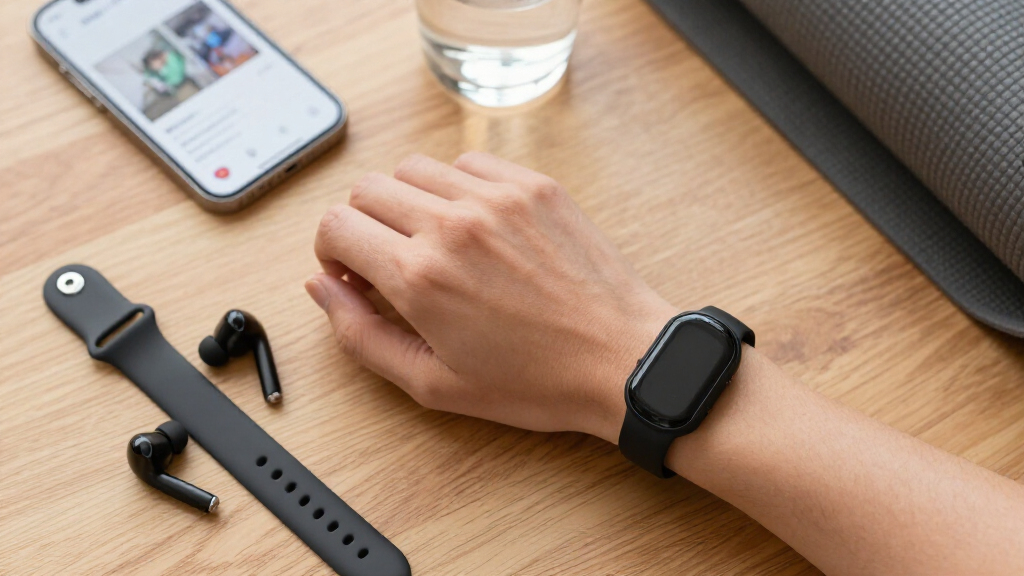
I ranked these 11 wearable health tech devices around four factors that actually change a buying decision: data accuracy and depth, wearing comfort and battery life, total cost of ownership including subscriptions, and how easy the companion app is to live with. Devices with validated sensors, published accuracy claims, or established reputations ranked higher than generic trackers that list impressive-sounding metrics without evidence behind them. Where two devices offered similar hardware, the one without a mandatory membership scored better on value.
That logic explains the ordering: clinically credible devices like the Oura Ring 5, Withings ScanWatch 2, and WHOOP 5.0 sit at the top despite higher prices, while budget screenless trackers fill the value tier. Generic smart bracelets landed lower not because they’re useless, but because their blood pressure and HRV claims can’t match the sensor quality of the established brands. Each pick was assigned a distinct role so the lineup covers every buyer type without two devices serving the same purpose.
Factors to Consider When Choosing Wearable Health Tech Devices
Before settling on a specific device, it helps to understand the bigger patterns across wearable health tech — the pricing traps, the accuracy gaps, and the design choices that determine whether a tracker stays on your wrist (or finger) past month three.
Sensor Accuracy: Why Price Usually Predicts Truthfulness
The single biggest mistake buyers make is assuming every tracker that lists a metric actually measures it well. Heart rate and step counting are reliable even on cheap devices, but blood pressure, HRV, and blood oxygen readings vary wildly by price tier. No consumer wearable is a validated blood pressure monitor — cuffs like actual FDA-cleared devices remain the only trustworthy option there, so any tracker advertising blood pressure should be read as a rough trend indicator at best. Premium devices like Oura and WHOOP publish their validation methodology and are used in research settings, which is why their recovery scores mean something. If a $35 bracelet and a $350 ring both claim HRV, ask which one you’d trust before making health decisions based on the number. Spending more here genuinely buys better sensors, not just a nicer brand name.
The Subscription Trap: Total Cost Over Two Years
Upfront price is only part of the math. Oura and WHOOP both gate their most useful insights behind memberships that can add $300 or more over two years, effectively doubling the cost of ownership. A $350 ring with a $6/month fee can end up pricier than a $450 watch that charges nothing extra. Before buying, check whether the features you actually want — sleep scores, recovery metrics, trend charts — are included or paywalled, because the free tiers often show raw data without the interpretation that makes it useful. Devices like the Withings ScanWatch 2 and RingConn Gen 2 Air include their core analytics with no recurring fee, which changes the value comparison entirely. My rule: calculate the two-year cost first, then compare devices on equal footing.
Form Factor: Ring, Watch, or Screenless Band?
The best sensor is worthless if you take the device off, so form factor drives long-term consistency more than any spec sheet. Rings win for sleep tracking because they’re comfortable all night and sit close to capillaries in the finger, but they can’t display anything and require a sizing kit step before purchase. Traditional smartwatches offer glanceable data and workout screens but get uncomfortable during sleep and need charging every few days. Screenless bands split the difference — lighter, longer battery life, and no distraction, at the cost of always needing your phone to see anything. Think honestly about when you’ll actually wear it: if you already remove your watch at night, a ring or screenless band will capture far more sleep data than a watch you take off.
Battery Life and Charging Habits
Battery life in this category runs from 4 days on a full-featured smartwatch to 60 days on a budget screenless bracelet, and the difference shapes your data continuity. A device that dies mid-sleep creates gaps in exactly the metrics you bought it for, and sleep tracking is the first casualty of nightly charging habits. Rings like the Oura 5 and RingConn Gen 2 Air last about a week, which most people can manage, while WHOOP’s 14+ days works well for athletes who charge around workouts. Frequent charging also degrades long-term compliance — trackers that demand attention twice a week tend to end up in a drawer by spring. Match the charging cadence to your personality, not your optimism.
Ecosystem Lock-In and Phone Compatibility
Health data only accumulates value over years, so where that data lives matters. Apple Watch users are locked to iOS, several budget trackers only sync fully with Android, and standalone ecosystems like Oura, WHOOP, and Withings export to Apple Health, Google Fit, and third-party apps. If you switch phone platforms every few years, a platform-neutral device protects your history. Also check whether the companion app requires account creation and whether your data can be exported at all — some generic bracelets store data in apps that vanish when the manufacturer stops supporting them. Established brands cost more partly because their software gets maintained. A cheap tracker with an abandoned app becomes e-waste within a year.
Who Should Skip Wearables Altogether
A honest caveat: if you have a diagnosed heart condition, suspected sleep apnea, or hypertension, a consumer wearable is a supplement to medical care, never a replacement. The Withings ScanWatch 2’s ECG can flag irregular rhythms worth discussing with a doctor, but no device here can diagnose anything. Buyers who experience health anxiety sometimes find that constant metric monitoring makes things worse — if seeing a low recovery score would ruin your day, a simpler step-counting band may serve you better than a full analytics suite. Wearables excel at spotting trends and motivating behavior change, not at replacing a blood pressure cuff, a sleep study, or a cardiologist. Buy for insight, not for diagnosis.
Frequently Asked Questions
Are smart rings actually better than watches for sleep tracking?
For most people, yes — but the advantage comes from comfort and sensor placement rather than raw technology. Rings sit on fingers where capillary blood flow gives a cleaner signal than the wrist, and because they’re barely noticeable at night, people wear them consistently, which matters more than any spec. Watches like the Withings ScanWatch 2 track sleep perfectly well, but a chunky watch face can disrupt sleep for side-sleepers, and watches that need nightly charging will miss sleep sessions entirely. In this lineup, the Oura Ring 5 and RingConn Gen 2 Air both outperform the wrist devices for sleep data continuity. If sleep is your primary reason for buying, lean ring; if you also want workout screens and notifications, a watch makes more sense.
Is WHOOP’s mandatory membership worth it?
It depends entirely on how you train. WHOOP’s strain, recovery, and sleep coach scores are genuinely useful for athletes managing training load, and the hardware is effectively subsidized by the membership — which is why the device itself feels affordable. The problem is that without the membership the device does almost nothing, so you’re committing to roughly $300+ per year indefinitely. If you’re a runner, lifter, or endurance athlete who adjusts training based on recovery data, the insights justify the cost better than any competitor’s. If you’re a casual walker who wants step counts and sleep times, the FITVII screenless tracker or the generic smart bracelet delivers 80% of the practical benefit for a one-time $35 payment. WHOOP is a tool for people who train with intent, not a general health purchase.
Can I trust the blood pressure readings on budget fitness trackers?
No wearable — budget or premium — is a validated blood pressure monitor right now. The sub-$50 trackers in this roundup like the Zeacool and the generic smart bracelet estimate blood pressure using pulse-wave analysis, which can drift substantially from cuff readings and isn’t calibrated to any medical standard. Treat those numbers as directional trends at best, and expect occasional readings that are simply wrong. If you have hypertension, a validated upper-arm cuff costs about the same as a budget tracker and gives readings your doctor can actually use. The value of cheap trackers lies in heart rate, steps, and sleep duration — the blood pressure feature is marketing filler more than medicine.
What’s the real difference between the Oura Ring 5 and cheaper smart rings?
Three things separate them: sensor validation, sleep science depth, and app quality. The Oura Ring 5’s sleep staging and readiness scores draw on years of research and a large user base, and its temperature trends are accurate enough that many people use them for cycle tracking and illness detection. Generic rings like the size-10 black smart ring in this lineup cover basics — sleep duration, heart rate, some sports modes — but their algorithms are unverified and their apps are typically basic. The catch is Oura’s ~$6/month membership for full insights, while the generic ring charges nothing after purchase. If you want health data you can act on and trust, Oura justifies the cost; if you just want to see roughly how you slept, the cheaper ring does that fine. RingConn’s Gen 2 Air splits the difference with no-membership analytics that outclass other budget rings.
Do screenless fitness trackers actually work, or do I need a display?
They work, and for some buyers they work better. Screenless devices like the FITVII screenless tracker and the no-screen smart bracelet shift all interaction to your phone, which means no notifications on your wrist — for people trying to reduce screen time, that’s the whole appeal. The design also enables dramatically longer battery life, up to 60 days on the budget bracelet here, and smaller, lighter hardware that disappears on your wrist. The tradeoff is immediacy: during a workout you can’t glance at your pace or heart rate zone without your phone. If you check stats once a day and mainly want passive 24/7 monitoring, screenless is arguably the smarter format. If you interval train or want on-wrist feedback, spring for a display.
Conclusion
After comparing all 11 devices, the right choice comes down to what kind of health data you’ll actually act on. Best overall goes to the Oura Ring 5, which pairs the most trustworthy sleep and recovery insights in the lineup with a form factor people actually wear around the clock. Best premium is the Withings ScanWatch 2 — its FDA-cleared ECG and timeless analog design justify the price for anyone focused on heart health who hates the look of plastic smartwatches. Best value is the FITVII Screenless Fitness Tracker, which covers heart rate, sleep, and activity competently for a fraction of what the big brands charge.
Best for beginners is the Zeacool Fitness Tracker, cheap and simple enough to test whether you’ll stick with health tracking before spending real money. Best for athletes is the WHOOP 5.0, provided the training-load insights justify its membership for you. Best for specific needs splits two ways: the RingConn Gen 2 Air for ring-style sleep tracking without a subscription, and the generic 60-day battery smart bracelet for anyone who refuses to charge a device weekly. Whatever you choose, buy for consistency — the device you forget you’re wearing is the one that will still be collecting useful data a year from now.