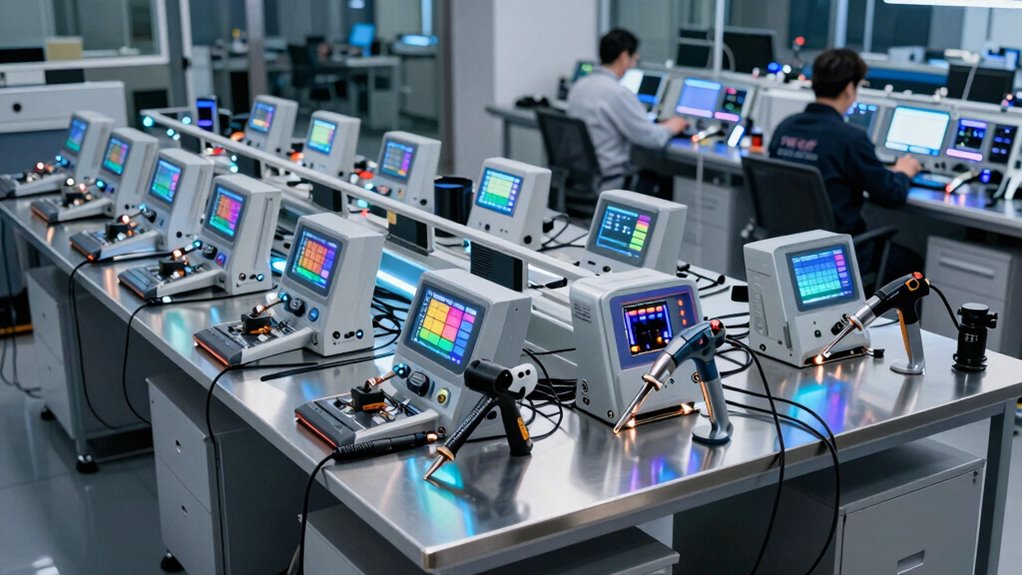

For a versatile bench setup, I’d start with the YIHUA 862BD+, which combines a soldering iron and hot air in one station. The YIHUA 948-II stands apart for buyers who want desoldering and suction functions, while the YIHUA 959D suits work centered on hot air. The main tradeoff is between an integrated station that saves bench space and a more specialized setup that may fit repeated jobs better. I also weigh controls, included accessories, and how many functions a buyer will actually use. Read on for the full comparison and guidance by work style.

Get the latest gadgets delivered free — and shop member deals
- Fast, free delivery on millions of items
- Access to Prime Big Deal Days deals on October 6–7
- Prime Video, Amazon Music and more included
Complete the kit



Key Takeaways
- The YIHUA 862BD+ is the roundup’s balanced starting point: it pairs soldering and hot air without adding the extra functions of the 948-II.
- The YIHUA 948-II is the most function-heavy option here, combining hot air, soldering, desoldering, and suction for buyers whose bench work needs all four.
- The YIHUA 959D is the focused choice for hot-air tasks; it does not replace a combined soldering and rework station.
- Several picks bundle soldering and hot air, including WEP’s 8786D-I SE and 882D, so buyers should compare controls, kit contents, and workspace fit rather than assume the same model name means the same package.
- The YIHUA 853D 2A adds a DC power supply and USB soldering capability, making it more suitable for electronics benches that need those functions alongside rework.
| YIHUA 862BD+ 2-in-1 Soldering and Hot Air Rework Station |  | Best Overall | Type: 2-in-1 soldering and hot air rework station | Soldering power: 75W | Soldering temperature range: 392–896°F | VIEW ON AMAZON | See Our Full Breakdown |
| WEP 8786D-I SE 2-in-1 Hot Air Rework and Soldering Iron Station Kit |  | Best for Temperature Control | Type: 2-in-1 hot air rework and soldering station | Soldering temperature range: 392–896°F | Hot air temperature range: 212–896°F | VIEW ON AMAZON | See Our Full Breakdown |
| Beaiguna 2-in-1 Soldering and Hot Air Rework Station Kit |  | Best Compact Pick | Type: 2-in-1 soldering and hot air rework station | Power: Up to 700W | Soldering iron temperature range: 392–896°F | VIEW ON AMAZON | See Our Full Breakdown |
| YIHUA 853D 2A USB Soldering and Hot Air Rework Station with DC Power Supply |  | Best for Electronics Bench Work | Soldering temperature range: 392–896°F | Hot air temperature range: 212–896°F | Maximum hot air volume: 120 L/min | VIEW ON AMAZON | See Our Full Breakdown |
| WEP 882D 2-in-1 Soldering Iron and Hot Air Rework Station Kit |  | Best for Simple Dual-Tool Setup | Type: 2-in-1 soldering iron and hot air rework station | Soldering iron temperature range: 392–896°F | Hot air temperature range: 212–896°F | VIEW ON AMAZON | See Our Full Breakdown |
| YIHUA 959D Digital Hot Air Rework Station |  | Best Dedicated Hot Air Pick | Temperature range: 212°F–932°F | Maximum temperature: 932°F | Airflow: Up to 120 L | VIEW ON AMAZON | See Our Full Breakdown |
| YIHUA 8786D I 2-in-1 Hot Air Rework and Soldering Iron Station with 10 Solder Tips and 4 Nozzles |  | Best Starter Kit | Functions: Soldering station and hot air rework station | Temperature control: PID precision program with fast compensation | Temperature units: °F / °C | VIEW ON AMAZON | See Our Full Breakdown |
| YIHUA 948-II 4-in-1 Hot Air Rework, Soldering, Desoldering, and Suction Station |  | Best for Desoldering Work | Desoldering station power: 75 W | Hot air rework station power: 650 W | Soldering station power: 60 W | VIEW ON AMAZON | See Our Full Breakdown |
| YIHUA 995D+ 2-in-1 Hot Air Rework and Soldering Iron Station |  | Best for Fine Temperature Control | Processor: Zilog dual-core microcomputer | Display: Large LCD | Temperature control: PID, cycles every 20 milliseconds | VIEW ON AMAZON | See Our Full Breakdown |
| WEP 992D+ 2-in-1 Soldering Iron and Hot Air Rework Station |  | Best for a Flexible Compact Bench | Soldering iron temperature range: 392°F–896°F (200°C–480°C) | Hot air temperature range: 212°F–896°F (100°C–480°C) | Maximum airflow: 120 L/min | VIEW ON AMAZON | See Our Full Breakdown |
| professional soldering rework station | Temperature control | Voltage | Hot air temperature range |
|---|---|---|---|
| YIHUA 862BD+ 2-in-1 Soldering | PID, dual-core microprocessor | — | — |
| WEP 8786D-I SE 2-in-1 Hot Air | PID stabilization | 110–127V | 212–896°F |
| Beaiguna 2-in-1 Soldering and | — | — | 212–896°F |
| YIHUA 853D 2A USB Soldering an | — | — | 212–896°F |
| WEP 882D 2-in-1 Soldering Iron | Built-in PID | 110–127V | 212–896°F |
| YIHUA 959D Digital Hot Air Rew | — | — | — |
| YIHUA 8786D I 2-in-1 Hot Air R | PID precision program with fast compensation | 110–127V | — |
| YIHUA 948-II 4-in-1 Hot Air Re | PID with digital temperature calibration | 110–127V | — |
| YIHUA 995D+ 2-in-1 Hot Air Rew | PID, cycles every 20 milliseconds | 110–127V, US-standard plug | — |
| WEP 992D+ 2-in-1 Soldering Iro | — | 110–127V | 212°F–896°F (100°C–480°C) |
More Details on Our Top Picks
YIHUA 862BD+ 2-in-1 Soldering and Hot Air Rework Station
The YIHUA 862BD+ is a balanced choice for a bench that handles both component soldering and hot air rework. Its 75W iron, PID control, and three digital displays give you separate temperature information for monitoring the work, while the detachable iron and hot air gun make storage and replacement more manageable. Compared with the WEP 8786D-I SE, it adds more included accessories and display information, but the WEP lists a hot air temperature range and standby cooling mode explicitly. The 862BD+’s broad kit can get a repair bench started without sourcing basic tools separately. Its main fit limits are the 110–127V power requirement and Fahrenheit-only soldering range, so it suits US-voltage workspaces better than international benches.
Pros:- Combines soldering and hot air rework in one station
- Three digital displays support temperature monitoring
- PID control and adjustable sleep mode
- Includes multiple tips, nozzles, and repair tools
Cons:- Designed for 110–127V US-standard power
- Soldering temperature is specified in Fahrenheit
- The listed data does not specify a hot air temperature range
Best for: Electronics repairers who want one US-voltage bench station with both rework tools and a broad starter accessory kit.
Not ideal for: Technicians working from 220V outlets or those who need temperature readings in Celsius.
- Type:2-in-1 soldering and hot air rework station
- Soldering power:75W
- Soldering temperature range:392–896°F
- Temperature control:PID, dual-core microprocessor
- Sleep mode:Adjustable from 0 to 99 minutes
- Displays:3 digital displays
- Power compatibility:110–127V, US-standard power plug
- Included accessories:35g lead-free solder, 5 soldering tips, 4 hot air nozzles, ESD-safe tweezers, desoldering pump, iron holder, brass wool, cleaning sponge, IC extractor
Our verdict“Choose the YIHUA 862BD+ for a well-equipped US-voltage bench that needs soldering and hot air in one station.”
WEP 8786D-I SE 2-in-1 Hot Air Rework and Soldering Iron Station Kit
The WEP 8786D-I SE suits repairers who want clearly separated controls for iron and hot air work. It specifies temperature ranges for both tools, and independent digital readouts make it easier to track each setting than on the Beaiguna, whose display shows hot air temperature only. PID stabilization, a 10-minute iron sleep mode, and automatic standby cooling for the hot air unit add useful safeguards during bench work. The kit includes core accessories, and WEP lists one-year US technical support. Compared with the YIHUA 862BD+, it has fewer listed nozzles and accessories, but its hot air range and standby behavior are more clearly specified. It remains a US-voltage, Fahrenheit-only option, which limits its fit outside that setup.
Pros:- Independent digital temperature readouts for both tools
- Specified soldering and hot air temperature ranges
- PID stabilization, iron sleep mode, and hot air standby cooling
- Includes core tips, nozzles, and repair accessories
Cons:- Rated for 110–127V and not compatible with 220V outlets
- Temperature displays use Fahrenheit only
- Includes fewer hot air nozzles than the YIHUA 862BD+
Best for: Repair technicians who want separate temperature readouts and defined control ranges for soldering and hot air work.
Not ideal for: International users needing 220V compatibility, or buyers who prefer Celsius displays and a larger accessory bundle.
- Type:2-in-1 hot air rework and soldering station
- Soldering temperature range:392–896°F
- Hot air temperature range:212–896°F
- Temperature control:PID stabilization
- Iron sleep mode:10 minutes
- Included soldering tips:5 (I/B/K/3.2D/3C)
- Included hot air nozzles:3
- Voltage:110–127V
- Support:1-year USA technical support
Our verdict“Pick the WEP 8786D-I SE if separate readouts and defined hot air controls matter more than a larger accessory set.”
Beaiguna 2-in-1 Soldering and Hot Air Rework Station Kit
The Beaiguna 2-in-1 is a straightforward fit for a crowded repair bench: it combines the iron and hot air tool in a compact unit, with independent controls and temperature calibration. Its listed power reaches up to 700W, and the controls support auto-sleep and °C/°F conversion. A key compromise is that the digital display shows hot air temperature only; the WEP 8786D-I SE lists independent readouts, making it easier to monitor both tools at a glance. Beaiguna’s kit covers common repair needs with five tips, three nozzles, and basic accessories, though its calibration instructions may require manual adjustment. This is a practical choice for users who value compactness and flexible settings over more complete display feedback.
Pros:- Combines soldering and hot air in a compact station
- Independent controls for the iron and hot air tool
- Supports temperature calibration and auto-sleep
- Allows °C/°F conversion
Cons:- Digital display shows hot air temperature only
- Calibration may require manual adjustment
- Listed power is up to 700W without further detail in the product data
Best for: Hobbyist repairers with limited bench space who want soldering and hot air tools with independent controls.
Not ideal for: Technicians who need to monitor both tool temperatures on displays or want clearly guided calibration.
- Type:2-in-1 soldering and hot air rework station
- Power:Up to 700W
- Soldering iron temperature range:392–896°F
- Hot air temperature range:212–896°F
- Controls:Independent soldering iron and hot air controls
- Display:Digital display shows hot air temperature only
- Features:Auto-sleep, temperature calibration, °C/°F conversion
- Included accessories:5 soldering tips, 3 hot air nozzles, 30g lead-free solder wire, desoldering pump, cleaning sponge, tweezers
Our verdict“Choose Beaiguna when bench space and independent controls matter more than dual temperature displays.”
YIHUA 853D 2A USB Soldering and Hot Air Rework Station with DC Power Supply
The YIHUA 853D 2A earns a distinct place by adding a 0–15V, 0–2A DC supply and voltage testing to the usual soldering and hot air tools. That makes it more useful for a repair bench diagnosing or powering low-voltage electronics than the 2-in-1 YIHUA 862BD+, which focuses on soldering and rework accessories. The station’s soldering and hot air functions can operate independently or together, and its kit includes ten soldering tips. A maximum hot air volume of 120 L/min is also specified. The extra functions bring more bench utility, but may be unnecessary for buyers who only need board rework; like the other YIHUA options here, it requires 110–127V power.
Pros:- Combines soldering, hot air rework, and a DC power supply
- Stations can operate simultaneously or independently
- Includes voltage testing and a 5V USB output
- Includes ten soldering tips and four hot air nozzles
Cons:- Requires 110–127V power and a US-standard plug
- DC output is limited to 0–15V and 0–2A
- Extra supply and testing functions may be unnecessary for rework-only benches
Best for: Electronics repair technicians who also need a built-in low-voltage DC supply and voltage testing at the bench.
Not ideal for: Buyers seeking a simple soldering and hot air station without power supply functions, or users on 220V mains.
- Soldering temperature range:392–896°F
- Hot air temperature range:212–896°F
- Maximum hot air volume:120 L/min
- DC power output:0–15V, 0–2A
- DC voltage test range:0–35V
- USB output:5V, 0.5A
- Power input:110–127V, US-standard plug
- Included components:Desoldering pump, ESD-safe tweezers, IC extractor, 10 soldering tips, 4 hot air nozzles
- Warranty coverage:12 months
Our verdict“Choose the YIHUA 853D 2A if your rework bench also needs a modest DC supply and voltage testing.”
WEP 882D 2-in-1 Soldering Iron and Hot Air Rework Station Kit
The WEP 882D keeps the setup focused: soldering iron and hot air gun controls each have a separate LED display, with PID temperature control and support for calibration and °C/°F conversion. That display arrangement is more informative than Beaiguna’s hot-air-only display, while its included accessories are less extensive than the YIHUA 862BD+ bundle. Sleep and standby modes help suit repeated bench sessions, and the kit adds solder wire, a tip cleaner, tweezers, and a desoldering pump. Its main limitation is practical reach: the product data lists three hot air nozzles and five tips, but no extra functions such as the 853D 2A’s DC supply. It also remains restricted to 110–127V outlets.
Pros:- Separate LED displays and adjustable controls for each tool
- PID control with sleep, standby, and temperature calibration
- Supports °C/°F conversion
- Includes solder wire, tips, nozzles, and repair tools
Cons:- Rated only for 110–127V
- Does not include the DC supply functions of the YIHUA 853D 2A
- Accessory set includes three hot air nozzles
Best for: Bench users who want separate iron and hot air displays, basic repair accessories, and Celsius/Fahrenheit conversion.
Not ideal for: Technicians who need integrated DC power or a station specified for 220V outlets.
- Type:2-in-1 soldering iron and hot air rework station
- Soldering iron temperature range:392–896°F
- Hot air temperature range:212–896°F
- Voltage:110–127V
- Temperature control:Built-in PID
- Included soldering tips:5 (I/B/K/3.2D/3C)
- Included hot air nozzles:3
- Other accessories:2 spools of solder wire, brass wool tip cleaner, desoldering pump, tweezers
- Warranty/support:1-year USA technical support
Our verdict“Pick the WEP 882D for a focused dual-tool station with separate displays and a useful basic kit.”
YIHUA 959D Digital Hot Air Rework Station
The YIHUA 959D is the focused choice here: it handles hot air rework without adding a soldering iron or desoldering system to the station. Its 120 L airflow capacity and heat up to 932°F give it room for varied rework jobs, while three preset channels make switching between saved setups straightforward. Compared with the YIHUA 8786D I, it gives up the convenience of an integrated iron and accessory kit, but keeps the choice simple for buyers who already have soldering tools. The in-holder standby and hot air gun fail-safe add practical safeguards during bench work. The main limitation is regional: its 110–127V supply is intended for US-standard power, so it is a poor fit for a 220V-only bench.
Pros:- Heats quickly for rework tasks
- Three preset channels simplify switching between saved settings
- In-holder standby and hot air gun fail-safe add practical protection
- Brushed aluminum control panel
Cons:- Does not include an integrated soldering iron
- Designed for 110–127V power only
Best for: Technicians who already own a soldering iron and want a dedicated hot air station with preset channels
Not ideal for: Buyers seeking an all-in-one soldering and rework setup or equipment for 220V-only power
- Temperature range:212°F–932°F
- Maximum temperature:932°F
- Airflow:Up to 120 L
- Preset channels:3
- Input voltage:110–127V
- Plug type:US-standard
- Control panel:Brushed aluminum
- Safety features:In-holder standby and hot air gun fail-safe
Our verdict“Choose the 959D if you need capable hot air rework and already have separate soldering tools.”
YIHUA 8786D I 2-in-1 Hot Air Rework and Soldering Iron Station with 10 Solder Tips and 4 Nozzles
The YIHUA 8786D I suits a bench that needs both soldering and hot air rework, with 10 iron tips and four nozzles ready for different jobs. Dual displays and switches let each function be managed separately, while PID control with fast compensation helps keep temperature changes in check. Compared with the hot-air-only YIHUA 959D, this model saves space and adds an iron, though it also brings more functions and settings to learn. Its ESD-safe design and airflow fail-safe, which cuts heater power if airflow stops, are useful safeguards for component work. The supplied extractor, pump, and solder wire make it a more complete starting package, but buyers outside 110–127V regions need a compatible power solution.
Pros:- Combines soldering iron and hot air rework in one station
- Includes 10 soldering tips and four hot air nozzles
- PID temperature control with fast compensation
- ESD-safe design and airflow failure power cutoff
Cons:- Limited to 110–127V US-standard power
- Dual functions and controls may be more than buyers needing hot air alone require
Best for: New repair-bench owners who want soldering and hot air functions with a broad starter set of tips and nozzles
Not ideal for: Technicians who already have an iron and want a dedicated hot air station, or buyers on 220V-only power
- Functions:Soldering station and hot air rework station
- Temperature control:PID precision program with fast compensation
- Temperature units:°F / °C
- Safety features:Fail-safe power cutoff, cool/hot air conversion, sleep function
- ESD safe:Yes
- Voltage:110–127V
- Included accessories:10 soldering tips, four hot air nozzles, IC extractor, desoldering pump, 0.8 mm lead-free solder wire
- Certification:UL Standard (U.S.)
Our verdict“Pick the 8786D I for a two-function station that arrives with a useful range of working accessories.”
YIHUA 948-II 4-in-1 Hot Air Rework, Soldering, Desoldering, and Suction Station
The YIHUA 948-II is the lineup’s broadest tool combination, pairing a 75 W desoldering station and suction pen with 650 W hot air and a 60 W soldering station. That mix makes it more suited to component removal and cleanup than the YIHUA 8786D I, which combines only an iron and hot air. PID control, digital calibration, and selectable hot air modes give the user more ways to tune the process, while the extra functions can occupy bench space and add setup complexity. It makes sense for a repair bench that regularly needs desoldering and suction in one unit. The description does not identify the included accessories, which makes it harder to judge the package, and its 110–127V rating narrows where it can plug in directly.
Pros:- Combines desoldering, suction, hot air, and soldering functions
- PID control and digital temperature calibration
- Selectable hot air auto and manual modes
- Sleep function and hot/cool air selection
Cons:- Designed for 110–127V US-standard power only
- Included accessories are not specified in the product description
- Four functions may add complexity for users who only need basic rework
Best for: Electronics repair technicians who routinely desolder components and want suction alongside hot air and iron functions
Not ideal for: Users who only need soldering and hot air, or whose workspace has 220V-only outlets
- Desoldering station power:75 W
- Hot air rework station power:650 W
- Soldering station power:60 W
- Temperature control:PID with digital temperature calibration
- Display:Celsius / Fahrenheit
- Hot air modes:Auto and manual
- Voltage:110–127V
- Power plug:US standard
Our verdict“Choose the 948-II when desoldering and suction are regular bench tasks, not occasional extras.”
YIHUA 995D+ 2-in-1 Hot Air Rework and Soldering Iron Station
The YIHUA 995D+ centers its appeal on controllability: its PID system cycles every 20 milliseconds, and three memory buttons store repeatable setups for soldering and hot air work. The large LCD, ESD-safe design, sleep mode, and self-test function make it more control-focused than the straightforward YIHUA 8786D I, whose advantage is its generous included tips and nozzles. Here, the listed strengths are the station’s processor and operating features rather than an accessory bundle. Temperature compensation is specified at ±90°F / 50°C, so buyers should not read the fast PID cycle as a guarantee of a particular tolerance. Its advanced programming can take time to learn, and like the other YIHUA combo models here, it is limited to 110–127V US-standard power.
Pros:- PID temperature control cycles every 20 milliseconds
- Three preset memory buttons support repeatable setups
- Large LCD with °C/°F conversion
- ESD-safe design, sleep mode, and self-test function
Cons:- Advanced programming may take time to learn
- Designed for 110–127V US-standard power only
Best for: Experienced electronics technicians who repeat specific hot air and soldering jobs and want programmable presets
Not ideal for: Buyers who prefer simple controls, need a wide accessory bundle, or use 220V-only power
- Processor:Zilog dual-core microcomputer
- Display:Large LCD
- Temperature control:PID, cycles every 20 milliseconds
- Temperature compensation:±90°F / 50°C
- Preset memory buttons:3
- Sleep mode:0–99 minutes
- Safety:ESD safe, hot air gun protective feature, self-test function
- Voltage:110–127V, US-standard plug
Our verdict“The 995D+ is a strong fit for repeat repair work where programmable settings matter more than an extensive included kit.”
WEP 992D+ 2-in-1 Soldering Iron and Hot Air Rework Station
The WEP 992D+ brings adjustable hot air and soldering into one station, with three presets for saving both temperature and airflow settings. Its brushless blower and detachable handles set it apart from the YIHUA 995D+, whose listed strengths lean more toward processor-driven control and self-test features. The tilted LCD offers a clear viewing angle, while four nozzles, five tips, and bench accessories help equip a mixed repair setup. Buyers who need extra functions such as a dedicated desoldering station should look to the YIHUA 948-II instead; this WEP keeps the job to hot air and soldering. It is limited to 110–127V, and although the listing includes lead-free solder wire, it does not specify its composition.
Pros:- Three presets store temperature and airflow settings
- Brushless hot air blower with adjustable airflow
- Detachable handles support replacement and repair
- Includes four nozzles, five soldering tips, and bench accessories
Cons:- Rated for 110–127V power only
- The included lead-free solder wire composition is unspecified
Best for: Bench technicians who want a compact soldering and hot air combination with detachable handles and adjustable airflow presets
Not ideal for: Users who need dedicated desoldering equipment or direct compatibility with 220V-only outlets
- Soldering iron temperature range:392°F–896°F (200°C–480°C)
- Hot air temperature range:212°F–896°F (100°C–480°C)
- Maximum airflow:120 L/min
- Hot air blower:Brushless
- Memory presets:3
- Voltage:110–127V
- Included accessories:Four hot air nozzles, five soldering iron tips, holder, desoldering pump, tweezers, silicone mat
- Additional features:Sleep mode, adjustable airflow, hot/cool air modes, °F/°C conversion, detachable handles
Our verdict“Choose the WEP 992D+ for a two-function station with flexible airflow settings and detachable handles.”

How We Picked
I compared these stations through the needs of a professional electronics bench: whether the tool set matches common repair work, whether the controls support practical adjustment, and whether the layout and included accessories suit regular use. I also considered versatility, the value of bundled functions, and the maintenance burden that can come with extra tools and consumables. A broad feature list only helps when it serves the buyer’s workflow.
The ranking favors stations that cover frequent soldering and hot-air tasks without adding unnecessary complexity. The 862BD+ leads as a balanced combined setup; the 948-II earns a distinct place for its wider tool range, while the 959D is aimed at hot-air-focused work. Other combined models are separated by their added capabilities, stated kit contents, and intended bench role. Product names and package details can vary by listing, so I treat included tips and nozzles as part of the specific kit rather than a universal promise.
| professional soldering rework station | Temperature control |
|---|---|
| YIHUA 862BD+ 2-in-1 Soldering | PID, dual-core microprocessor |
| WEP 8786D-I SE 2-in-1 Hot Air | PID stabilization |
| Beaiguna 2-in-1 Soldering and | — |
| YIHUA 853D 2A USB Soldering an | — |
| WEP 882D 2-in-1 Soldering Iron | Built-in PID |
| YIHUA 959D Digital Hot Air Rew | — |
| YIHUA 8786D I 2-in-1 Hot Air R | PID precision program with fast compensation |
| YIHUA 948-II 4-in-1 Hot Air Re | PID with digital temperature calibration |
| YIHUA 995D+ 2-in-1 Hot Air Rew | PID, cycles every 20 milliseconds |
| WEP 992D+ 2-in-1 Soldering Iro | — |
Factors to Consider When Choosing Professional Soldering Rework Stations
Before choosing a station, I’d map the work it needs to handle across an ordinary week. A combined unit can reduce bench clutter, but only if both tools see regular use. These broader checks help prevent buying around a feature list instead of a real workflow.
Match the Tool Mix to Your Work
List the jobs you repeat: through-hole repairs, connector replacement, surface-mount rework, or component removal. A soldering iron and hot-air tool cover many repair tasks, but they do not automatically make every job easier. Desoldering and suction functions can help with particular removal workflows, though they add equipment that may sit idle if your work rarely calls for them. A dedicated hot-air station can make sense when soldering is already covered elsewhere on the bench. Avoid choosing the station with the longest feature list unless those functions solve recurring problems. The best fit is the one that cuts tool changes without creating unused complexity.
Check Controls and Workflow Separation
Temperature adjustment matters, but the way a station lets you set and return to working conditions matters too. Consider whether you need separate controls for the iron and hot air, clear status displays, or quick access to frequently used settings. For repeated jobs, predictable adjustments can save time and reduce accidental changes between tools. A compact faceplate may be convenient, yet crowded controls can slow work when you switch often. Think through where the station will sit and whether you can reach its controls while handling a board. Do not infer control behavior from a product family name; confirm the exact model’s manual and listing.
Plan for Nozzles, Tips, and Consumables
Included accessories affect how quickly a station can fit your current jobs, but a large bundle does not guarantee the right sizes or shapes. Match soldering tips to the joints you handle and hot-air nozzles to the component sizes and access constraints you face. Check whether replacement accessories are available for the exact model and whether they are easy to identify. A kit with many extras can still leave a gap in a specialized workflow. Also account for consumables such as soldering tips and cleaning materials when estimating upkeep. Verify the package contents before purchase, since bundles can differ between listings.
Treat Bench Space and Power as Part of Fit
Measure the available bench area and leave room for tool holders, cables, and safe placement of a hot handpiece. A combined station may reduce the number of separate boxes, while added functions can increase the footprint and cable clutter. Check the electrical requirements for the specific model and make sure the outlet and circuit suit the equipment you plan to run. If you work on temperature-sensitive boards, setup also includes stable board support and a clear area for hot tools. The station is only one part of the work surface, so plan around the whole repair process. This avoids choosing a unit that technically fits but makes the bench awkward to use.
Decide When Specialization Pays Off
Paying for more functions makes sense when they remove repeated steps or let one bench handle distinct classes of repair. A multi-tool station can consolidate equipment, but a dedicated unit may be simpler when one task dominates your workload. Buyers outfitting a first professional bench should prioritize the tools they will use daily, then add specialized equipment as their repair mix becomes clear. For an established shop, downtime and handoff between jobs may matter more than compactness. Avoid treating wattage or a digital display as a substitute for workflow fit. Compare the station’s capabilities with the actual boards, components, and repair volume you expect.
Frequently Asked Questions
Should I choose a combined soldering and hot-air station or buy separate units?
A combined station is a sensible choice when both tools are regular parts of your repair work and bench space is limited. Separate units can be preferable when one task dominates, when you want independent setups, or when a tool failure should not take both functions out of service. Compare how often you switch between iron and hot air, not just the equipment count. Also check whether the combined unit’s controls and handpiece storage suit your habits. The right choice depends on workflow and service needs, rather than the number of functions on the box.
Is the YIHUA 948-II a good choice if I mainly replace surface-mount components?
It may fit if your work also benefits from its soldering, desoldering, and suction functions. If surface-mount rework with hot air is nearly all you do, a hot-air-focused station such as the YIHUA 959D may be a more direct match. Think about whether the added tools will shorten actual repair steps or simply add controls and accessories to maintain. Check the exact package and operating guidance before relying on a bundled function for a production task. Your component mix and removal method should drive the decision.
What should I verify before ordering a station kit with many tips or nozzles?
Confirm the included tip and nozzle shapes and sizes against the components you work on. Check that replacements are available for the exact model, since accessory compatibility can vary across product families and revisions. Read the listing carefully for the contents of that specific bundle; package names do not always guarantee identical extras. If a needed accessory is missing, find out whether it can be sourced separately before choosing the station. A shorter, relevant kit can be more useful than a large assortment with few parts that match your jobs.
When does a dedicated hot-air station make more sense than a 2-in-1?
A dedicated hot-air station is worth considering when soldering is already handled by another reliable tool or when hot-air work takes up most of your bench time. It keeps the purchase focused on the function you need and can avoid paying for a second iron setup you will rarely use. A 2-in-1 is more convenient when you want both tools in one station and expect to switch between them. Compare controls, handpiece storage, and footprint as well as the tool count. The YIHUA 959D is the focused hot-air option in this roundup, while the combined models cover both tool types.
Does adding a DC power supply make the YIHUA 853D 2A the best all-around station?
It makes the 853D 2A more relevant to a bench that also needs its stated DC power supply and USB soldering functions. Those additions do not automatically make it the best choice for every buyer, since some repairers may prefer a simpler iron-and-hot-air setup. Decide whether the extra capabilities will replace equipment you already use or support tasks you perform regularly. Compare the footprint and controls with a more focused combined station before choosing. Its value comes from matching a broader bench workflow, not from feature count alone.
Conclusion
For the best overall balance, I’d choose the YIHUA 862BD+ for a bench that needs soldering and hot air in one station. The best pick for broader tool needs is the YIHUA 948-II, provided you will use its desoldering and suction functions. For a hot-air-focused setup, the YIHUA 959D is the most direct fit. Beginners building a first bench can start with a straightforward combined model such as the 862BD+ and add specialized tools when their work calls for them. Buyers who also need DC supply and USB soldering functions should compare the YIHUA 853D 2A closely with the simpler combined stations.
Fall Picks
fall essentials
As an affiliate, we earn on qualifying purchases.