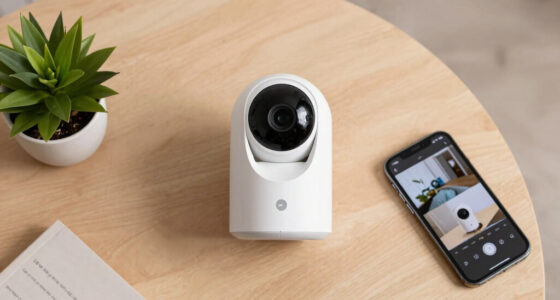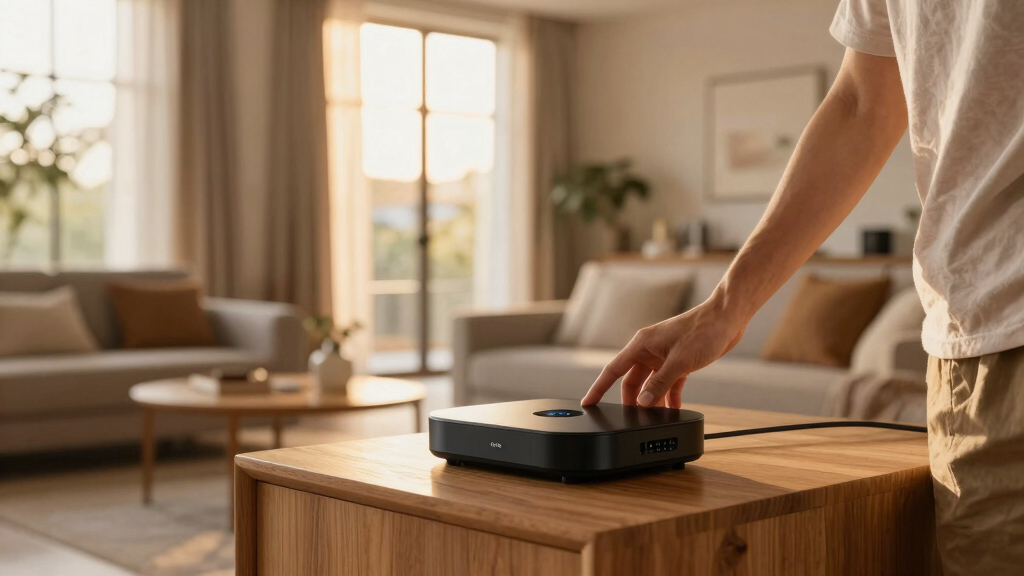

Smart home automation hubs serve as the central control point for your connected devices, simplifying management and enhancing automation capabilities. The best options, like the Aqara Smart Home Hub M3, stand out for their versatility and compatibility with multiple protocols. Others, such as the Philips Hue Bridge Pro, excel in specific areas like lighting control, but may lack broader device support. Choosing the right hub involves weighing factors like protocol support, ease of setup, and future-proof features. Continue reading for a detailed breakdown of the top options and what makes each one unique.

Get the latest gadgets delivered free — and shop member deals
- Fast, free delivery on millions of items
- Access to Prime Big Deal Days deals on October 6–7
- Prime Video, Amazon Music and more included
Key Takeaways
- The most versatile hubs support multiple protocols like Zigbee, Z-Wave, and Matter, ensuring broad device compatibility.
- Ease of use and setup vary significantly; hubs with integrated apps and simple setup are better for beginners.
- Premium hubs often offer advanced automation features and higher device capacity but come at a higher price.
- Compatibility with popular voice assistants like Alexa, Google Assistant, and Apple HomeKit is a key consideration for seamless control.
- Future-proofing is critical—look for hubs supporting the latest standards like Matter and Thread for longevity.
| Aqara Smart Home Hub M3 with Matter, Zigbee, Thread, Wi-Fi, PoE, IR, Apple HomeKit, Alexa, SmartThings, Home Assistant |  | Best Overall Smart Home Hub for Versatility and Privacy | Protocols Supported: Zigbee, Thread, Matter | Device Capacity: 127 Zigbee, 127 Thread devices | Connectivity: Wi-Fi 2.4/5 GHz, PoE, USB-C | VIEW LATEST PRICE | See Our Full Breakdown |
| Philips Hue Bridge Pro – Wireless Smart Lighting Hub with Advanced Encryption, Supports 150+ Lights & 50+ Accessories, Compatible with Apple Home, Alexa, Google, Samsung SmartThings |  | Best for Extensive Smart Lighting and Fast Response | Processor: Quad-core Cortex-A35 1.7 GHz | Memory: 4 GB DDR4 SDRAM | Supports: 150+ lights, 50+ accessories | VIEW LATEST PRICE | See Our Full Breakdown |
| Home Assistant Green – Official Smart Home Hub with Advanced Automation |  | Best for Local Control and Custom Automation | RAM: 4 GB | Storage Capacity: 32 GB | Processor: Quad-core ARM | VIEW LATEST PRICE | See Our Full Breakdown |
| Aqara Hub M1S Gen 2 – Smart Home Bridge for Alarm System with Apple HomeKit, Alexa, Google, IFTTT Compatibility |  | Best for Home Security and Multi-Assistant Compatibility | Power Source: Corded Electric | Compatible Devices: Apple HomeKit, Alexa, Google, IFTTT | Connectivity Technology: Wireless | VIEW LATEST PRICE | See Our Full Breakdown |
| Amazon Echo Hub (newest model), 8” Smart Home Control Panel with Alexa+ Compatibility |  | Best for Centralized Touchscreen Control and Multi-Protocol Support | Display: 8-inch, 1280 x 800 resolution | Power Requirements: USB-C PD, PoE with converter | Connectivity: WiFi 802.11a/b/g/n/ac, Bluetooth | VIEW LATEST PRICE | See Our Full Breakdown |
| SwitchBot Hub 2 (2nd Gen) – WiFi Thermometer, Hygrometer, IR Remote, Smart Home Hub |  | Best for Environmental Monitoring and Scene Automation | Weight: 6.7 ounces | Dimensions: 3.15 x 2.76 x 0.91 inches | Color: White | VIEW LATEST PRICE | See Our Full Breakdown |
| SwitchBot Hub 3 (3rd Gen) Smart Home Hub with 2.4″ IPS Screen & Knob Control |  | Best for Visual Data and Physical Control | Dimensions: 3.7 x 1.5 x 4.96 inches | Weight: 1.1 pounds | Display: 2.4″ IPS screen | VIEW LATEST PRICE | See Our Full Breakdown |
| SmartThings Hub 3rd Generation |  | Best for Broad Protocol Compatibility and Automation | Protocols: Zigbee, Z-Wave, Cloud to Cloud | Compatibility: Alexa, Google Home | VIEW LATEST PRICE | See Our Full Breakdown | |
| TREATLIFE ZigBee 3.0 & Bluetooth Gateway, Smart Home Hub, Supports 128 Devices |  | Best for Versatile Connectivity and Large Device Support | Protocol: Zigbee 3.0, Bluetooth | Device Support: 128 devices | WiFi: 2.4GHz only | VIEW LATEST PRICE | See Our Full Breakdown |
| Aeotec Smart Home Hub, Works as a SmartThings Hub, Z-Wave, Zigbee, Matter Gateway |  | Best for Multi-Protocol Integration and Local Automation | Weight: 1.1 Pounds | Connectivity Technology: Ethernet, Wi-Fi, Z-Wave, Zigbee, Matter | Control Method: App, Voice | VIEW LATEST PRICE | See Our Full Breakdown |
| Lutron Caseta Smart Lighting Smart Hub for Light Bulbs and Fans, Compatible with Alexa, Apple HomeKit, Google Home, 75 Device Capacity, White |  | Best Overall for Versatile Smart Home Control | Device Capacity: 75 devices | Compatibility: Amazon Alexa, Apple HomeKit, Google Assistant, Ring, Serena shades, Sonos | Includes: 1 Smart Hub | VIEW LATEST PRICE | See Our Full Breakdown |
| Aqara Smart Hub M100 for Home Automation, Matter Controller, Thread Border Router, Supports Apple HomeKit, Amazon Alexa, IFTTT, Home Assistant |  | Best for Local Automation and Protocol Flexibility | Compatibility: Apple HomeKit, Amazon Alexa, IFTTT, Home Assistant | Protocols: Zigbee, Thread, Wi-Fi 6 | Device Capacity: 20 Zigbee devices, 20 Thread devices | VIEW LATEST PRICE | See Our Full Breakdown |
More Details on Our Top Picks
Aqara Smart Home Hub M3 with Matter, Zigbee, Thread, Wi-Fi, PoE, IR, Apple HomeKit, Alexa, SmartThings, Home Assistant
The Aqara M3 Hub stands out for supporting multiple protocols—Zigbee, Thread, and Matter—making it highly adaptable for various smart home setups. Compared to the Home Assistant Green, it offers broader protocol support but relies on Aqara devices for Zigbee, limiting third-party compatibility. Its local control and encrypted storage boost privacy, which is a key advantage over cloud-dependent hubs like the Amazon Echo Hub. However, the need for placement within 6 to 19 feet of the router and the absence of a PoE power adapter can complicate installation, especially in larger or more complex homes. This pick makes the most sense for users seeking a flexible, privacy-conscious hub that can integrate with multiple ecosystems, but who are willing to manage some installation constraints.Pros:- Supports multiple protocols including Zigbee, Thread, and Matter for broad device compatibility
- Local control and encrypted storage enhance privacy and reliability
- Wired (PoE) and wireless options ensure stable connectivity
- Includes a smart IR blaster for controlling traditional remotes
Cons:- Requires placement within 6 to 19 feet of the router for optimal connectivity
- PoE power adapter is sold separately
- Limited to Aqara Zigbee devices, restricting third-party device support
Best for: Homeowners with diverse smart devices seeking a privacy-focused, multi-protocol hub with wired options.
Not ideal for: Users preferring third-party Zigbee device support or minimal setup complexity, as Aqara’s ecosystem is somewhat closed.
- Protocols Supported:Zigbee, Thread, Matter
- Device Capacity:127 Zigbee, 127 Thread devices
- Connectivity:Wi-Fi 2.4/5 GHz, PoE, USB-C
- Storage:8GB encrypted local storage
- IR Blaster:360° IR with feedback and learning
- Compatibility:Apple HomeKit, Alexa, SmartThings, Home Assistant
Bottom line: This hub is ideal for tech-savvy users who want a versatile, privacy-oriented controller that supports multiple protocols, despite installation limits.
Philips Hue Bridge Pro – Wireless Smart Lighting Hub with Advanced Encryption, Supports 150+ Lights & 50+ Accessories, Compatible with Apple Home, Alexa, Google, Samsung SmartThings
The Philips Hue Bridge Pro is tailored for serious lighting setups, supporting over 150 lights and 50 accessories, which exceeds the capacity of most hubs like the Aqara M3. Its ultra-fast quad-core processor ensures quick response times, critical for dynamic lighting scenes. Compared with the Aqara Hub, its focus on lighting means it lacks broader protocol support like Thread or Zigbee for non-lighting devices. The security enhancements, such as the Zigbee Trust Center, add peace of mind for sensitive automation. However, setup might challenge beginners, and the higher price reflects its premium features. This hub makes the most sense for dedicated lighting enthusiasts who prioritize speed and security over multi-protocol versatility.Pros:- Supports over 150 lights and 50 accessories for large lighting setups
- Fast response with a powerful processor and advanced security
- Wireless design allows flexible placement
- Enhanced data protection with Zigbee Trust Center
Cons:- Setup can be complex for beginners
- Higher price point compared to basic hubs
- Limited to lighting and accessories, not a multi-protocol hub
Best for: Smart lighting enthusiasts requiring extensive device support and high responsiveness.
Not ideal for: Homeowners seeking a general-purpose hub for diverse device types beyond lighting, as its core strength is lighting capacity.
- Processor:Quad-core Cortex-A35 1.7 GHz
- Memory:4 GB DDR4 SDRAM
- Supports:150+ lights, 50+ accessories
- Connectivity:Zigbee mesh, Wi-Fi
- Security:Zigbee Trust Center
- Unit Count:1
Bottom line: This hub is best suited for users with extensive smart lighting needs who prioritize speed and security, accepting a more complex setup process.
Home Assistant Green – Official Smart Home Hub with Advanced Automation
The Home Assistant Green offers a straightforward, fanless design optimized for local automation, making it appealing for users prioritizing privacy and custom control. Unlike the Aqara or Hue hubs, it’s focused exclusively on automation and protocol support—Z-Wave, Zigbee, and Thread—without the distraction of multimedia features. Its compact size and energy efficiency are advantages over larger, more complex systems. However, the need for an Ethernet connection and its limited scope—no multimedia or voice assistant integration—means it’s best for dedicated automation users rather than those wanting a comprehensive smart home hub. This makes it ideal for DIYers who value privacy and customizable automation over all-in-one convenience.Pros:- Supports multiple protocols including Z-Wave, Zigbee, and Thread
- Easy to set up with pre-installed Home Assistant OS
- Compact, fanless, energy-efficient design
- Local data storage enhances privacy
Cons:- Limited to automation, no multimedia or voice features
- Requires Ethernet for optimal performance
- Expandable only via USB devices
Best for: Home automation enthusiasts seeking a reliable, local-only hub for custom routines and protocol support.
Not ideal for: Users wanting a multimedia control panel or integrated voice assistant features, as it is purely automation-focused.
- RAM:4 GB
- Storage Capacity:32 GB
- Processor:Quad-core ARM
- Connectivity:Ethernet, USB
- Operating System:Home Assistant OS
- USB Ports:2
Bottom line: This hub suits DIYers and automation fans who prioritize local control, protocol flexibility, and privacy over multimedia features.
Aqara Hub M1S Gen 2 – Smart Home Bridge for Alarm System with Apple HomeKit, Alexa, Google, IFTTT Compatibility
The Aqara M1S Gen 2 extends beyond basic hubs by combining smart home bridging with alarm capabilities, making it ideal for security-focused users. Its built-in RGB light and alarm speaker add automation flair, while supporting Apple HomeKit, Alexa, Google, and IFTTT broadens compatibility. Compared with the Aqara M3, it leans more toward security and alarm integration, but it’s limited to Aqara Zigbee devices and doesn’t support third-party Zigbee devices, which can restrict flexibility. Setup requires proximity to Wi-Fi, and its range is modest. This hub makes the most sense for homeowners who want integrated security features and voice assistant support in a compact form, but it’s less suitable for larger or more diverse device ecosystems.Pros:- Supports multiple ecosystems including Apple HomeKit, Alexa, Google, and IFTTT
- Built-in RGB light and alarm speaker for security automation
- Compact size suitable for small spaces
- Supports various voice assistants for flexible control
Cons:- Limited to Aqara Zigbee devices; no third-party Zigbee support
- Requires 2.4 GHz Wi-Fi and proximity setup
- Limited range of 33 feet
Best for: Homeowners seeking a security-enhanced smart hub with multi-voice assistant support and integrated alarm features.
Not ideal for: Users with extensive third-party Zigbee devices or larger homes needing extended range, as the hub’s limited range and device support may fall short.
- Power Source:Corded Electric
- Compatible Devices:Apple HomeKit, Alexa, Google, IFTTT
- Connectivity Technology:Wireless
- Alert Type:Motion, alarm
- Voltage:5 Volts
- Range:33 Feet
Bottom line: This hub is best for security-conscious users who want multi-assistant compatibility and integrated alarms in a small package, despite limited device support.
Amazon Echo Hub (newest model), 8” Smart Home Control Panel with Alexa+ Compatibility
The Amazon Echo Hub provides an intuitive 8-inch touchscreen for managing a variety of smart devices, making it ideal for users who want a centralized dashboard. Its support for Zigbee, Thread, and Matter covers most popular protocols, surpassing simpler hubs like the Aqara M1S in versatility. The built-in privacy controls, including a mic off button, address privacy concerns common with voice-enabled devices. Unlike the Hue or Aqara hubs, it emphasizes user-friendly control through its display, but it requires mounting or a stand, limiting portability. Some features, like connectivity, may depend on additional accessories. This hub makes the most sense for households that want a sleek, easy-to-use control panel with broad protocol support, especially if they prefer visual management over app-based controls.Pros:- Large, easy-to-use touchscreen for smart device management
- Supports multiple protocols including Zigbee, Thread, and Matter
- Built-in privacy controls, including mic off button
- Environmentally friendly materials
Cons:- Requires wall mounting or stand (sold separately)
- Not portable or handheld
- Some connectivity features may need additional accessories
Best for: Families or individuals wanting a centralized, touchscreen smart home interface with broad protocol compatibility.
Not ideal for: Those seeking a portable, standalone device or a hub solely for automation without a visual dashboard, as it is fixed and designed for wall or stand installation.
- Display:8-inch, 1280 x 800 resolution
- Power Requirements:USB-C PD, PoE with converter
- Connectivity:WiFi 802.11a/b/g/n/ac, Bluetooth
- Sensors:PIR, ambient light sensor
- Compatibility:Zigbee, Thread, Matter, BLE
- Materials:Recycled materials
Bottom line: This control panel is best for users seeking a visual, centralized interface with broad protocol support, willing to handle installation requirements.
SwitchBot Hub 2 (2nd Gen) – WiFi Thermometer, Hygrometer, IR Remote, Smart Home Hub
This version of the SwitchBot Hub excels at integrating environmental sensors with automation, making it ideal for those who want precise control over climate and lighting conditions. Compared with the SwitchBot Hub 3, it offers more specialized sensors but lacks the visual interface and physical controls, which can limit real-time feedback. The Hub 2’s support for multiple ecosystems, including Matter, Alexa, Google Home, and Apple HomeKit, broadens its compatibility, but it relies on external power and Wi-Fi, which adds some setup complexity. Its high accuracy in temperature, humidity, and light measurement makes it a strong choice for environmental automation, though limited sensor integration means it’s less suited for comprehensive device control beyond environmental data. This pick makes the most sense for users prioritizing environmental monitoring and scene automation, especially if they already use or plan to use multiple smart ecosystems.
Pros:- Accurate temperature, humidity, and light monitoring
- Supports multiple ecosystems including Matter, Alexa, Google Home, and Apple HomeKit
- Includes smart buttons for manual control and automation
Cons:- Requires external power source, no batteries included
- Limited to 2.4GHz Wi-Fi network, which might restrict connectivity in some environments
Best for: Homeowners who want accurate environmental sensors integrated into their smart automation setup
Not ideal for: Users seeking a hub primarily for device control without environmental monitoring or those with limited Wi-Fi setup options
- Weight:6.7 ounces
- Dimensions:3.15 x 2.76 x 0.91 inches
- Color:White
- Material:ABS
- Power Source:AC/DC
- Measurement Accuracy:± 0.2℃ / ± 1.8% RH
Bottom line: This hub is perfect for those focused on precise environmental automation within a multi-ecosystem setup.
SwitchBot Hub 3 (3rd Gen) Smart Home Hub with 2.4″ IPS Screen & Knob Control
The SwitchBot Hub 3 stands out for its 2.4-inch IPS screen and physical control dial, making it ideal for users who prefer real-time data display and tactile interaction. Unlike the Hub 2, which is more sensor-focused, the Hub 3 offers a broader device control range, supporting over 100,000 infrared appliances and integrating with Matter. Its vibrant display provides instant updates on home status, which benefits users who want quick insights without opening apps. However, it’s limited to infrared devices and does not support RF-controlled items like ceiling fans or garage openers. The reliance on Wi-Fi and the need for a 2.4GHz connection can pose challenges in complex networks. This is best suited for those who want an intuitive, visual hub that simplifies managing numerous infrared devices alongside smart home ecosystems.
Pros:- Supports a vast range of infrared appliances and smart devices
- Vivid 2.4″ IPS display for real-time home data
- Includes a physical dial and customizable scene buttons
Cons:- Limited to infrared devices, no RF support like ceiling fans or garage openers
- Requires a 2.4GHz Wi-Fi network, limiting flexibility in some setups
Best for: Home users who want a visually informative hub with easy physical controls for infrared devices
Not ideal for: Users needing control over RF devices or seeking a hub with extensive device protocol support beyond infrared
- Dimensions:3.7 x 1.5 x 4.96 inches
- Weight:1.1 pounds
- Display:2.4″ IPS screen
- Connectivity:WiFi (2.4GHz), Bluetooth, Matter
- Compatibility:Alexa, Google Assistant, Apple Home
Bottom line: Ideal for users who value visual feedback and easy manual control over infrared devices in their smart ecosystem.
SmartThings Hub 3rd Generation
The SmartThings Hub 3rd Generation offers a versatile platform for integrating a wide variety of smart home devices via Zigbee, Z-Wave, and cloud-to-cloud connections. Compared with the SwitchBot Hub models, it provides a more robust automation framework, especially for users who already have compatible devices or prefer managing everything through one app. While setup can be complex for newcomers, its support for popular voice assistants makes routine management straightforward. The hub’s strength lies in its protocol support, but it depends heavily on compatible devices to deliver full functionality, which can be a limitation for those with a smaller device ecosystem. This model is best for those seeking a reliable, multi-protocol hub capable of centralizing diverse smart devices in a larger home automation system.
Pros:- Supports multiple protocols including Zigbee, Z-Wave, and cloud integrations
- Enables automation and routines with a dedicated app
- Compatible with Alexa and Google Home for voice control
Cons:- Setup can be complex for those unfamiliar with smart home ecosystems
- Requires compatible devices for full automation potential
Best for: Homeowners with existing Zigbee or Z-Wave devices looking for a central automation controller
Not ideal for: Beginners with minimal setup experience or users with only Wi-Fi-based devices, as full benefits depend on compatible hardware
- Protocols:Zigbee, Z-Wave, Cloud to Cloud
- Compatibility:Alexa, Google Home
Bottom line: This hub is best suited for experienced users seeking broad protocol support and reliable automation in larger setups.
TREATLIFE ZigBee 3.0 & Bluetooth Gateway, Smart Home Hub, Supports 128 Devices
The TREATLIFE Gateway combines Zigbee 3.0 and Bluetooth to support up to 128 devices, making it a flexible choice for expanding smart home networks. Unlike the more protocol-specific hubs, its dual support for Zigbee and Bluetooth creates a mesh network that enhances reliability and range. Its compatibility with popular apps like Smart Life and Tuya streamlines setup, and voice control integration with Alexa and Google Assistant adds convenience. However, its reliance on 2.4GHz Wi-Fi and limited to that band may impact performance in congested networks. For users with a mix of Zigbee and Bluetooth devices seeking straightforward, scalable connectivity, this hub offers a compelling balance of capacity and ease of use.
Pros:- Supports both Zigbee 3.0 and Bluetooth devices
- Handles up to 128 devices for extensive smart setups
- Plug-and-play setup with automatic device discovery
Cons:- Does not support 5GHz Wi-Fi networks, limiting network flexibility
- Limited to 2.4GHz Wi-Fi only, which may cause congestion
Best for: Users managing large numbers of Zigbee and Bluetooth devices who want a scalable, easy-to-set-up hub
Not ideal for: Homes with existing 5GHz Wi-Fi networks or those needing RF device support like ceiling fans or garage openers
- Protocol:Zigbee 3.0, Bluetooth
- Device Support:128 devices
- WiFi:2.4GHz only
- App Compatibility:Smart Life, Tuya
Bottom line: This hub is well-suited for users who want to expand their Zigbee and Bluetooth device networks effortlessly.
Aeotec Smart Home Hub, Works as a SmartThings Hub, Z-Wave, Zigbee, Matter Gateway
The Aeotec Smart Home Hub offers a comprehensive solution for integrating Z-Wave, Zigbee, and Matter devices, providing a central point for managing a diverse smart home. Unlike the simpler hubs, it emphasizes local execution of routines, which can improve speed and reliability. Its compatibility with the SmartThings app and support for voice assistants makes it suitable for users who want extensive device flexibility. However, its primary design for North American markets and the potential complexity of setup may deter beginners or international users. Compared to the SmartThings Hub 3rd Gen, it provides broader protocol support but may require a more involved installation process. This hub is a smart choice for experienced users who need a multi-protocol, reliable automation platform in a larger residence.
Pros:- Supports Z-Wave, Zigbee, and Matter for extensive device compatibility
- Enables local routines for faster, more reliable automation
- Easy setup via the SmartThings app with multiple connectivity options
Cons:- Designed mainly for North American use, limiting global compatibility
- Setup can be complex if unfamiliar with smart home ecosystems
Best for: Advanced smart home users who want a highly flexible, multi-protocol hub with local automation capabilities
Not ideal for: Novice users or those outside North America who may encounter compatibility or setup issues
- Weight:1.1 Pounds
- Connectivity Technology:Ethernet, Wi-Fi, Z-Wave, Zigbee, Matter
- Control Method:App, Voice
- Frequency:908.42 MHz
Bottom line: This hub is ideal for tech-savvy users who require broad protocol support and local automation in a larger or more complex home setup.
Lutron Caseta Smart Lighting Smart Hub for Light Bulbs and Fans, Compatible with Alexa, Apple HomeKit, Google Home, 75 Device Capacity, White
The Lutron Caseta Smart Hub stands out for its broad compatibility and ease of integration, making it ideal for users who want a reliable, multi-platform hub. Unlike the Aqara M100, which supports Zigbee and Thread but is limited to 20 devices per protocol, the Caseta supports up to 75 devices, providing scalability for larger homes. Its straightforward setup and support for popular voice assistants boost convenience, but it requires separate purchases for compatible dimmers and switches, adding to the cost. While some may find the initial setup complex if unfamiliar with smart ecosystems, its extensive platform support and user-friendly app make it a solid choice for most households seeking comprehensive lighting and device control. This pick is best for those wanting reliable, broad control without sacrificing compatibility.
Pros:- Supports multiple smart home platforms including Alexa, Apple HomeKit, and Google Assistant
- Easy to set up with a simple plug-and-play design
- Can control up to 75 devices, suitable for larger homes
Cons:- Requires separate purchase of compatible dimmers or switches, increasing overall cost
- Setup can be complex for those unfamiliar with smart home systems
Best for: Homeowners seeking a versatile, widely compatible hub for lighting, shades, and climate control that can grow with their needs
Not ideal for: Tech-savvy users who prefer an all-in-one, integrated hub without needing separate dimmers or switches
- Device Capacity:75 devices
- Compatibility:Amazon Alexa, Apple HomeKit, Google Assistant, Ring, Serena shades, Sonos
- Includes:1 Smart Hub
- Connectivity:Wi-Fi
- Color:White
Bottom line: This hub is an excellent choice for users who prioritize broad compatibility and scalable lighting automation in a straightforward setup.
Aqara Smart Hub M100 for Home Automation, Matter Controller, Thread Border Router, Supports Apple HomeKit, Amazon Alexa, IFTTT, Home Assistant
The Aqara Smart Hub M100 offers a compelling option for users who prioritize local processing and protocol diversity, supporting Zigbee, Thread, and Wi-Fi 6. Compared with the Lutron Caseta hub, which emphasizes broad compatibility for lighting and shades, the M100 is better suited to more technically inclined users who want advanced automation and local control without relying heavily on cloud services. Its compact form factor and adjustable design make it adaptable to various placements, but the need to purchase a separate power adapter and its limit of 20 Zigbee and Thread devices could restrict larger setups. Automation features requiring cloud connectivity may also limit some advanced use cases. This hub is ideal for those who value reliable, local automation and protocol flexibility over sheer device capacity.
Pros:- Supports multiple protocols including Zigbee, Thread, and Wi-Fi 6 for flexible integration
- Enables local automation for enhanced privacy and reliability
- Compact with adjustable placement options
Cons:- Power adapter is sold separately, adding extra cost and potential inconvenience
- Limited to 20 Zigbee and 20 Thread devices, which could constrain larger smart homes
- Some automation features require cloud connectivity, which may affect reliability
Best for: Enthusiasts and advanced users seeking local, reliable automation with support for Zigbee, Thread, and Wi-Fi 6
Not ideal for: Casual users or larger households needing support for more than 20 Zigbee or Thread devices or seeking a plug-and-play experience
- Compatibility:Apple HomeKit, Amazon Alexa, IFTTT, Home Assistant
- Protocols:Zigbee, Thread, Wi-Fi 6
- Device Capacity:20 Zigbee devices, 20 Thread devices
- Power:USB-A port (power adapter not included)
- Connectivity:2.4GHz Wi-Fi 6, WPA3 security
- Size:Adjustable shaft within 210 degrees
Bottom line: This hub is best for users who need robust local control and multi-protocol support, especially in smaller or tech-savvy setups.
How We Picked
To evaluate these smart home automation hubs, I focused on criteria that matter most to buyers: compatibility, ease of installation, build quality, automation capabilities, and value for money. I prioritized devices that support a wide range of protocols and integrate smoothly with popular smart ecosystems. Devices with robust app interfaces and reliable performance ranked higher, especially for users seeking dependable automation. I also considered future-proof features like support for emerging standards such as Matter and Thread, ensuring longevity and expandability. The ranking reflects a balance of versatility, usability, and overall value, helping different types of smart home enthusiasts find their best fit.Factors to Consider When Choosing Smart Home Automation Hubs
Choosing the right smart home automation hub involves more than just picking the most popular or feature-rich device. Buyers should consider compatibility with existing devices, protocol support, ease of use, and future-proofing. Understanding these factors helps avoid buyer’s remorse and ensures the hub will serve your needs for years to come.Compatibility with Devices and Ecosystems
One of the most critical considerations is whether the hub supports your existing devices and preferred smart home ecosystems. Some hubs excel with specific protocols like Zigbee or Z-Wave, while others support multiple standards or emerging technologies like Matter. Selecting a hub that aligns with your device ecosystem ensures seamless integration and reduces frustration caused by incompatible products.
Ease of Setup and User Interface
A hub’s setup process and user interface influence how smoothly you can manage your smart home. Hubs with intuitive apps, clear instructions, and minimal technical hurdles are better suited for beginners. Conversely, more complex setups may appeal to advanced users who want granular control but require a steeper learning curve.
Device Capacity and Scalability
Consider how many devices you plan to connect now and in the future. Some hubs support only a handful of devices, while others can handle hundreds. Overestimating your needs can lead to additional purchases or limitations later. A scalable hub ensures your smart home can grow without replacing the central controller.
Automation and Integration Features
Automation capabilities—like routines, schedules, and conditional triggers—vary widely. Look for hubs that offer advanced automation options if you want complex scenes or multi-device interactions. Compatibility with voice assistants is also key for effortless control across your ecosystem.
Future-Proofing and Standards Support
Standards like Matter and Thread are shaping the future of smart home devices. A hub that supports these standards now will remain relevant longer, avoiding the need for frequent upgrades. Investing in future-proof technology can save money and effort down the line, especially as your smart home expands.
Frequently Asked Questions
Can I use multiple smart home hubs together?
Yes, many smart home enthusiasts use multiple hubs to optimize compatibility and functionality across different device types and ecosystems. However, managing multiple hubs can introduce complexity, so it’s important to choose hubs that can integrate or coexist smoothly, such as those supporting common standards like Zigbee, Z-Wave, and Matter. This approach allows you to leverage each hub’s strengths while maintaining a unified control system.
Are smart home hubs secure against hacking?
Security varies depending on the hub’s design, firmware updates, and supported protocols. Reputable hubs with regular updates and strong encryption practices provide better protection. Enabling two-factor authentication and network security measures further reduces risks. It’s wise to stay informed about firmware updates and only purchase hubs from trusted manufacturers committed to security.
Do I need a smart home hub if I only use Wi-Fi devices?
For Wi-Fi-only devices, a dedicated hub isn’t always necessary, as many can connect directly to your Wi-Fi network and be controlled via apps. However, hubs can still offer benefits like centralized control, automation, and improved reliability. If you plan to expand with Zigbee or Z-Wave devices later, investing in a hub now can provide flexibility and simplify management.
How important is protocol support for my smart home hub?
Protocol support determines which devices your hub can connect to and control. Supporting multiple protocols like Zigbee, Z-Wave, and Matter ensures broader device compatibility and reduces the risk of needing multiple hubs. For a cohesive smart home, choosing a hub with extensive protocol support is often worth the initial investment, especially if you plan to add various device types over time.
Should I prioritize a premium hub over a budget option?
Premium hubs generally offer higher device capacity, more advanced automation features, and better build quality, making them suitable for extensive or complex smart homes. Budget options can serve smaller setups or newcomers well, especially if you only need basic control. The key is matching the hub’s capabilities to your current and future needs to avoid outgrowing a less capable device too quickly.
Conclusion
For most users, the Aqara Smart Home Hub M3 offers a compelling mix of compatibility, future-proofing, and ease of use, making it the best overall pick. Those seeking value without sacrificing core features should consider the SmartThings Hub 3rd Generation, which balances price and performance. If you desire a premium experience with extensive automation, the Aeotec Smart Home Hub stands out. Beginners or casual users will find the Amazon Echo Hub straightforward and user-friendly, while advanced enthusiasts aiming for maximum flexibility might prefer the Home Assistant Green. Ultimately, your choice should align with your current device ecosystem, automation needs, and budget—this guide helps clarify those priorities.
Evergreen bestsellers Picks
bestsellers
As an affiliate, we earn on qualifying purchases.