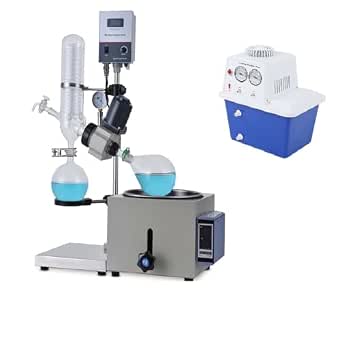
Rotary evaporators remove solvents under reduced pressure, but the right setup depends on how much you process and which controls your work requires. My best overall pick is the INTSUPERMAI RE2000A 2L for its automatic lifting bath, while the PreAsion 5L stands out for larger batches and the INTBUYING 2L kit for an included circulating vacuum pump. Across these options, the main tradeoffs are capacity, lift convenience, temperature and speed control, and whether vacuum equipment comes in the package. A larger flask can reduce batch turnover, but it also takes more bench space and may not suit small, frequent runs. Read on for the full comparison, buying advice, and recommendations by lab need.

Get the latest gadgets delivered free with Prime
- Fast, free delivery on millions of items
- Prime Video, Amazon Music and more included
- Member-only deals all year
Complete the kit


Key Takeaways
- Automatic lifting separates the INTSUPERMAI RE2000A from the several manual-lift 2L models, making bath positioning less hands-on.
- The PreAsion 5L is the capacity outlier; most of this lineup centers on 2L systems, while the 4E’s USA and HNZXIB models are 1L options.
- Included vacuum equipment changes the buying decision: INTBUYING and TECHTONGDA list a 15L circulating water vacuum pump, while several other listings do not name a pump in the product title.
- Digital displays and vacuum controls appear on multiple 2L models, so those features alone do not distinguish a system; check what each control actually measures and regulates.
- Compact 1L units trade throughput for a smaller working scale, while 5L capacity is best matched to labs that can support larger batches, glassware, and workspace needs.



| rotary evaporator | Voltage | Rotation speed |
|---|---|---|
| LAB 110V 2L Rotary Evaporator | 110 V | 0–120 RPM |
| 110V 2L Rotary Evaporator with | 110 V | 0–120 rpm |
| 110V Laboratory Rotary Evapora | 110 V | 0–120 rpm |
| INTSUPERMAI RE2000A 2L Rotary | — | 20–200 RPM |
| INTBUYING 2L Rotary Evaporator | 110 V | 10–120 rpm |
| 2L Lab Rotary Evaporator with | — | — |
| Lab Rotary Evaporator with Coo | 110 V | — |
| 2L Lifting Laboratory Rotary E | — | 0–120 rpm |
| 110V Rotary Evaporator for Lab | 110 V | — |
| PreAsion 5L Laboratory Rotary | 110 V | — |
| TECHTONGDA 2L Rotary Evaporato | 110V | 10–120 rpm |
| 4E’s USA Rotary Evaporator | — | 20–320 RPM |
| HNZXIB RE-201D Laboratory Rota | — | — |
| 2L Rotary Evaporator with 15L | 110V | 10–120 rpm |
| HNpuxing 2L Manual-Lift Rotary | 110V or 220V | — |
More Details on Our Top Picks
LAB 110V 2L Rotary Evaporator with Heating Bath, 0-120 RPM
The gear-reduced motor with three times the original torque gives this 2L unit a different emphasis from the RE-201 and the electric-lift RE2000A: it prioritizes rotational drive and overload protection over faster bath handling. Its thermostatic bath has a digital temperature display, while double PTFE-rubber sealing rings are intended to support high-vacuum work. That combination suits labs running routine concentration or solvent recovery where steady operation matters. The tradeoff is hands-on setup: the bath lift is manual, and the 2L system may be limiting for larger batches. Compared with the RE-201, the supplied details do not specify flask sizes or an evaporation rate, so buyers who need those planning figures should favor a model with them listed.
Pros:- Gear-reduced motor provides three times the original motor torque
- Overload protection adds a safeguard for the drive
- Thermostatic heating bath has a digital temperature display
- Double PTFE-rubber sealing rings are designed for high-vacuum sealing
Cons:- Manual bath lifting requires operator effort
- 2L capacity may constrain throughput
- Evaporation rate and individual flask capacities are not specified
Best for: Small laboratory teams prioritizing a high-torque drive and thermostatic bath for routine 2L processing.
Not ideal for: Labs processing larger batches or needing published flask-capacity and evaporation-rate figures before purchase.
- Capacity:2 L
- Voltage:110 V
- Rotation speed:0–120 RPM
- Bath control:Thermostatic heating bath with digital temperature display
- Motor:Gear reducer; three times original motor torque
- Lift:Manual heating tank lift
- Sealing:Double PTFE-rubber composite sealing rings
- Materials:Stainless steel, aluminum alloy, high-borosilicate glass
Our verdict“Choose this model for its high-torque drive and displayed bath control if manual lifting and modest capacity suit your lab.”
110V 2L Rotary Evaporator with Temperature-Controlled Water Bath
The RE-201 is the clearest pick here for buyers who need concrete operating figures: it lists 1L evaporation and collection flasks, a water evaporation rate of at least 1.5 L/h, and a stated vacuum level of -0.098 MPa. Its room-temperature-to-99°C water bath and 0–120 rpm drive put it in the same general operating range as the LAB 110V 2L, but the RE-201 provides more detail for planning a small workflow. A vertical condenser supports vapor recovery, while the 4.7-inch manual lift keeps positioning in the operator’s hands. Compared with the INTSUPERMAI RE2000A, it lacks automatic bath lifting and the broader 20–200 RPM range; its advantage is a more explicit set of capacity and performance specifications.
Pros:- Lists separate 1L evaporation and collection flask capacities
- States a water evaporation rate of at least 1.5 L/h
- Water bath heats from room temperature to 99°C
- Vertical condenser supports solvent condensation and collection
Cons:- Manual flask lifting requires operator adjustment
- The 1L evaporation flask limits batch size
- Total system power is not specified
Best for: Lab buyers who need stated flask sizes, vacuum level, temperature range, and water evaporation rate to plan small-scale solvent recovery.
Not ideal for: Teams seeking powered lifting or rotation above 120 rpm, or processing batches larger than its 1L evaporation flask.
- Model:RE-201
- Voltage:110 V
- Flask capacities:1 L evaporation; 1 L collection
- Rotation speed:0–120 rpm
- Evaporation rate:≥1.5 L/h (water)
- Vacuum:-0.098 MPa
- Temperature range:Room temperature–99°C
- Lift distance:4.7 in
- Motor and bath power:40 W motor; 1000 W water bath
Our verdict“Pick the RE-201 when published operating figures and a 99°C water bath matter more than powered lifting or higher rotational speed.”
110V Laboratory Rotary Evaporator 2L Electric Vacuum Distillation System with 120mm Lift
This model makes sense for labs that already have, or plan to add, compatible vacuum and cooling equipment. It lists a modular design for common accessories, a 1L evaporation flask, and a 1L collection flask, along with a stated water evaporation rate of at least 1.5 L/h. Those details closely match the RE-201’s working figures, but this listing specifies a 120 mm manual lift and fluorine-rubber seal. The bath reaches 99°C and rotation tops out at 120 rpm, covering routine small-scale solvent work. The limitation is the same basic scale as the RE-201, plus required external vacuum and circulation accessories; the INTBUYING kit includes a circulating water vacuum pump, so it may suit buyers who need more equipment in one package.
Pros:- Modular design supports common vacuum and cooling accessories
- Lists a water evaporation rate of at least 1.5 L/h
- Water bath reaches 99°C with adjustable rotation up to 120 rpm
- Borosilicate glass and fluorine-rubber seal are specified
Cons:- Vacuum pump and circulation accessories are required separately
- Manual lift needs operator effort
- 1L evaporation and collection flasks limit batch size
Best for: Labs with compatible vacuum and cooling accessories seeking a modular 110V unit for 1L flask workflows.
Not ideal for: First-time buyers assembling a complete system or operators who need larger flasks or powered lifting.
- Voltage:110 V
- Flask capacities:1 L evaporation; 1 L collection
- Rotation speed:0–120 rpm
- Evaporation rate:≥1.5 L/h (water)
- Vacuum:-0.098 MPa
- Temperature range:Room temperature–99°C
- Lift:120 mm, manual
- Motor and bath power:40 W motor; 1 kW water bath
- Materials:Borosilicate glass, stainless steel, aluminum alloy, fluorine-rubber seal
Our verdict“Choose this unit if your lab already has the supporting vacuum and cooling gear and needs a modular 1L flask system.”
INTSUPERMAI RE2000A 2L Rotary Evaporator with Automatic Lifting Bath
The RE2000A stands apart from the three manually lifted units in this group through its automatic heating-bath lift and 140 mm stroke. That can make repeated vessel positioning less laborious, especially compared with the LAB 110V 2L or the manual-lift RE-201. It also reaches 20–200 RPM, giving it a wider stated rotation range than those 0–120 rpm models. Modular construction and overload protection add practical flexibility and a drive safeguard. Its tradeoffs are meaningful: the listed specifications omit an evaporation rate, flask sizes, and a numeric temperature range, which makes process planning harder than with the RE-201. At 85 lb with a large package footprint, it also suits a settled lab bench better than a frequently moved setup.
Pros:- Automatic heating-bath lifting reduces manual positioning
- 140 mm lift stroke is specified
- 20–200 RPM range extends beyond the 0–120 rpm models
- Modular design and overload protection support lab integration and drive safety
Cons:- Listed data do not specify flask sizes or evaporation rate
- Speed display is not specified
- 85 lb item weight and 27 × 27 × 22 in package demand substantial space
Best for: Labs that reposition the bath often and value powered lifting plus a wider rotation range.
Not ideal for: Mobile or space-constrained labs, and buyers who require published flask capacities or evaporation-rate data.
- Model:RE2000A
- Capacity:2 L
- Rotation speed:20–200 RPM
- Bath lift:Automatic; 140 mm stroke
- Condenser:Vertical
- Protection:Overload protection
- Item weight:85 lb
- Package dimensions:27 × 27 × 22 in
Our verdict“Choose the RE2000A when automatic bath lifting and rotation up to 200 RPM outweigh the need for detailed throughput specifications.”
INTBUYING 2L Rotary Evaporator Kit with 15L Circulating Water Vacuum Pump, 110V, Digital Display
Unlike the standalone LAB 110V 2L and RE-201, this package includes a 15L circulating water vacuum pump alongside the rotovap, making it a more joined-up option for labs that need the pump as well as the evaporator. The unit has a 2L evaporator capacity, digital display, 10–120 rpm rotation, and a 120 mm manual bath lift. Borosilicate glass, SUS304 stainless steel, and aluminum alloy make up the stated construction. The kit’s extra equipment may simplify sourcing, but it also means two packages and added setup space. Its manual lift is less convenient than the INTSUPERMAI RE2000A’s automatic bath lift, and the supplied specs do not state flask sizes or an evaporation rate. Check that 110V power fits your lab before choosing it.
Pros:- Includes a 15L circulating water vacuum pump with the evaporator
- Digital display and 10–120 rpm rotation provide operating controls
- 2L evaporator capacity suits small-scale solvent workflows
- Specifies high-borosilicate GG3.3 glass and SUS304 stainless steel
Cons:- Manual bath lifting requires operator effort
- Two-package shipment needs coordination and setup space
- 110V requirement may not match some laboratory power systems
Best for: 110V lab buyers who need a 2L evaporator and circulating water vacuum pump in one kit.
Not ideal for: Labs with limited bench or setup space, users needing powered lifting, or buyers who require a published evaporation rate.
- Voltage:110 V
- Evaporator capacity:2 L
- Included equipment:15 L circulating water vacuum pump
- Rotation speed:10–120 rpm
- Motor power:40 W
- Heating bath power:1 kW
- Bath lift:Manual; 120 mm
- Display:Digital screen
- Materials:GG3.3 high-borosilicate glass, SUS304 stainless steel, aluminum alloy
Our verdict“Choose this kit when the included 15L circulating water vacuum pump is useful and a manual-lift 110V setup fits your lab.”
2L Lab Rotary Evaporator with Electric Lifting for Education, Pharma, and Factory Use
For a classroom or shared lab, the appeal here is the combination of electric lifting, microcomputer control, and a moderate 20–200 rpm range. That makes routine height adjustment and speed changes more accessible to students than on the PreAsion 5L, which uses a manual lift, while its 2 L capacity keeps the unit suited to demonstrations and smaller separations. The listed noise level of 55 dB or less and universal wheels also fit rooms where the evaporator may need to move between benches. The tradeoff is scale: the 5 L PreAsion can handle larger batches, and several 2 L kits in this roundup include pumps. This model’s description does not specify a vacuum pump or condenser, so buyers should confirm what equipment is included before planning a complete setup.
Pros:- Electric lift simplifies routine flask height adjustment
- Microcomputer control with a 20–200 rpm speed range
- Noise level is specified at 55 dB or less
- Universal wheels support moving the 25 kg unit between work areas
Cons:- 2 L capacity is restrictive for higher-volume production
- Description does not confirm whether vacuum and cooling equipment are included
Best for: Teaching labs and small research groups that need a mobile 2 L unit with powered lifting and straightforward speed control
Not ideal for: Production teams processing larger batches or buyers who need a confirmed all-in-one vacuum and cooling kit
- Capacity:2 L
- Lifting mechanism:Electric
- Control system:Microcomputer
- Speed range:20–200 rpm
- Noise level:≤55 dB
- Weight:Approx. 25 kg
- Mobility:Universal wheels
- Compatible bath:Water bath or oil bath
Our verdict“Choose this for teaching and small-scale lab work when powered lifting and mobility matter more than batch size or a complete bundled system.”
Lab Rotary Evaporator with Cooling and Vacuum Pump, 110V
This 110 V set is aimed at labs that want the main support equipment in the same package: it includes both a vacuum pump and a low-temperature coolant circulation pump. That gives it a more complete starting point than the 110V Rotary Evaporator for Laboratory and Industrial Use, whose listing describes the evaporator but does not specify included pumps. Stainless steel and galvanized construction, heat-resistant glass, and a stated leak-proof seal address practical solvent-handling concerns. The tradeoff is limited control detail: unlike the 2L Lifting Laboratory Rotary Evaporator with Vacuum Digital Controller, this listing gives no rotation-speed range or vacuum-control precision, and it says adjustments may be manual. Its 110 V supply also narrows compatibility outside regions using that standard. I’d confirm the kit’s operating controls and connections before matching it to an existing lab setup.
Pros:- Vacuum pump and low-temperature coolant circulation pump are included
- Heat-resistant glass components are specified
- Stainless steel and galvanized construction is intended to resist corrosion
- Leak-proof sealing is described for solvent use
Cons:- Manual rotation and vacuum adjustments may require more operator attention
- 110 V supply limits use where that electrical standard is unavailable
- Listing does not provide capacity or control precision details
Best for: US-based labs setting up a basic rotovap station that need vacuum and coolant circulation equipment included
Not ideal for: Labs needing specified digital vacuum control, known speed limits, or compatibility with non-110 V mains
- Voltage:110 V
- Included equipment:Vacuum pump and low-temperature coolant circulation pump
- Frame materials:Stainless steel and galvanized construction
- Glass parts:High-temperature resistant
- Seal:Leak-proof design
- Applications:Labs, industry, biology, chemistry, pharmaceuticals, food, factories, and bars
Our verdict“Pick this bundle when included vacuum and coolant equipment matter more than detailed digital controls or published capacity figures.”
2L Lifting Laboratory Rotary Evaporator with Vacuum Digital Controller, 0-120 rpm
Among the 2 L choices, this model puts the clearest emphasis on controlled conditions: it specifies PID temperature control and built-in vacuum adjustment to ±1 mbar. That level of vacuum detail makes it a more documented fit for repeatable concentration work than the 2L Lab Rotary Evaporator with Electric Lifting, whose listing gives a speed range but no vacuum accuracy. Its 0–120 rpm controller, 150 mm lift, and 1 L collection flask round out a setup for organic synthesis or natural-product extraction. A double-layer serpentine condenser and safety protections are also listed. The tradeoff is capacity: it remains a 2 L unit, well below the PreAsion 5L for larger batches. The listed 7.7-pound weight is unusually light for this equipment, so I would verify shipping and assembled-unit details before arranging a bench or stand.
Pros:- Built-in vacuum adjustment specified to ±1 mbar
- PID temperature control with a listed range up to 100°C
- Double-layer serpentine condenser supports solvent recovery
- Safety features include overheating warning and dry-burning protection
Cons:- 2 L evaporation capacity limits batch size compared with the PreAsion 5L
- Oil-bath operation up to 185°C is optional and may need additional compatible equipment
- Listed 7.7-pound item weight should be verified for the assembled unit
Best for: Small research labs that need specified vacuum adjustment and temperature control for repeatable 2 L concentration work
Not ideal for: Teams processing large batches or buyers who cannot verify the unit’s assembled weight and included accessories
- Evaporation flask capacity:2 L
- Collection flask capacity:1 L
- Rotation speed:0–120 rpm
- Temperature range:Room temperature to 100°C; optional oil bath mode up to 185°C
- Vacuum control accuracy:±1 mbar
- Lifting stroke:150 mm
- Condenser cooling area:0.15 m² / 1500 cm²
- Glass material:High borosilicate glass
- Heating pot material:304 stainless steel with PTFE coating
Our verdict“Choose this 2 L model when specified vacuum precision and temperature control matter more than processing larger batches.”
110V Rotary Evaporator for Laboratory and Industrial Use
This evaporator’s listing focuses on basic construction and vacuum retention: it specifies a leak-resistant seal, stainless steel and galvanized materials, and heat-resistant borosilicate glass. Those details may suit a lab that already knows its required capacity and has the rest of its system planned. Against the Lab Rotary Evaporator with Cooling and Vacuum Pump, however, this product offers less clarity about what arrives in the box; that other listing explicitly includes both a vacuum pump and coolant circulator. This model also gives no capacity, speed, lift, or evaporation-rate figures, which makes it difficult to judge fit for a particular workflow. It has a plausible role as a component in a specified 110 V setup, but I would ask the seller to confirm its configuration before selecting it for a new lab.
Pros:- Leak-resistant seal is designed to help maintain vacuum pressure
- Borosilicate glass is specified for heat resistance
- Stainless steel and galvanized materials are listed
- Intuitive operation and maintenance are stated design aims
Cons:- No capacity or evaporation-rate details are provided
- Listing does not specify whether a vacuum pump or coolant system is included
- No speed, temperature, or lift range is given
Best for: Lab managers replacing or specifying a 110 V evaporator who can confirm capacity, controls, and included components before ordering
Not ideal for: First-time buyers who need published batch capacity, operating ranges, or a ready-to-run package
- Voltage:110 V
- Frame materials:Stainless steel and galvanized materials
- Glass:Heat-resistant borosilicate glass
- Seal:Leak-resistant design
Our verdict“Consider it only when the seller can confirm the capacity and system components your 110 V workflow requires.”
PreAsion 5L Laboratory Rotary Evaporator, 110V Electric Vacuum Distillation System with 120mm Manual Lift
With a 5 L evaporating flask and 3 L collection flask, this PreAsion is the batch-size pick in a lineup dominated by 2 L machines. Its listed water evaporation rate of at least 1.5 L/h gives buyers another planning figure that the 110V Rotary Evaporator for Laboratory and Industrial Use does not provide. The 0–90 rpm range, temperature control to 99°C, and modular connections for pumps and coolers make it a more clearly specified foundation for solvent or essential-oil work. The tradeoff is handling: the bath uses a manual 120 mm lift, while the 2 L electric-lift model makes height adjustment easier, and this unit weighs nearly 66 lb. The listing describes compatibility with ancillary equipment rather than including it, so buyers should account for the vacuum and cooling hardware their process needs.
Pros:- 5 L evaporating flask and 3 L collecting flask support larger batches
- Specified evaporation rate of at least 1.5 L/h for water
- Temperature control from room temperature to 99°C
- Modular design can connect with vacuum pumps, coolers, and other lab equipment
Cons:- Bath height adjustment uses a manual lift
- At 65.9 lb, the unit is cumbersome to move
- Vacuum and cooling equipment are described as compatible accessories, not included components
Best for: Labs processing larger solvent or essential-oil batches that need a specified 5 L flask and already have compatible vacuum and cooling equipment
Not ideal for: Teaching rooms or small benches where powered lifting, easy movement, or a compact footprint is a priority
- Evaporating flask capacity:5 L
- Collecting flask capacity:3 L
- Voltage:110 V
- Vacuum:−0.098 MPa
- Rotating speed:0–90 rpm
- Evaporating speed:≥1.5 L/h (water)
- Temperature range:Room temperature to 99°C
- Lifting distance:120 mm, manual
- Weight:65.9 lb
Our verdict“Choose the PreAsion when 5 L batch capacity outweighs the convenience of powered lifting and a lighter, more mobile setup.”
TECHTONGDA 2L Rotary Evaporator with Digital Screen and 15L Water Circulating Vacuum Pump
The TECHTONGDA pairs a 2L flask with a 15L circulating vacuum pump whose dual taps allow parallel use. That setup gives it a different role from the smaller 4E’s USA 1000 mL model: it suits a bench where pump flexibility matters more than a compact footprint. Its double-layer serpentine condenser is designed for rapid cooling, while the 10–120 rpm range covers routine rotation needs. The stainless steel and aluminum alloy body adds durability, and overload protection addresses viscous materials. The tradeoff is practical: at 84 pounds, it is difficult to reposition, and its 2L capacity still falls short of the 5L PreAsion option for larger batches. I would choose it for shared lab workflows, not high-volume processing.
Pros:- 15L circulating vacuum pump has dual taps for parallel use
- Double-layer serpentine condenser is designed for rapid cooling
- Stainless steel and aluminum alloy body
- Overload protection is specified for viscous materials
Cons:- 84-pound weight makes relocation difficult
- 2L capacity is limited for larger-scale batches
Best for: Laboratories that need a 2L evaporator and want a circulating pump with dual taps for parallel work
Not ideal for: Teams handling larger batches or frequently rearranging equipment, given the 2L capacity and 84-pound weight
- Capacity:2L
- Voltage:110V
- Rotation speed:10–120 rpm
- Condenser:Double-layer serpentine coil
- Pump tank capacity:15L
- Pump flow rate:60L/min
- Maximum vacuum degree:0.098 MPa
- Item weight:84 pounds
Our verdict“Choose the TECHTONGDA if dual-tap pump access matters more than portability or batch capacity.”
4E’s USA Rotary Evaporator, 1000 mL Rotovap with Adjustable Height, Double-Layer Vertical Condenser
The 4E’s USA stands apart from the 0–120 rpm HNZXIB RE-201D with a much broader 20–320 RPM range and adjustable cycle timing. That gives operators more room to tune rotation and intervals for different procedures, while its 1500 cm² double-layer condenser provides substantial cooling surface for a 1000 mL unit. Adjustable height and tilt can also help fit changing glassware arrangements into a bench workflow. The touch-key LED interface and overload protection add accessible controls. Those capabilities come with a clear limit: the 1L capacity is half that of the 2L TECHTONGDA, and its 1300W heater may be more than a simple small-volume setup needs. At 25.5 pounds, it is lighter than the larger units here, though still a substantial piece of lab equipment.
Pros:- 20–320 RPM range offers broad rotation adjustment
- 1500 cm² double-layer vertical condenser cooling surface
- Adjustable height and 0–360° tilt support flexible positioning
- LED touch-key controls and overload protection
Cons:- 1000 mL capacity limits batch size compared with 2L models
- 1300W heating power may be excessive for simple small-volume needs
- Technical setup may be required
Best for: Lab operators processing 1L batches who need a wide speed range, cycle timing, and adjustable positioning
Not ideal for: Buyers who need 2L or larger batches, or who want a basic evaporator without technical setup
- Capacity:1000 mL
- Condenser:Double-layer vertical
- Cooling surface:1500 cm²
- Heating power:1300 W
- Rotation speed:20–320 RPM
- Interval/cycle time:5–999 seconds
- Tilt angle:0–360°
- Item weight:25.5 pounds
Our verdict“Pick the 4E’s USA for 1L work where speed flexibility and adjustable positioning matter more than capacity.”
HNZXIB RE-201D Laboratory Rotary Evaporator, 1 L
The HNZXIB RE-201D is a straightforward choice for 1L evaporation and receiving flasks, with digital monitoring and a 7.5L stainless steel water bath. Its vertical coiled condenser has a stated 0.2 m² cooling area, giving it a defined recovery setup compared with the TECHTONGDA’s serpentine condenser and larger 2L flask. The 0–120 RPM stepless control supports gradual speed changes, and the 1.1 kW bath has a specified temperature range up to 399°C. Those figures suit a lab that values controlled small-batch work, but the temperature precision is ±2°C, looser than operators may want for sensitive thermal protocols. Manual lifting also means the operator must adjust the assembly directly. At 88 pounds, it is notably heavy for a 1L unit.
Pros:- 1L evaporation and receiving flasks made from high-borosilicate glass
- 0–120 RPM stepless speed control with digital monitoring
- 7.5L water bath is made from 304 stainless steel
- Vertical coiled condenser has a stated 0.2 m² cooling area
Cons:- Manual lift requires operator adjustment
- Temperature control precision is specified as ±2°C
- 88-pound weight is high for a 1L evaporator
Best for: Laboratory users recovering or concentrating solvents in 1L batches who want a stainless steel water bath and digital monitoring
Not ideal for: Users needing precise temperature control, powered lifting, or a lighter small-batch unit
- Evaporation flask capacity:1L
- Receiving flask capacity:1L
- Water bath capacity:7.5L
- Heating power:1.1 kW
- Temperature range:Room temperature to 399°C
- Temperature control precision:±2°C
- Condenser cooling area:0.2 m²
- Lift type:Manual
Our verdict“Choose the RE-201D for small-batch solvent work when its stainless bath and digital speed control fit your process.”
2L Rotary Evaporator with 15L Water Circulating Vacuum Pump, Digital Display, 0-120rpm
This HNpuxing model combines a 2L flask, digital speed control, and 15L circulating vacuum pump in a 61.6-pound package. It is a more manageable alternative to the 84-pound TECHTONGDA, while retaining a similar 10–120 rpm range and double-layer serpentine condenser. The pump includes dual taps, two vacuum gauges, and a check valve, giving operators more monitoring and connection points than the listing specifies for the 4E’s USA 1L unit. High-borosilicate glass and overload protection add useful process details. Its drawbacks are tied to scale and setup: 2L remains limiting beside the 5L PreAsion, and the system’s pump and glass assembly call for lab familiarity. This is the broadest fit among these 2L options when pump features matter and the heavier TECHTONGDA is less appealing.
Pros:- 15L circulating vacuum pump includes dual taps
- Two vacuum gauges and a check valve are specified
- Electronic 10–120 rpm speed control with overload protection
- 61.6-pound weight is lower than the comparable TECHTONGDA listing
Cons:- 2L capacity is below the 5L PreAsion model
- Complex setup may require laboratory expertise
- At 61.6 pounds, it is still difficult to move frequently
Best for: Laboratories seeking a 2L system with a circulating pump, multiple monitoring points, and electronic speed adjustment
Not ideal for: High-volume facilities needing more than 2L capacity or occasional users without experience setting up lab vacuum systems
- Capacity:2L
- Voltage:110V
- Rotation speed:10–120 rpm
- Condenser:Double-layer serpentine coil
- Pump tank capacity:15L
- Pump flow rate:60L/min
- Maximum vacuum degree:0.098 MPa
- Item weight:61.6 pounds
Our verdict“Choose this HNpuxing if you want a feature-rich 2L pump package and can accommodate its setup and weight.”
HNpuxing 2L Manual-Lift Rotary Evaporator with Digital Display
The HNpuxing manual-lift model is the only 2L option in this group whose description specifically calls out PTFE and glass sealing components intended to support airtight operation and high vacuum. It also lists digital temperature control and adjustable motor speed, while the 2L capacity gives it more batch room than the 1L 4E’s USA and HNZXIB models. The manual lift keeps the arrangement operator-adjusted, which may suit a fixed bench with a familiar workflow, but it lacks the pump detail and condenser specifications provided for the TECHTONGDA and HNpuxing PX-021001. Its voltage is listed as 110V or 220V without identifying the supplied configuration, so buyers need to confirm compatibility before installation. I’d treat it as a simpler 2L choice when sealing materials are a priority and documented system specs are less central.
Pros:- 2L capacity exceeds the 1L models in this group
- Digital temperature display and adjustable speed are specified
- PTFE and glass sealing components are intended to support airtightness
- Vacuum pump is listed as included
Cons:- Manual lift requires hands-on adjustment
- Voltage listing does not identify the supplied configuration
- Pump performance and condenser specifications are not provided
Best for: Lab users who need 2L capacity, prefer manual height adjustment, and prioritize PTFE and glass sealing components
Not ideal for: Buyers who need clearly specified pump performance, condenser details, or a confirmed voltage configuration before purchase
- Capacity:2L
- Lift type:Manual
- Display:Digital screen
- Voltage:110V or 220V
- Included equipment:Vacuum pump
- Sealing materials:PTFE and glass
Our verdict“Consider this model for 2L bench work when manual lifting and specified PTFE-glass seals suit your setup.”

How We Picked
I compared the 15 listings on the factors that affect day-to-day rotary evaporation: flask capacity, lift type and travel, bath temperature control, rotation range, vacuum controls, included pump equipment, and stated configuration. I gave more weight to useful system completeness and handling features than to broad claims such as laboratory or industrial use, which do not establish performance on their own. I also treated a pump listed in the kit as a practical advantage, while recognizing that a water circulating pump does not by itself describe every part of a complete vacuum setup.
The ranking favors options whose stated features address clear buyer needs. The INTSUPERMAI RE2000A leads for its automatic lift in the common 2L class; the INTBUYING kit earns a strong place for bundling a 15L pump and digital display. PreAsion ranks as a larger-batch choice rather than a universal winner, since 5L capacity brings scale and space tradeoffs. Compact 1L models suit smaller workloads, while listings with limited named specifications rank lower because buyers have less information for comparing controls and completeness.
Factors to Consider When Choosing Rotary Evaporators
To choose a rotary evaporator, start with the work the system must support, then check which accessories and controls are actually included. A product title can name a capacity or pump without settling compatibility, operating range, or service needs. These broader checks help prevent a mismatch between the instrument and your lab process.
Match Flask Capacity to Batch Size and Frequency
Choose capacity around your usual working volume, not the largest batch you might run once a year. A larger flask can reduce repeat cycles, but it also needs more room above and around the bath, condenser, and receiving flask. Running very small samples in an oversized setup may add handling overhead without improving throughput. Think about how many batches you process per day and whether they are similar in size. If volumes vary widely, confirm the system can handle the glassware sizes you expect to use. Leave headroom for safe operation rather than planning to fill a flask to its nominal capacity.
Check What the Lift Does for Your Workflow
Lift style affects how you place glassware, lower a flask into the bath, and respond when a run needs to stop. Manual lift can be a straightforward fit when runs are occasional and operators are comfortable positioning the assembly. An electric or automatic lift can reduce repetitive handling during frequent cycles, though it adds another mechanism whose controls and service requirements deserve a check. Confirm whether the lift moves the bath or the flask assembly and how much travel is available. Clearance matters if shelves or overhead equipment limit vertical movement. Do not assume that a lift described as electric also includes automatic control of the entire evaporation process.
Treat Vacuum Equipment as a Whole System
A pump in the package is useful, but it does not answer every vacuum-system question. Check whether the kit includes the necessary tubing, connections, traps, and controls for your intended solvents and operating conditions. A water circulating vacuum pump and a chemically compatible vacuum pump are not interchangeable in every application. Ask what vacuum level the assembled system is specified to reach and whether the controller can hold a stable setpoint. Consider solvent recovery and protection from vapor reaching the pump. Comparing complete configurations helps avoid buying an instrument that still needs major supporting equipment.
Read Bath and Rotation Specifications as a Pair
Bath temperature and flask rotation work together with vacuum to affect how a solvent evaporates, so a single maximum figure is not a useful comparison by itself. Check the stated temperature range, how the temperature is controlled, and whether the bath medium suits your protocol. Rotation range matters when you need to tune film formation across different flask sizes or sample behavior. A digital display can show a value without actively controlling it; verify which functions are adjustable and which are only monitored. For sensitive samples, stable control and repeatability may matter more than a broad nominal range. Confirm that the specifications fit your solvents and method rather than relying on generic laboratory-use claims.
Plan for Glassware, Space, and Maintenance
Before choosing, check the condenser orientation, glassware joints, flask compatibility, and replacement-part availability. A tall vertical condenser can save some horizontal room, while a larger capacity system can demand more bench depth and overhead clearance. Fragile glassware is a routine maintenance cost in time and downtime, even when replacements are available. Ask whether seals and clips are standard sizes and whether the manufacturer provides parts or service documentation. Also account for cleaning access around the bath and the space needed to remove receiving flasks. A compact footprint only helps if the full glass assembly remains accessible.
Buy for Support and Total Setup Needs
Compare the instrument as a working setup, including electrical requirements, included accessories, warranty terms, documentation, and technical support. Low-detail listings can leave uncertainty about controller functions, compatible glassware, or the contents of a kit. That uncertainty can matter more than a headline feature if the system will support routine production or regulated work. Ask for a parts list and operating manual before committing to a configuration. Pay more for a feature when it removes a recurring bottleneck, such as repeated manual lifting or frequent small-batch changeovers. For occasional teaching or exploratory work, a simpler system may be easier to justify if its controls and safety needs match the protocols.
Frequently Asked Questions
Should I choose a 2L rotary evaporator or a 5L model?
Base the choice on your normal batch volume and how often you need to repeat runs. The PreAsion 5L is the lineup’s larger-capacity option, while most listed systems are 2L and are likely easier to fit into a standard lab workflow. Larger capacity can reduce batch turnover, but it also increases space and glassware demands. Check the minimum practical working volume and compatible flask sizes before moving up. If your samples are usually small, a 2L or 1L setup may be more manageable.
Is an included water circulating vacuum pump enough to complete my setup?
Not necessarily. INTBUYING and TECHTONGDA list a 15L water circulating vacuum pump, which can simplify sourcing one part of the system. You still need to confirm tubing, fittings, vacuum control, solvent compatibility, and any required traps or recovery components. The pump’s stated capacity does not by itself tell you the vacuum level available at the evaporator. Compare the full accessory list with your lab’s method and safety requirements before ordering.
Is an automatic lift worth choosing over a manual lift?
An automatic lift can make sense when operators perform frequent runs or handle a heavy assembly repeatedly. The INTSUPERMAI RE2000A is the named automatic-lift option in this roundup, whereas several alternatives specify manual or electric lifting. Manual lift may be adequate for occasional work and has fewer powered functions to manage. Compare lift travel, how it is controlled, and whether it moves the bath or flask assembly. The better fit depends on workflow frequency and ergonomics rather than the lift label alone.
What should I verify when a listing says it has a digital display?
Find out which values the screen shows and which ones the system can actively control. A display might report rotation speed or bath temperature without providing vacuum regulation or a stable temperature setpoint. The 2L listings include several digital-display models, so the word digital does not establish that their controls are equivalent. Request the manual or a control-panel specification if the product page is unclear. Match the controls to your protocol’s need for repeatability and operator adjustments.
When is a 1L rotary evaporator a better choice than a 2L model?
A 1L system can suit small sample volumes, teaching work, or labs where bench space and glassware scale are priorities. The 4E’s USA and HNZXIB listings are the compact-capacity choices here, compared with the many 2L systems. Smaller capacity may mean more cycles if your work regularly involves larger batches. Check that the unit supports your needed bath, vacuum, and condenser configuration rather than choosing on flask volume alone. If workflows vary, also confirm whether larger compatible glassware can be fitted.
Conclusion
For most buyers seeking a 2L setup with less manual handling, I would start with the INTSUPERMAI RE2000A as my best overall pick. The INTBUYING 2L kit is my value-oriented choice when the included 15L circulating water vacuum pump and digital display match your setup needs; verify the rest of the accessories before purchase. For larger batches, the PreAsion 5L is the best fit, while a 1L option from 4E’s USA or HNZXIB suits compact workflows. Beginners should favor a listing with clear controls, documentation, and support, then choose manual or automatic lift based on how often they will run samples. If your priority is a named pump-and-instrument bundle, compare INTBUYING with TECHTONGDA; if it is lift convenience, begin with INTSUPERMAI. My final choice would depend on verified specifications and the exact glassware and vacuum components supplied.
Columbus Day / Indigenous Peoples' Day Picks
long weekend sales
As an affiliate, we earn on qualifying purchases.