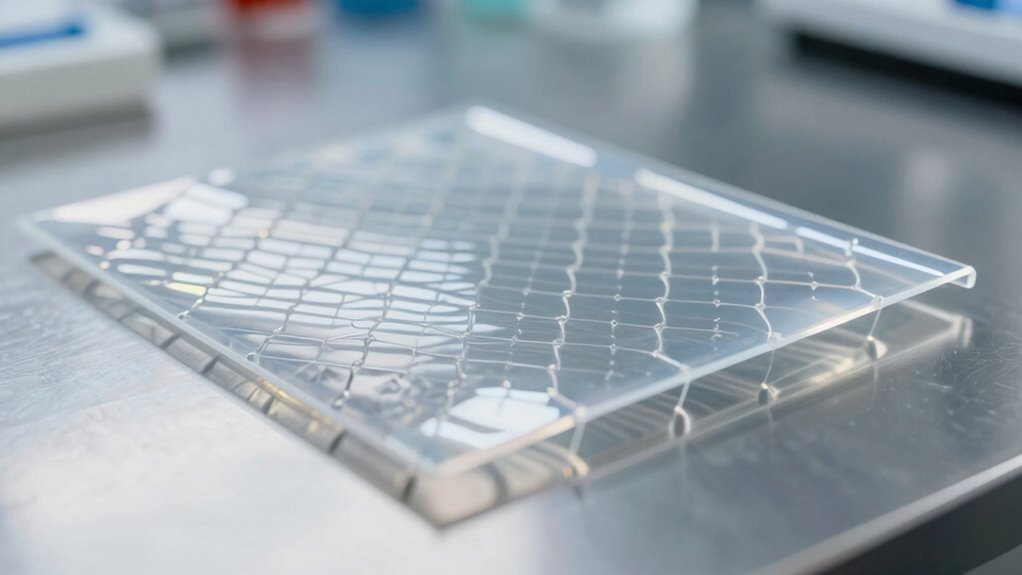

You see, graphene still dominates nano material conversations because it combines outstanding conductivity, strength, and flexibility that few materials can match. Its potential for creating faster electronics, durable devices, and eco-friendly manufacturing makes it incredibly valuable across industries. Advances in large-scale production are also lowering costs, making it more accessible for practical use. If you keep exploring, you’ll discover how ongoing innovations keep graphene at the cutting edge of nano material research.
Key Takeaways
- Graphene’s exceptional electrical conductivity surpasses most nanomaterials, enabling faster and more efficient electronic devices.
- Its combination of strength, flexibility, and chemical resistance ensures durability in diverse applications.
- Advances in scalable, cost-effective production make graphene more accessible for industrial use.
- Its versatile properties drive innovation across energy, health, and electronics sectors.
- Ongoing research continues to enhance its properties, maintaining its central role in nanomaterial discussions.
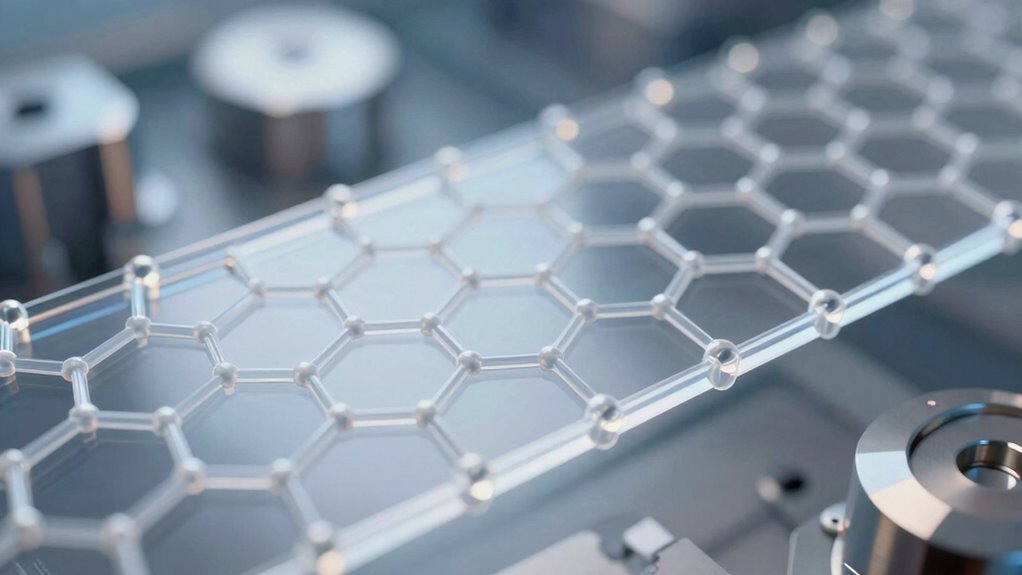
Have you ever wondered how tiny materials can revolutionize technology? When it comes to nano materials, few stand out as much as graphene. Its remarkable properties continue to keep it at the forefront of scientific conversations. One reason for this is graphene’s exceptional conductivity. You might think that electrical conductivity is common among materials, but graphene surpasses most with its ability to conduct electricity with near-perfect efficiency. This property makes it incredibly valuable for developing faster, more efficient electronic devices. Whether it’s in flexible screens, ultra-fast transistors, or energy storage systems, graphene’s high conductivity opens doors to innovations that weren’t possible before. Its thinness—just one atom thick—doesn’t diminish its conductive prowess; instead, it enhances its appeal for miniaturization and lightweight applications.
Beyond conductivity, graphene’s nano material durability plays a significant role in its ongoing dominance. When you think about durability, you want materials that can withstand wear and tear without losing their properties. Graphene offers exceptional strength and flexibility, making it resilient in demanding environments. Its ability to maintain integrity under mechanical stress means it’s not just a laboratory curiosity but a practical choice for real-world applications. This durability ensures that devices made with graphene last longer and perform reliably, which is critical for industries like aerospace, automotive, and electronics. Plus, its resistance to corrosion and chemical stability means it can function in harsh conditions, further extending its usability. Additionally, ongoing advancements in large-scale production methods are making graphene more accessible and affordable for commercial use. As research progresses, the development of cost-effective manufacturing techniques is crucial for accelerating its adoption across various industries. Moreover, the ongoing improvements in scaling up production are helping to reduce costs and increase availability, which further boosts its commercial potential. Furthermore, innovations in sustainable manufacturing are also contributing to environmentally friendly ways of producing graphene, aligning with global sustainability goals. As the demand for high-performance nano materials grows, researchers are also exploring ways to enhance its properties further through material engineering techniques.
The combination of these two properties—superior conductivity and nano material durability—creates a compelling case for why graphene remains a dominant topic in nano material research. It’s not just about having cutting-edge properties; it’s about how those properties translate into tangible, real-world benefits. Researchers and engineers are constantly exploring ways to harness graphene’s potential, knowing that its unique blend of electrical and physical resilience can lead to breakthroughs in energy, health, and electronics. As new methods for large-scale production emerge, the cost barriers are lowering, making graphene more accessible for commercial applications. This ongoing progress fuels the conversation, ensuring graphene’s position at the top of nano material discussions for years to come. Its ability to combine conductivity with durability makes it not just a remarkable material, but a cornerstone for future technological evolution.

Carbon Nanotube and Graphene Device Physics
- Condition: Used Book in Good Condition
As an affiliate, we earn on qualifying purchases.
As an affiliate, we earn on qualifying purchases.
Frequently Asked Questions
How Cost-Effective Is Large-Scale Graphene Production Currently?
Large-scale graphene production isn’t fully cost-effective yet, mainly due to challenges in ensuring economic feasibility and market scalability. You’ll find that manufacturing methods like chemical vapor deposition are expensive and hard to scale efficiently. While demand grows, reducing costs remains a priority. Advances in production techniques could improve market scalability and make large-scale graphene more economically feasible in the future, but current costs still limit widespread use.
What Are the Main Environmental Impacts of Graphene Manufacturing?
You might think graphene manufacturing is eco-friendly, but it often causes environmental pollution and ecosystem disruption. The production process can release toxic chemicals and generate waste that harms nearby wildlife and water sources. These impacts challenge the sustainability of large-scale graphene use. To visualize this, imagine a vibrant ecosystem gradually fading as pollutants seep into the environment, illustrating how manufacturing can unintentionally threaten the very ecosystems we aim to protect.
How Does Graphene Compare to Other 2D Materials?
You’ll find that graphene surpasses other 2D materials due to its exceptional properties like high electrical conductivity, strength, and flexibility. These qualities make it ideal for diverse applications, from flexible electronics to energy storage. While other 2D materials offer unique features, graphene’s combination of properties often provides more versatile solutions, keeping it at the forefront of nano material discussions and research efforts.
What Are the Latest Breakthroughs in Graphene-Based Electronics?
Ever wonder how close we are to ultra-fast, flexible gadgets? Recent breakthroughs show graphene’s quantum conductivity is enhancing electronic performance, enabling faster, more efficient devices. Researchers are integrating graphene onto flexible substrates, paving the way for wearable tech and foldable screens. These advancements could revolutionize electronics, making them more durable and adaptable. Isn’t it exciting to think about the future where your devices are as flexible as your lifestyle?
Are There Any Health Risks Associated With Graphene Exposure?
You should be aware that graphene toxicity is still being studied, but current research suggests that, under controlled conditions, it poses minimal health safety risks. However, inhaling or ingesting graphene nanoparticles could cause respiratory or gastrointestinal issues. To stay safe, handle graphene with proper protective gear, avoid prolonged exposure, and stay updated on new findings, as ongoing research continues to clarify its safety profile.

ZAGG Fusion XTR4 Samsung Galaxy S25 Ultra Screen Protector – Flexible Hybrid Protection with Graphene, Eyesafe Blue Light Filter, Anti-Reflective, Scratch Resistant, InvisibleShield, Easy Installation
- Unbreakable Hybrid Screen Protection: Flexible, durable, shock-absorbing polymer
- Blue Light Filter & Anti-Reflective: Protects eyes, reduces glare, enhances clarity
- Graphene-Fortified Technology: Provides superior impact and scratch resistance
As an affiliate, we earn on qualifying purchases.
As an affiliate, we earn on qualifying purchases.
Conclusion
So, after all the hype and high hopes, here you are—still marveling at graphene’s potential. It seems the wonder material just can’t help but dominate every conversation, despite the challenges. Ironically, it’s precisely these hurdles that keep it in the spotlight, fueling your curiosity and dreams of what’s to come. Maybe, in the end, it’s not about overcoming limitations but about how much you still believe in its promise.

Graphene Oxide in Enhancing Energy Storage Devices
As an affiliate, we earn on qualifying purchases.
As an affiliate, we earn on qualifying purchases.

Bio-pharmaceutical manifacturing large scale production process: The graphene – derivates role and m RNA vaccine
As an affiliate, we earn on qualifying purchases.
As an affiliate, we earn on qualifying purchases.