

Nano materials help you manage heat better by allowing precise control of heat flow at the atomic level. They can enhance thermal properties of devices, improve heat dissipation, and reduce overheating. Embedding nanoparticles with high thermal conductivity into composites or interface materials creates more efficient heat pathways. This leads to longer device life and better performance. If you explore further, you’ll discover how ongoing innovations are shaping the future of thermal management across industries.

Get the latest gadgets delivered free with Prime
- Fast, free delivery on millions of items
- Prime Video, Amazon Music and more included
- Member-only deals all year
Key Takeaways
- Nano materials enable atomic-level control of heat transfer, improving heat dissipation in devices.
- Incorporating high-conductivity nanoparticles enhances thermal performance of composite materials.
- Nano-enhanced thermal interface materials (TIMs) reduce thermal resistance between heat sources and sinks.
- Customizable nanoparticle properties allow precise management of heat distribution and dissipation.
- Widespread adoption of nano materials leads to longer-lasting, safer, and more energy-efficient electronic devices.
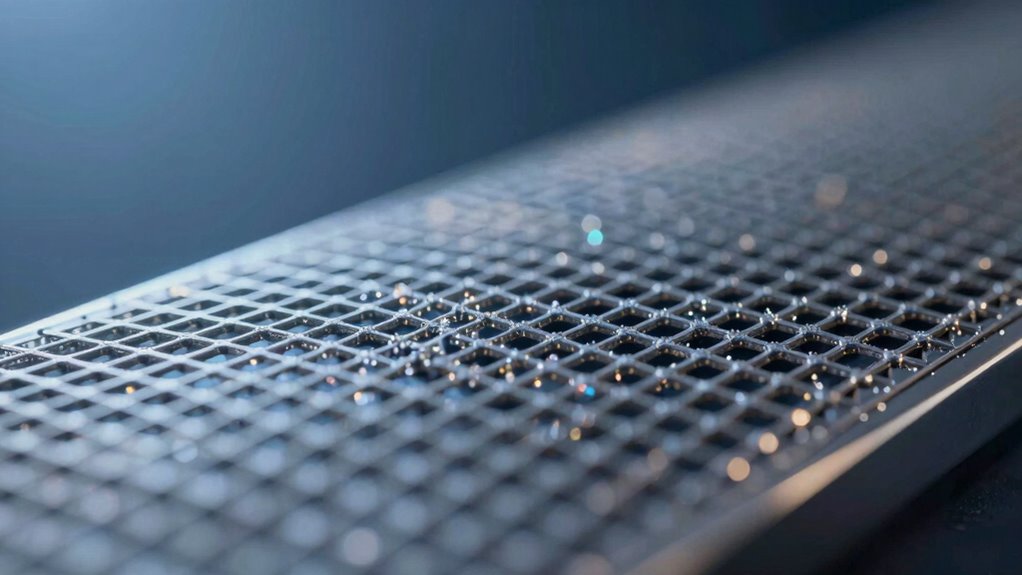
Nano materials are revolutionizing heat management by enabling more efficient control of thermal properties at an atomic level. This breakthrough allows you to manipulate how heat moves through materials, opening new possibilities for electronics, energy systems, and industrial applications. One of the key factors in this advancement is nanoparticle conductivity, which measures how well these tiny particles can transfer heat. By engineering nanoparticles with high thermal conductivity, you can markedly enhance the overall heat dissipation capabilities of composite materials. These particles can be embedded into various matrices, creating composites that conduct heat more efficiently than traditional materials. This means your devices can stay cooler, last longer, and perform better under demanding conditions.
Thermal interface materials (TIMs) are another vital element in this landscape. They act as the bridge between heat-generating components and heat sinks, ensuring minimal thermal resistance and promoting rapid heat transfer. Incorporating nano materials into TIMs can drastically improve their performance. For example, adding nanoparticles with excellent thermal conductivity to a TIM can reduce the interface’s thermal resistance, enabling faster heat flow from the source to the sink. This makes your electronic devices more reliable and less prone to overheating. The small size of nanoparticles also allows for better dispersion within the TIM, leading to more uniform thermal properties across the interface. As a result, thermal management becomes more precise and efficient, especially in compact or high-performance systems. Additionally, understanding the atomic-level behavior of nano materials helps in designing more effective thermal solutions. Nano engineering plays a crucial role in optimizing these properties and ensuring scalability for commercial use.
Moreover, nano materials open up possibilities for designing customizable thermal properties. You can tailor nanoparticle size, shape, and surface chemistry to optimize their conductivity and compatibility with different matrices. This flexibility gives you control over how heat is distributed and dissipated in complex systems. For instance, in electronics cooling, you can develop nano-enhanced TIMs that are not only highly conductive but also mechanically flexible and durable. These innovations help you meet the increasing demands for miniaturization and energy efficiency. Advances in material science are enabling the development of smarter, more adaptable heat management solutions that cater to specific application needs. Furthermore, ongoing research into nano materials enhances our understanding of their atomic structure, leading to more innovative and effective thermal management strategies. Overall, nano materials equip you with powerful tools to develop advanced heat management solutions that are faster, more effective, and adaptable to various technological challenges.
As research progresses, the integration of nano materials into commercial products will become more widespread. You stand to benefit from smarter, more efficient cooling systems that extend device lifespan, improve safety, and reduce energy consumption. Incorporating nanoparticle conductivity into heat management strategies highlights how advancements at the atomic level can lead to significant improvements in thermal performance. Embracing these nano-enabled solutions means you’re at the forefront of a technological revolution that’s transforming how heat is managed across industries.
thermal interface materials with nanoparticles
As an affiliate, we earn on qualifying purchases.
As an affiliate, we earn on qualifying purchases.
Frequently Asked Questions
Are Nano Materials Cost-Effective for Large-Scale Heat Management?
Nano materials can be cost-effective for large-scale heat management if you focus on improving cost efficiency and overcoming scalability challenges. While they sometimes have higher initial costs, their superior thermal properties can reduce energy consumption over time, saving money. However, scaling production remains a challenge, which can increase costs. If you invest in scalable manufacturing methods, nano materials could become a practical, economical solution for your heat management needs.
How Durable Are Nano Materials Under Extreme Temperatures?
Think of nano materials as brave explorers venturing into a blazing furnace. Their thermal stability under extreme temperatures varies; some resist the heat, like seasoned warriors, while others face material degradation, weakening over time. Their durability depends on composition and application, but many are engineered to withstand harsh environments. With proper design, nano materials can maintain integrity, offering reliable heat management even in the most intense conditions.
Can Nano Materials Be Integrated Into Existing Cooling Systems?
Yes, nano materials can be integrated into existing cooling systems. You can apply nano coatings to surfaces to enhance heat dissipation, making the system more efficient. These coatings improve thermal conductivity, helping heat spread evenly and reduce hotspots. By incorporating nano materials, your cooling systems become more effective, durable, and capable of managing higher temperatures, ultimately boosting performance and extending the lifespan of electronic components.
What Environmental Impacts Do Nano Materials Have?
You should be aware that nano materials can pose environmental risks, such as environmental toxicity if they’re released into ecosystems. Recycling challenges also exist, as their small size and unique properties make them difficult to recover and reuse. These issues highlight the importance of careful management and development of sustainable methods for handling nano materials, ensuring they don’t harm the environment during production, use, or disposal.
How Do Nano Materials Compare to Traditional Heat Conductors?
Imagine a time-traveling scientist witnessing future tech—nano materials outperform traditional heat conductors by offering superior nano efficiency and material stability. You’ll find that nano materials transfer heat more rapidly and reliably, reducing hotspots and energy loss. Unlike conventional conductors, they maintain their properties under extreme conditions, making them ideal for advanced electronics and cooling systems. This leap in heat management helps you design smarter, more durable devices with enhanced performance.
high thermal conductivity thermal paste
As an affiliate, we earn on qualifying purchases.
As an affiliate, we earn on qualifying purchases.
Conclusion
Imagine nano materials as tiny firefighters rushing to your heat emergencies. They swiftly detect hot spots and cool them down with precision, preventing damage before it happens. Just like a well-trained team, these materials work quietly yet effectively, safeguarding your devices and systems. Embrace these microscopic heroes, and you’ll keep your tech cool under pressure, ensuring longevity and performance. With nano materials on your side, heat management becomes a smooth, controlled dance—small scale solutions for big temperature troubles.
As an affiliate, we earn on qualifying purchases.
thermal management composite materials
As an affiliate, we earn on qualifying purchases.
As an affiliate, we earn on qualifying purchases.
Columbus Day / Indigenous Peoples' Day Picks
long weekend sales
As an affiliate, we earn on qualifying purchases.