
TL;DR
Get ready for Prime Big Deal Days — try Prime free
Exclusive member deals on October 6–7, plus fast free delivery. Cancel anytime.
Start your free trialAs an affiliate, we earn on qualifying purchases.
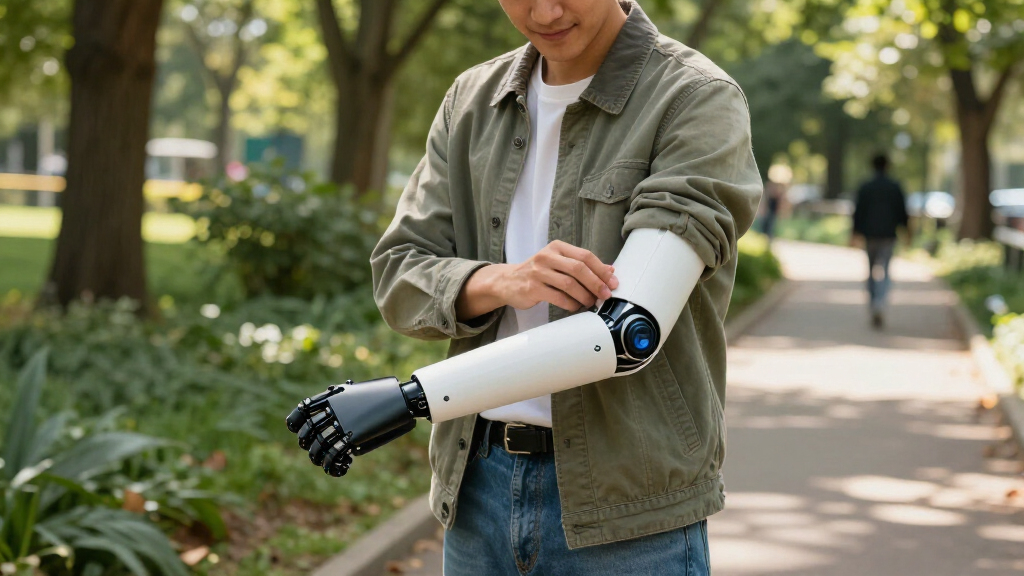
Canadian start-up smartARM has revealed a new line of AI-enhanced bionic prosthetics that aim to improve user control and comfort. This development signals a potential shift in prosthetic design, driven by artificial intelligence. Details are still emerging, and the impact remains to be seen.
Canadian start-up smartARM has introduced a new line of AI-powered bionic prosthetics designed to enhance control and comfort for users. The company claims that their technology leverages artificial intelligence to interpret neural signals more accurately, potentially revolutionizing prosthetic use. This announcement marks a significant step forward in the development of intuitive limb replacements, with implications for thousands of individuals worldwide.
According to the company, smartARM’s prosthetics utilize advanced AI algorithms to translate neural and muscular signals into precise movements, offering a more natural user experience. The devices incorporate sensors that interface directly with the nervous system, enabling users to control their prosthetic limbs with greater ease and less mental effort than traditional models. The start-up states that initial prototypes have demonstrated promising results in laboratory testing, with users able to perform complex movements with minimal training.
While specific technical details remain proprietary, smartARM has indicated that their system employs machine learning models trained on large datasets of neural activity to adapt to individual user needs. The company also emphasizes that their design prioritizes comfort and durability, aiming to reduce the common issues of skin irritation and device failure seen in earlier prosthetic models. The announcement has garnered attention from medical professionals and industry analysts, who see it as a potential leap forward in prosthetic technology.
Potential Impact on Prosthetic Control and Accessibility
This development could significantly improve the quality of life for amputees by providing more intuitive and responsive prosthetic limbs. If commercialized successfully, smartARM’s AI-driven approach might reduce the learning curve for new users and increase the functional capabilities of prosthetics, allowing for more natural movement and better integration with daily activities. Additionally, the use of AI could enable future customization and adaptive learning, tailoring the device to individual needs over time. The broader industry may see increased investment in AI-enabled medical devices, accelerating innovation in this space.
As an affiliate, we earn on qualifying purchases.
Emerging Trends in AI and Prosthetics Development
Interest in AI-enhanced prosthetic devices has been growing over the past few years, driven by advances in machine learning, sensor technology, and neural interfaces. Major companies and research institutions have announced various prototypes and experimental systems, but widespread adoption remains limited by technical and regulatory challenges. The recent surge in coverage and interest appears to be linked to ongoing technological breakthroughs and increased funding in the field, although specific triggers or announcements have not yet been confirmed.
Historically, prosthetic development has focused on mechanical robustness and basic control features. Incorporating AI represents a shift toward more personalized, adaptive systems that can learn from user behavior. Canadian start-ups like smartARM are increasingly seen as key players in this evolving landscape, aiming to bridge the gap between research and commercial application.
As an affiliate, we earn on qualifying purchases.
Unconfirmed Technical Details and Market Readiness
It is not yet clear how advanced the current prototypes are in terms of real-world functionality or how soon they might be available commercially. Details about the AI algorithms, sensor integration, and regulatory approval process remain undisclosed. Industry experts caution that while initial laboratory results are promising, broader testing and validation are necessary before widespread adoption can occur. The impact on existing prosthetic markets and user experiences is still uncertain.
As an affiliate, we earn on qualifying purchases.
Next Steps for smartARM and the Industry
smartARM is expected to continue refining its prototypes, conduct clinical trials, and seek regulatory approval in the coming months. The company has indicated plans to demonstrate the technology at upcoming medical device conferences, which could attract investor interest and industry partnerships. Broader market adoption will depend on successful validation, manufacturing scalability, and regulatory clearance. Observers will be watching for peer-reviewed studies and independent testing results to confirm the technology’s efficacy.
As an affiliate, we earn on qualifying purchases.
Key Questions
When might smartARM’s prosthetics become available to consumers?
It is not yet clear when the devices will reach the market. The company plans further testing and regulatory approval, which could take several years.
How does AI improve prosthetic control compared to traditional systems?
AI enables more accurate interpretation of neural signals, allowing for more natural and intuitive movement, reducing the mental effort required for control.
Are there any safety concerns with AI-powered prosthetics?
Safety and reliability are key considerations, and extensive testing is needed to ensure these devices are safe for everyday use. Regulatory approval processes will address these concerns.
What are the main challenges in developing AI-enabled prosthetics?
Technical complexity, ensuring consistent neural interface performance, regulatory hurdles, and manufacturing scalability are among the main challenges faced by developers.
How does this development compare to existing prosthetic technologies?
Compared to traditional mechanical or myoelectric prosthetics, AI-driven systems aim to offer more natural, adaptable control, potentially transforming user experience and functionality.
Source: rss
Fall Picks
fall essentials
As an affiliate, we earn on qualifying purchases.