Nanofabrication 101 involves manipulating materials at an atomic or molecular scale to create tiny, high-performance electronic components. You use techniques like electron beam lithography, where focused electron streams modify surfaces coated with special resists. This precise method allows you to craft features just a few nanometers wide without needing masks, making it ideal for research and prototypes. If you want to discover more about how these advanced techniques work and their future, keep exploring further.
Key Takeaways
- Nanofabrication involves manipulating materials at atomic or molecular scales to create tiny, precise electronic and mechanical components.
- Electron beam lithography uses focused electron streams to pattern surfaces with nanometer accuracy without needing masks.
- This technique coats surfaces with a resist, exposes specific areas with an electron beam, and develops patterns for further processing.
- Advantages include high resolution, flexibility for complex designs, and suitability for research, prototyping, and low-volume manufacturing.
- Future innovations explore new methods like sonoluminescence and aim to improve resolution, efficiency, and enable advanced nanotechnology applications.
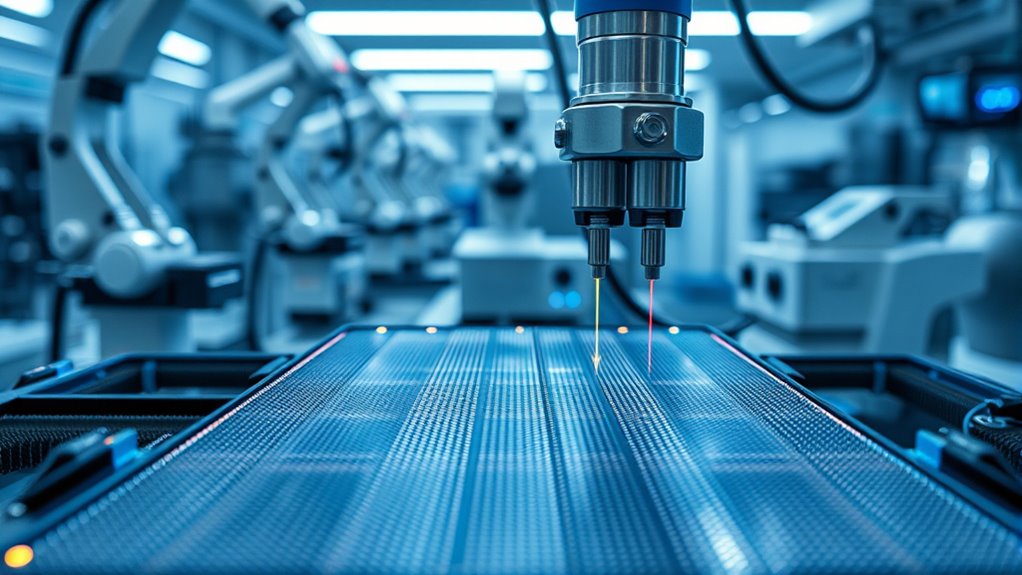
Have you ever wondered how tiny electronic devices like smartphones and computers are made so powerful yet so compact? The secret lies in the fascinating world of nanofabrication, where engineers and scientists manipulate materials at an atomic or molecular scale. One of the most precise tools in this field is the electron beam, which allows you to perform surface patterning with astonishing accuracy. Using an electron beam, you can directly write or modify patterns on a surface, creating intricate designs that form the foundation of microchips and other nanoscale components.
Surface patterning with an electron beam involves focusing a high-energy stream of electrons onto a material, typically a semiconductor or a resist-coated surface. As the electrons interact with the material, they can change its properties—either by breaking chemical bonds or by depositing energy that causes localized chemical reactions. This process enables you to carve out specific patterns with nanometer precision, which is essential for fabricating the tiny transistors, interconnects, and sensors packed into modern electronic devices.
Focusing a high-energy electron stream enables nanometer-precision patterning of surfaces for advanced electronic components.
The process starts with coating a surface with a resist—a sensitive material that reacts to electron exposure. You then use an electron beam lithography system to scan across the surface, precisely controlling where the beam hits. When the beam strikes, it modifies the resist in those regions, making them either more soluble or less soluble in a developer solution. You then immerse the surface in a developer, washing away the exposed or unexposed resist, depending on the process. This leaves behind a pattern that acts as a mask for subsequent etching or material deposition steps, allowing you to transfer your design onto the underlying substrate with high fidelity.
What makes electron beam surface patterning so powerful is its ability to create extremely complex and dense patterns without the need for masks, unlike traditional photolithography. This maskless approach gives you unparalleled flexibility, making it ideal for research, prototyping, and low-volume production of advanced nanodevices. Additionally, the resolution achievable with electron beam patterning can reach just a few nanometers, enabling the creation of features that are impossible with other techniques. Recent studies also explore the potential of sonoluminescence to generate extremely high temperatures that could someday influence future nanofabrication processes.

Design for Manufacturability with Advanced Lithography
As an affiliate, we earn on qualifying purchases.
As an affiliate, we earn on qualifying purchases.
Frequently Asked Questions
What Are the Environmental Impacts of Nanofabrication Processes?
You should be aware that nanofabrication processes can generate toxic waste, which may pollute water and soil if not properly managed. Additionally, these processes often consume significant energy, contributing to carbon emissions and environmental degradation. By adopting greener techniques and waste management practices, you can reduce these impacts, helping to protect the environment while advancing nanotechnology. Sustainable approaches are essential for minimizing the ecological footprint of nanofabrication.
How Cost-Effective Is Nanofabrication for Large-Scale Production?
Nanofabrication for large-scale production is like trying to tame a wild stallion; it’s promising but faces scaling challenges. While material costs can be high initially, advances in techniques are gradually reducing expenses. For now, it’s less cost-effective than traditional methods, but as technology improves and processes become more streamlined, the potential for cost savings grows, making nanofabrication more viable for mass production in the future.
What Safety Precautions Are Necessary During Nanofabrication?
You need to prioritize safety during nanofabrication by wearing proper personal protective equipment, like gloves, goggles, and lab coats. Always follow chemical handling protocols carefully to prevent exposure to hazardous substances. Work in well-ventilated areas or under fume hoods, and handle chemicals with caution. Regularly check safety equipment and stay updated on safety procedures to minimize risks and guarantee a safe working environment.
How Does Nanofabrication Differ Across Industries?
You’ll notice nanofabrication differs across industries through industry-specific techniques and application variations. For example, electronics focus on precise patterning of circuits, while biotech emphasizes creating nanoscale drug delivery systems. You adapt your methods based on industry needs, using specialized equipment and materials. This variation makes certain your nanofabrication processes meet specific performance, safety, and scalability requirements essential for each industry’s unique applications.
What Are Future Trends in Nanofabrication Technology?
You’ll see future nanofabrication trends involve quantum-enabled manufacturing, which boosts precision and efficiency at atomic scales, and bio-inspired nanotech, mimicking nature’s strategies for stronger, smarter materials. These advancements will make devices more powerful and sustainable, opening doors for breakthroughs in medicine, electronics, and energy. Staying ahead means embracing these innovations now, as they’ll transform how you design and produce at the tiniest levels.
nanofabrication resist materials
As an affiliate, we earn on qualifying purchases.
As an affiliate, we earn on qualifying purchases.
Conclusion
Now that you’ve grasped the basics of nanofabrication, imagine sculpting tiny worlds where atoms dance like shimmering stars under a microscope’s gaze. With each precise stroke, you build intricate structures as small as a few nanometers—like crafting delicate lace from atoms. This invisible craftsmanship transforms raw materials into marvels of technology, opening doors to endless innovations. Keep exploring, and soon you’ll be shaping the future, one atom at a time, in the vast universe of the very small.
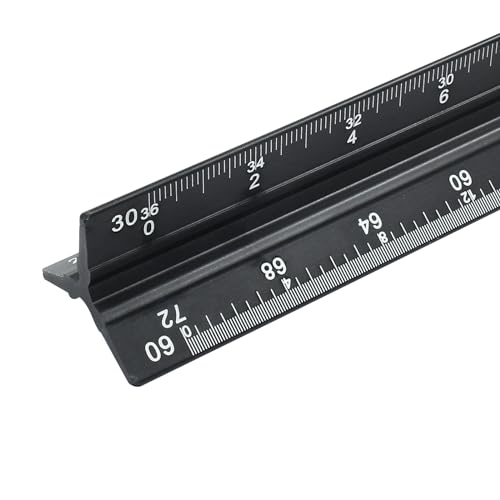
Piutouyar 12 Inch Engineer Scale Ruler, Metal Engineering Ruler, Black
- Package Includes: 12-inch engineer scale and storage box
- Durable Material: Anodized aluminum alloy construction
- Corrosion Resistant: Resistant to corrosion and damage
As an affiliate, we earn on qualifying purchases.
As an affiliate, we earn on qualifying purchases.

THE BRAIN: Exploring the Latest Research and Neurotechnological Innovations in Cognition and Consciousness (Cutting-Edge Sciences)
As an affiliate, we earn on qualifying purchases.
As an affiliate, we earn on qualifying purchases.