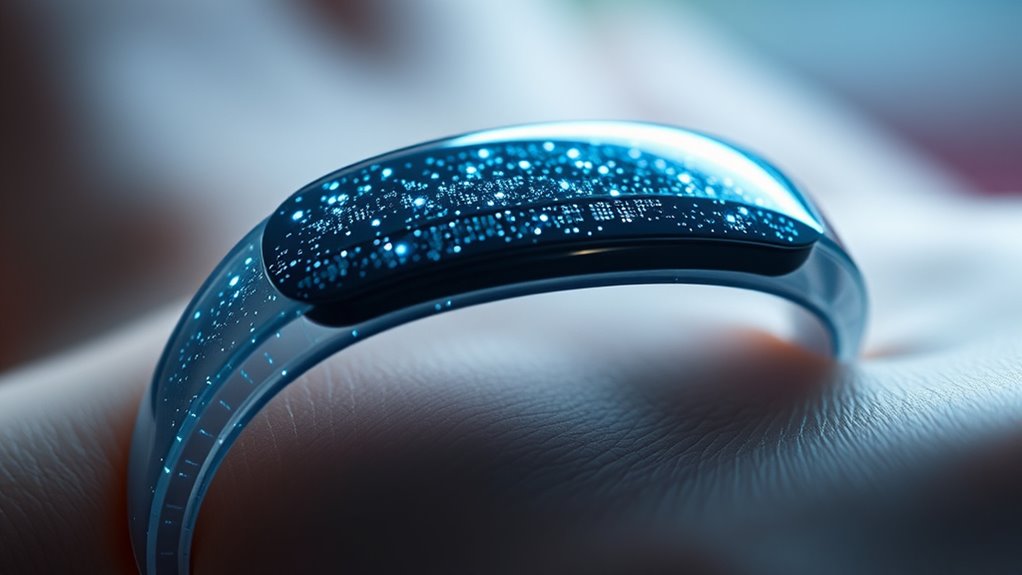

Wearable health trackers with nanotech enhance your monitoring experience by providing highly accurate, continuous data on essential signs like heart rate and blood pressure. These devices are designed to be durable, flexible, and comfortable, so you can wear them throughout daily activities without worry about wear and tear. They also securely collect your sensitive health info, but it’s important to stay aware of privacy concerns and choose reputable options. Keep exploring to discover how these innovative devices can transform your health management.
Key Takeaways
- Nanotech enables highly accurate, real-time health monitoring through advanced sensors integrated into wearable devices.
- Durability at microscopic levels allows wearables to withstand daily activities, ensuring long-term reliable data collection.
- Flexible nanotech materials improve user comfort and device longevity, supporting continuous health tracking.
- Privacy concerns arise due to extensive health data collection, requiring secure encryption and responsible data management.
- Users should choose reputable wearables with strong security features and be vigilant about sharing sensitive health information.
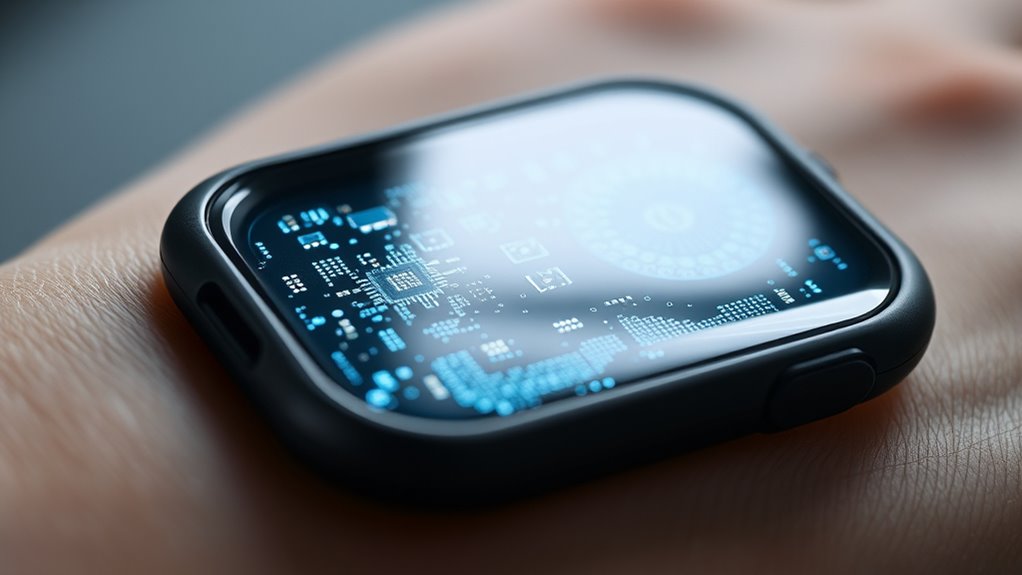
As wearable health trackers become more advanced, nanotechnology is opening new possibilities for real-time, highly accurate health monitoring. These tiny innovations allow your devices to measure vital signs and detect health issues with unprecedented precision. One major advantage of nanotech in wearables is nanotech durability. Because these sensors are built at a microscopic level, they can be integrated seamlessly into flexible, durable materials that withstand daily wear and tear. Whether you’re running, sleeping, or sweating, your tracker remains reliable, providing consistent data without breaking down or losing accuracy. This durability ensures your device can operate effectively over long periods, reducing the need for frequent replacements and making the technology more practical and cost-effective. Furthermore, advances in sensor technology enhance the sensitivity and functionality of these devices, allowing for more comprehensive health assessments. However, with these advancements come significant privacy concerns that you should be aware of. As nanotech enables wearables to collect a vast amount of sensitive health data, the risk of this information being compromised increases. Your health data—ranging from heart rate and blood pressure to genetic information—becomes a valuable commodity, attracting potential misuse or hacking. Manufacturers and developers need to prioritize robust security measures, such as encryption and secure data storage, to protect your personal information. Still, the sheer complexity of nanotech-enhanced devices can introduce vulnerabilities that cybercriminals might exploit. As a user, you should be vigilant about which data you share and ensure that the devices you use come from reputable sources with transparent privacy policies.
Top picks for "wearable health tracker"
Open Amazon search results for this keyword.
As an affiliate, we earn on qualifying purchases.
Frequently Asked Questions
How Long Do Nanotech-Based Wearables Typically Last Before Needing Replacement?
Nanotech-based wearables typically last around 2 to 5 years before needing replacement, depending on their nanotech durability and usage. You might find that their wearable lifespan is extended with proper care, such as avoiding extreme temperatures and water. Regular updates or maintenance can also help maximize their longevity. Ultimately, investing in high-quality nanotech wearables guarantees they stay functional and reliable longer, giving you better value over time.
Are There Any Known Health Risks Associated With Nanotech in Wearables?
You might think nanotech in wearables is completely safe, but ironically, nanotech toxicity and environmental impact raise real concerns. While these tiny devices offer incredible benefits, they can pose health risks if nanomaterials leach into your body or the environment. Though research is ongoing, it’s wise to stay cautious and demand transparency from manufacturers about safety measures, because sometimes, the smallest tech can have the biggest unintended consequences.
Can Nanotech Wearables Detect Mental Health Conditions?
Yes, nanotech wearables can detect mental health conditions through neural monitoring and emotional detection. You might find these devices analyze brain signals or physiological responses to identify stress, anxiety, or mood changes. By continuously monitoring neural activity and emotional cues, they offer real-time insights into your mental well-being, helping you manage conditions proactively. However, make certain you stay aware of privacy and accuracy concerns with these emerging technologies.
How Do Nanotech Sensors Improve Accuracy Over Traditional Sensors?
Nanotech sensors improve accuracy by enhancing sensor sensitivity and data precision. You’ll notice these sensors detect even tiny biological signals that traditional sensors might miss, leading to more reliable data. They respond faster to changes in your body, providing real-time insights. As a result, nanotech wearables give you a clearer, more detailed picture of your health, helping you make better-informed decisions and catch potential issues early.
What Are the Privacy Implications of Nanotech Health Data Collection?
You should be aware that nanotech health data collection raises privacy concerns, especially around data encryption and user consent. You need to guarantee your information is protected through strong encryption, prevent unauthorized access, and give clear, informed consent before sharing your data. Staying informed about how your health data is used, stored, and shared helps you maintain control and safeguard your privacy in this rapidly evolving landscape.
Conclusion
As you explore the potential of wearable health trackers with nanotech, one thing becomes clear: the future is closer than you think. These tiny innovations could revolutionize how you monitor your health—offering real-time insights you never imagined possible. But what’s next? Will nanotech unveil even more groundbreaking features? Stay tuned, because the next leap in health technology might be just around the corner, waiting to transform your life in ways you can’t yet imagine.