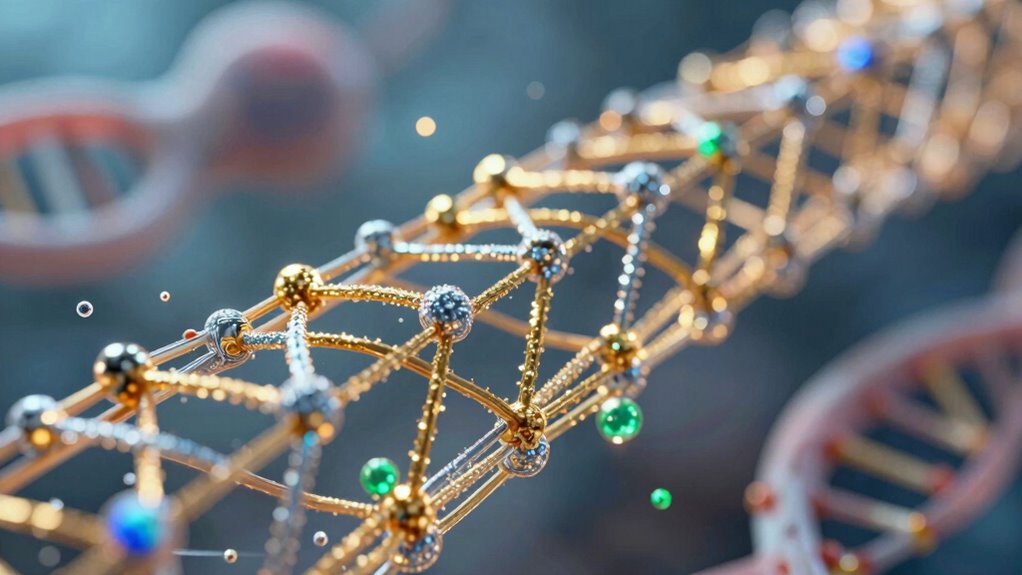
Promising for precise, self-assembling molecular systems, DNA nanotechnology’s potential to revolutionize medicine and electronics will leave you eager to learn more.
Browsing Category
nanomachines-basics
23 posts
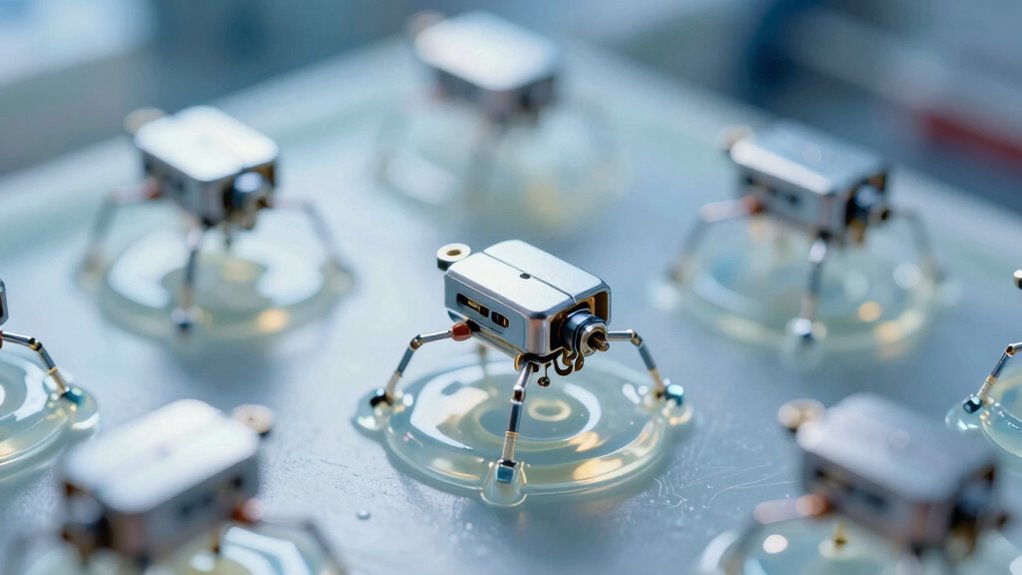
Why Nanorobots Remain More Research Than Reality for Now
Just as promising as nanorobots are, significant challenges remain that keep their practical use elusive—discover how researchers aim to overcome these hurdles.
What Makes Nano-Scale Heat Transfer So Different
Discover why nano-scale heat transfer differs fundamentally due to quantum effects and surface interactions, and how these tiny factors dramatically influence energy flow.
Why Nanoscale Precision Changes Manufacturing Possibilities
Manufacturing is transformed at the atomic level, unlocking new possibilities driven by nanoscale precision that could revolutionize industry standards and innovations.
The Key Tradeoffs in Designing Practical Nanomachines
Of all the challenges in nanomachine design, understanding core tradeoffs is crucial for creating effective, reliable devices that meet diverse demands.
The Big Promise and Limits of Molecular Electronics
Molecular electronics offers groundbreaking potential, but understanding its limits is essential to unlock its full transformative power—discover how scientists are overcoming these challenges.
What Makes Nanorobotics So Hard to Bring Into Practice
Keen advances are needed to overcome complex quantum effects and manufacturing hurdles, but the path to practical nanorobotics remains challenging.
The Most Important Difference Between Nanotech and Microtech
A fundamental difference between nanotech and microtech lies in their scale, influencing material behavior and manufacturing complexities—discover how this impacts innovation.
The Real Challenge of Building Stable Nanomachines
Inevitable challenges in quantum control and material durability make building stable nanomachines a complex puzzle worth exploring further.
What Makes Nanoparticles Behave Differently From Bulk Materials
Nanoparticles behave differently from bulk materials mainly because of their high surface…