
MXenes are rapidly gaining attention as a game-changing class of two-dimensional nanomaterials. They boast exceptional electrical conductivity, tunable optical properties, and outstanding mechanical strength, making them ideal for energy storage, environmental cleanup, and advanced electronics. Their versatile surface chemistry and stability open up endless possibilities across industries. If you stay curious, you’ll discover how MXenes could revolutionize technology and sustainability in the near future.

Get the latest gadgets delivered free with Prime
- Fast, free delivery on millions of items
- Prime Video, Amazon Music and more included
- Member-only deals all year
Key Takeaways
- MXenes offer exceptional electrical conductivity, high surface area, and tunable properties, making them ideal for energy storage and electronic devices.
- Their unique optical and plasmonic features enable applications in sensing, IR camouflage, and thermal regulation.
- MXenes enhance composite strength, flexibility, and thermal stability, supporting advanced aerospace, electronics, and wearable technologies.
- Their versatile surface chemistry allows for targeted environmental remediation and water purification solutions.
- Ongoing research aims to standardize synthesis, improve stability, and scale production, positioning MXenes as a transformative nanomaterial platform.
MXenes nanomaterials for energy storage
As an affiliate, we earn on qualifying purchases.
As an affiliate, we earn on qualifying purchases.
What Are MXenes and How Are They Made?
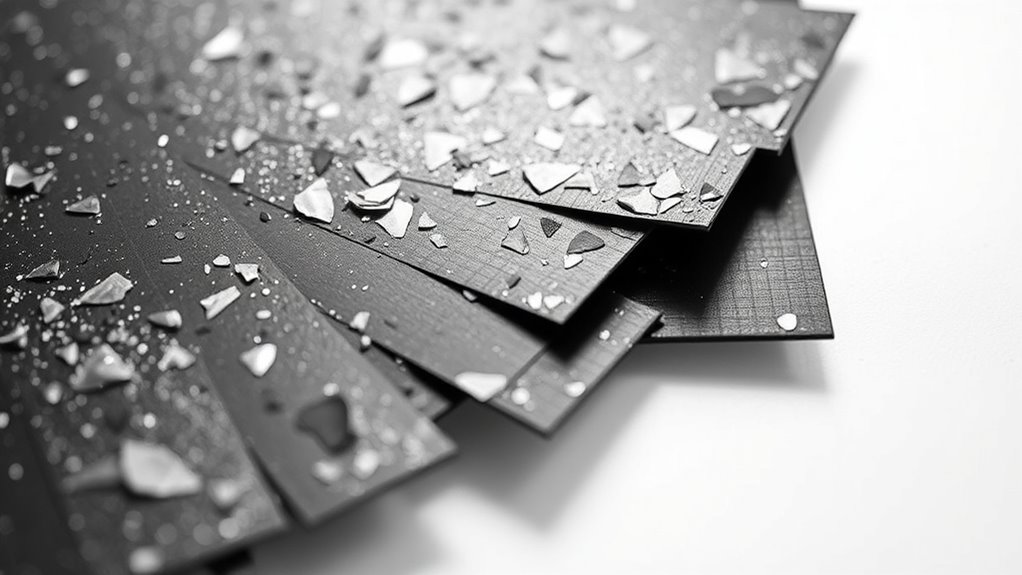
What exactly are MXenes, and how do scientists produce these remarkable materials? MXenes are atomically thin layers made of transition metal carbides, nitrides, or carbonitrides, with the general formula Mn+1XnTx. Transition metals like Ti, Nb, and V form the core structure, while layers of C or N fill the spaces. The surface terminations, such as -OH, =O, or -F, give MXenes unique properties. Scientists produce them by selectively etching away the aluminum A-layer from MAX phases—precise layered compounds—using chemical treatments. This process leaves behind hydrophilic, multilayered flakes. These flakes can be further separated into nanoscale sheets for various applications. Advanced techniques like electron microscopy, X-ray diffraction, and spectroscopy help characterize their structure and properties, ensuring high-quality MXenes for research and industry. The layered structure of MXenes contributes significantly to their exceptional electrical conductivity and mechanical strength. Additionally, ongoing research focuses on optimizing the synthesis methods to enhance their performance in energy storage, sensors, and other advanced technologies. Understanding the chemical stability of MXenes is crucial for their long-term application in real-world devices. Furthermore, exploring their potential biomedical applications could open new avenues for medical technologies. Recent studies also highlight the importance of scalable production techniques to facilitate commercial adoption of MXenes.
MXenes sensing and optical devices
As an affiliate, we earn on qualifying purchases.
As an affiliate, we earn on qualifying purchases.
Unique Electronic and Optical Traits of MXenes

You’ll find MXenes have remarkable electronic conductivity that can be tuned from metallic to semiconducting states, depending on surface terminations. Their optical responses are adjustable, with negative permittivity and high IR reflectivity enabling applications in thermal management and camouflage. Additionally, their plasmonic properties enhance surface-enhanced Raman spectroscopy, opening doors for advanced sensing technologies. The versatility of MXenes also allows for customization tailored to specific family needs in various technological applications. Moreover, their complex chemistry offers opportunities for innovative surface modifications that further expand their functionality and integration potential, making them highly adaptable for a broad range of innovative uses. This tunable conductivity is a key factor that enhances their potential across multiple fields.
Electronic Conductivity Versatility
The electronic conductivity of MXenes demonstrates remarkable versatility due to their unique layered structure and surface chemistry. You can manipulate their properties by altering surface terminations like -OH, =O, or -F, which influence conductivity and band structure. You can also tailor their electronic properties through doping or by controlling synthesis conditions to achieve specific functionalities. Bare MXenes behave as metals with high electron density, while oxygen or other groups can induce semiconducting behavior. Their conductivity varies with thickness, enabling device tuning. External stimuli, such as electrochemical bias, can shift Fermi levels, further enhancing their adaptability. This tunable conductivity makes MXenes promising candidates for electronic applications across various fields. Use the table below to see some key variations:
Tunable Optical Responses
MXenes exhibit highly tunable optical responses that stem from their unique electronic structure and surface chemistry. Their metallic nature results in strong light absorption, especially in the infrared region. Surface terminations like -OH, =O, and -F influence optical behavior by altering surface charge density and electronic states. This tunability allows for reversible shifts in absorption peaks, enabling electrochromic applications. Additionally, MXenes display negative permittivity above 1.4 micrometers, making them highly reflective to IR light and useful for thermal management. Their high light absorption surpasses that of carbon nanotubes, while their low emissivity aids in heat dissipation. The ability to modify optical properties through surface chemistry and external stimuli makes MXenes promising for adaptive coatings, smart windows, and optoelectronic devices.
Plasmonic and IR Properties
Have you ever wondered how MXenes can manipulate light at the nanoscale? Their plasmonic and IR properties enable unique interactions with electromagnetic waves. MXenes exhibit negative permittivity above 1.4 micrometers, making them highly reflective in the infrared spectrum. This trait allows for effective thermal management and camouflage, as they appear black visually but reflect IR light. Their surface plasmon resonances support surface-enhanced Raman spectroscopy, with enhancement factors up to 10^6, boosting detection sensitivity. Additionally, their tunable optical absorption—such as the reversible shift in Ti3C2Tx’s peak over 100 nanometers—enables dynamic electrochromic applications. These properties, combined with high light absorption and low IR emissivity, position MXenes as promising materials for advanced photonic, sensing, and thermal regulation devices. Moreover, their optical tunability makes them suitable for customizable devices in various technological fields.
As an affiliate, we earn on qualifying purchases.
Mechanical Strength and Thermal Stability of MXene-Based Composites
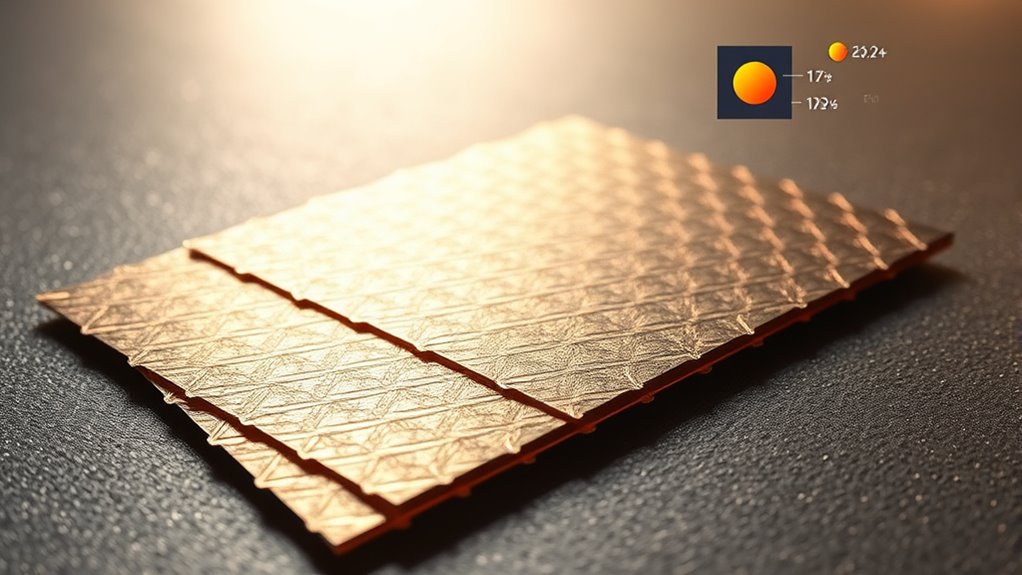
Incorporating MXenes into composite materials substantially enhances their mechanical strength and thermal stability, making them promising for various high-performance applications. When you embed MXenes into polymers or ceramics, you create composites with tensile strengths increased by up to 67% and modulus improvements of 23%. These nanomaterials distribute stress efficiently, preventing crack propagation and improving durability. MXenes also boost thermal stability, allowing composites to withstand higher temperatures without degradation. Their excellent interfacial bonding and high surface area facilitate load transfer and heat dissipation. As a result, MXene-based composites are ideal for aerospace, electronics, and energy storage, where strength and thermal resilience are critical. This synergy between MXenes and matrix materials disclose new possibilities for developing lightweight, robust, and thermally stable components. Understanding nanomaterials advances helps optimize their integration into composite structures.
As an affiliate, we earn on qualifying purchases.
Exploring the Versatile Applications of MXenes in Technology
Thanks to their unique combination of electrical conductivity, surface chemistry, and mechanical stability, MXenes are transforming a wide range of technological fields. You can leverage their high conductivity for flexible electronics, making transparent conductors that outperform traditional materials. MXenes’ tunable surface chemistry enables efficient sensors for environmental monitoring, biomedical diagnostics, and wearable devices. Their excellent mechanical strength and stability support lightweight, durable composites used in aerospace and automotive industries. You’ll also find MXenes valuable in electromagnetic interference shielding, protecting electronics from disruptions. Their optical properties allow for advanced photothermal and electrochromic devices, providing smart windows and thermal management solutions. As you explore these applications, you’ll see how MXenes open new avenues for innovation across energy, healthcare, communications, and beyond. surface chemistry plays a crucial role in customizing MXene properties for specific technological needs. Additionally, ongoing research into material synthesis techniques promises to further enhance their performance and expand their application scope. Furthermore, their scalability for large-scale production is a key factor in transitioning MXenes from laboratory research to commercial use. Improving scalable manufacturing processes will be essential to fully realize their commercial potential. Moreover, advances in material stability are critical for ensuring long-term functionality in various environments.
How MXenes Are Transforming Energy Storage Solutions
MXenes’ exceptional electrical conductivity and tunable surface chemistry make them highly promising for energy storage technologies. Their metallic nature allows for rapid electron transport, enabling high power density in supercapacitors and batteries. Surface terminations like -OH, =O, and -F can be adjusted to optimize electrochemical performance, enhancing charge storage capacity and cycling stability. MXenes also exhibit pseudocapacitive behavior, allowing for fast and reversible charge transfer, which boosts energy density. Their hydrophilic properties facilitate electrolyte infiltration, improving ion accessibility. When integrated into electrodes, MXenes provide high electrical conductivity and mechanical flexibility, making devices more durable. Additionally, the synthesis methods used to produce MXenes significantly influence their properties and performance in energy storage applications. These features collectively position MXenes as a game-changer in energy storage, promising safer, more efficient, and longer-lasting energy solutions for various applications. Understanding the properties of MXenes is essential for advancing their application in next-generation energy devices. Additionally, ongoing research into material customization aims to further tailor MXenes for specific energy storage needs.
The Role of MXenes in Sustainable and Environmental Technologies
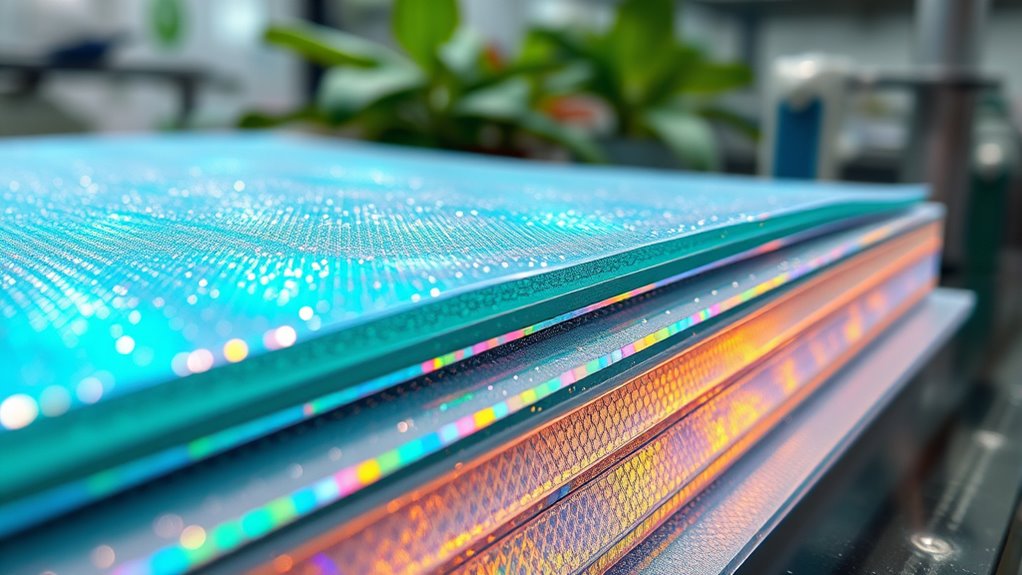
You can harness MXenes’ high surface area and hydrophilicity for effective water purification, removing heavy metals and organic pollutants. Their tunable surface chemistry makes them ideal for environmental remediation, targeting specific contaminants. By integrating MXenes into treatment systems, you’ll improve sustainability and reduce ecological impact. Additionally, their potential uses in air purification can contribute to creating healthier indoor environments. Thanks to their electrical conductivity, MXenes can also be employed in sensors that monitor environmental quality in real time. Their versatility in functionalization allows for customization to address various environmental challenges effectively.
Water Purification Capabilities
How do MXenes contribute to sustainable water purification efforts? You can leverage their unique properties to remove contaminants efficiently. MXenes’ high surface area and hydrophilicity enable rapid adsorption of heavy metals, dyes, and organic pollutants. Their metallic conductivity enhances electrochemical processes, supporting advanced filtration techniques. Additionally, their tunable surface terminations allow selective removal of specific toxins, improving purification quality. MXenes also facilitate membrane development with enhanced permeability and fouling resistance, extending filter lifespan. Their thermal stability ensures reliable operation in various conditions, making them ideal for portable or large-scale systems. By integrating MXenes, you create eco-friendly, cost-effective solutions that advance clean water access worldwide.
- High adsorption capacity for heavy metals and dyes
- Enhanced membrane performance and fouling resistance
- Tunable surface chemistry for selective contaminant removal
Environmental Remediation Potential
Harnessing their unique combination of high surface area, tunable surface chemistry, and excellent electrical conductivity, MXenes play a pivotal role in advancing sustainable environmental remediation technologies. Their hydrophilic nature and surface functional groups enable effective adsorption of pollutants like heavy metals, dyes, and organic contaminants from water. MXenes’ electrical properties also facilitate catalytic breakdown of pollutants, enhancing degradation processes. Their adjustable surface chemistry allows customization for specific remediation needs, increasing efficiency. Additionally, MXene-based membranes can filter out toxins while maintaining high flow rates, making water purification more effective. Their thermal stability and mechanical strength ensure durability in harsh environments. Overall, MXenes offer versatile, efficient solutions for removing pollutants, contributing markedly to eco-friendly and sustainable remediation efforts worldwide.
Advances in Characterization Techniques for MXenes
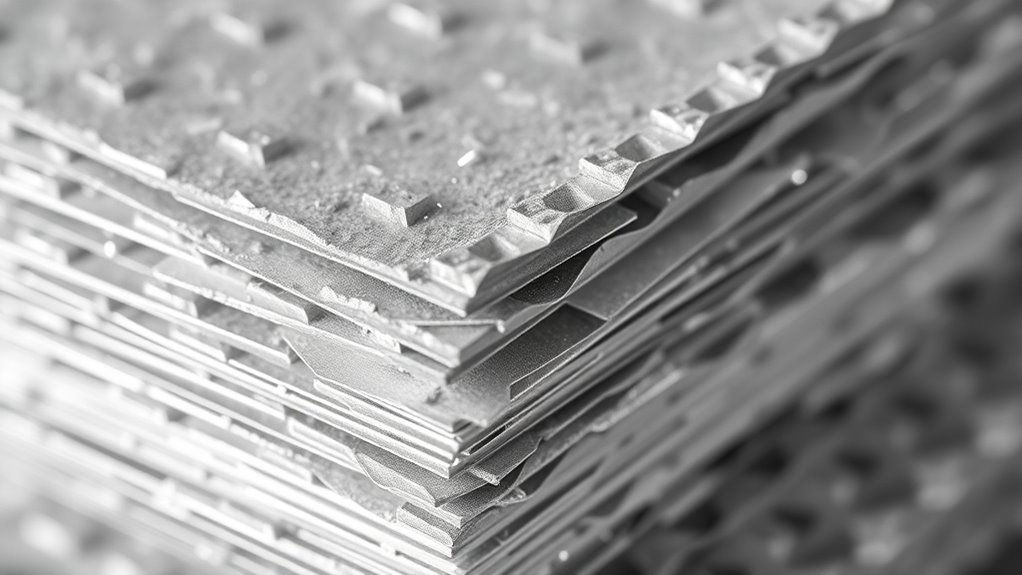
Recent advances in characterization techniques have considerably enhanced our ability to analyze MXenes at the nanoscale, providing detailed insights into their structure, composition, and properties. You now use tools that reveal atomic arrangements, surface terminations, and electronic states with greater clarity. Techniques like transmission electron microscopy (TEM) allow you to visualize layer thickness and defects. X-ray photoelectron spectroscopy (XPS) helps identify surface functional groups and elemental composition. Raman spectroscopy provides information on vibrational modes, indicating structural quality. These methods enable you to correlate synthesis parameters with material performance, optimize MXene properties, and understand their behavior in various applications.
- Atomic-scale imaging with TEM
- Surface chemistry analysis via XPS
- Vibrational insights through Raman spectroscopy
Future Perspectives and Challenges in MXene Research
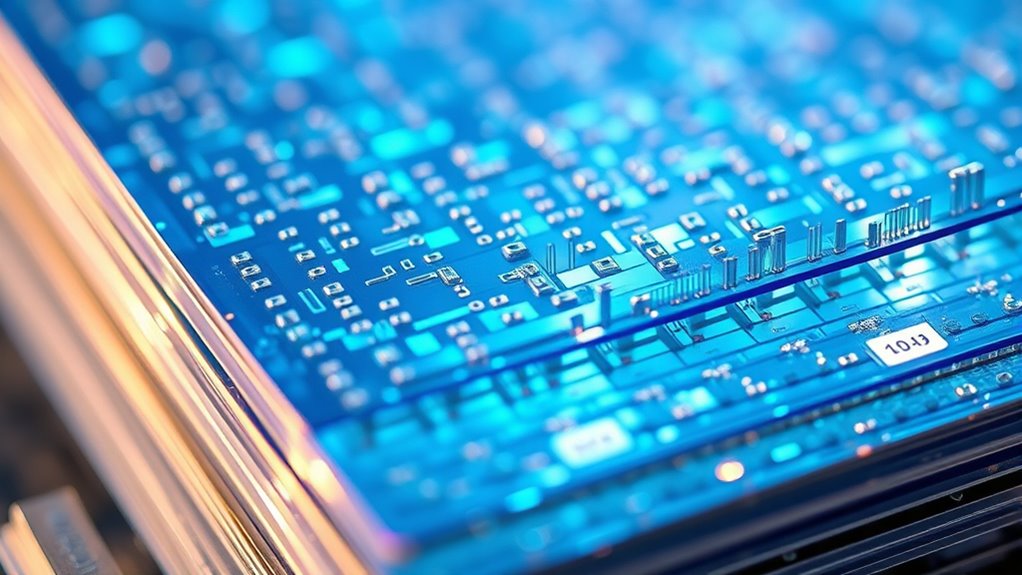
Advancements in characterization techniques have markedly deepened our understanding of MXenes, revealing detailed insights into their atomic structure, surface chemistry, and electronic behavior. However, challenges remain in standardizing synthesis methods to guarantee consistent quality and properties across batches. You’ll need to address stability issues, as MXenes can oxidize or degrade over time, limiting their long-term applications. Scaling up production while maintaining nanoscale precision is another hurdle, especially for industrial uses. You also face the task of tuning their properties for specific functions, such as enhancing conductivity or optimizing optical features. Furthermore, understanding environmental impacts and developing eco-friendly synthesis routes are essential. Overcoming these challenges will be key to releasing MXenes’ full potential in energy, electronics, and biomedical fields.
Frequently Asked Questions
Are MXENES Safe for Biomedical and Environmental Applications?
You should be cautious about MXenes’ safety in biomedical and environmental uses. While their excellent conductivity and hydrophilicity offer promising benefits, potential toxicity and environmental impact remain uncertain. You should take into account thorough testing for biocompatibility, long-term effects, and eco-friendliness. Proper risk assessments help ensure MXenes’ safe application, so stay informed about ongoing research to make responsible decisions for health and environmental protection.
How Scalable Are Current MXENE Synthesis Methods for Industrial Use?
You can scale current MXene synthesis methods for industrial use, but it requires optimization. Etching MAX phases with chemicals like HF or other safer alternatives can be adapted for larger batches. You’ll need to develop continuous flow processes, improve safety protocols, and make sure of consistent quality. While challenging, with dedicated investment and research, these methods can become efficient enough to meet industrial demands, paving the way for widespread MXene applications.
Can MXENES Be Integrated With Existing Electronic Device Fabrication Processes?
Yes, you can integrate MXenes with existing electronic device fabrication processes. They are compatible with standard techniques like sputtering, chemical vapor deposition, and solution processing. You can deposit MXenes onto various substrates, pattern them using lithography, and incorporate them into flexible or rigid devices. Their tunable electrical and optical properties make them versatile for applications like transparent conductors, sensors, and energy storage components within current manufacturing workflows.
What Are the Long-Term Stability and Degradation Mechanisms of MXENES?
You should be aware that MXenes can degrade over time due to oxidation, especially when exposed to air and moisture. This leads to surface deterioration and loss of conductivity. To enhance their stability, you can apply protective coatings or store them in inert environments. Regularly monitor their properties, as degradation impacts device performance, and develop strategies to minimize oxidation for long-term applications.
How Do Different Surface Terminations Affect MXENE Properties and Performance?
Think of surface terminations as the paint on a sculpture—each color changes how it looks and behaves. Different groups like -OH, =O, or -F directly influence MXene’s electrical, optical, and chemical properties. For example, -OH increases conductivity and transparency, while =O can open a band gap, making MXenes semiconductors. These modifications enable you to tailor MXene performance for specific applications like sensors, energy storage, or thermal management.
Conclusion
As you explore the world of MXenes, you’ll find they’re like a shining gem in the vast ocean of nanomaterials, poised to revolutionize technology. Their unique properties open endless possibilities, from energy storage to sustainability. While challenges remain, your curiosity and innovation can help shape their future. Embrace this exciting frontier, and watch as MXenes transform the landscape of science, turning what once seemed like science fiction into groundbreaking reality.
Fall Picks
fall essentials
As an affiliate, we earn on qualifying purchases.