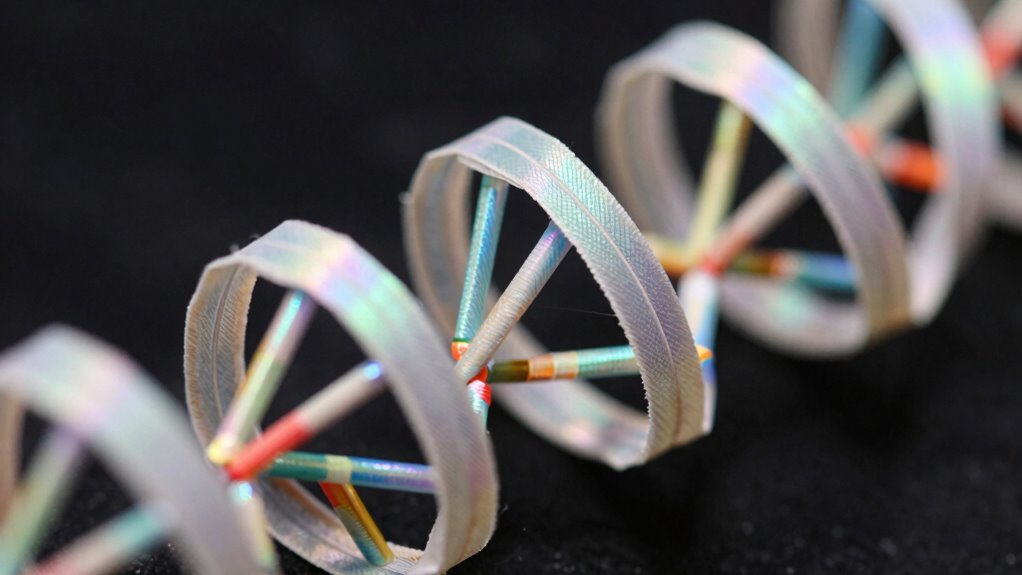

DNA origami uses the programmability of DNA strands to create precise nanostructures, forming the basis of nanomachines. You design specific shapes by folding long scaffolds with short staple strands, guided by computational tools. These structures can include hinges, joints, and moving parts, enabling controlled motion and functions like cargo delivery. If you continue exploring, you’ll discover how these tiny machines are advancing sensing, computing, and potential in vivo applications.
Key Takeaways
- DNA origami uses a long scaffold strand and short staples to fold DNA into precise nanostructures and nanomachines.
- Programmable base-pairing and crossover points confer structural stability and enable complex shapes.
- Computational tools optimize design, scaffold routing, and staple placement for accurate self-assembly.
- Mechanical components like hinges and rotors are created using flexible ssDNA linkers and rigid dsDNA segments.
- External stimuli and strand-displacement reactions enable dynamic movement and functional operation of DNA-based nanomachines.

AncestryDNA + Traits Genetic Test Kit: Personalized Genetic Traits, DNA Ethnicity Test, Origins & Ethnicities, Complete DNA Test, Ancestry Reports
TOP-SELLING CONSUMER DNA TEST: From your origins in over 3,600+ places around the world to the most connections…
As an affiliate, we earn on qualifying purchases.
As an affiliate, we earn on qualifying purchases.
Principles of DNA Self-Assembly and Design Strategies
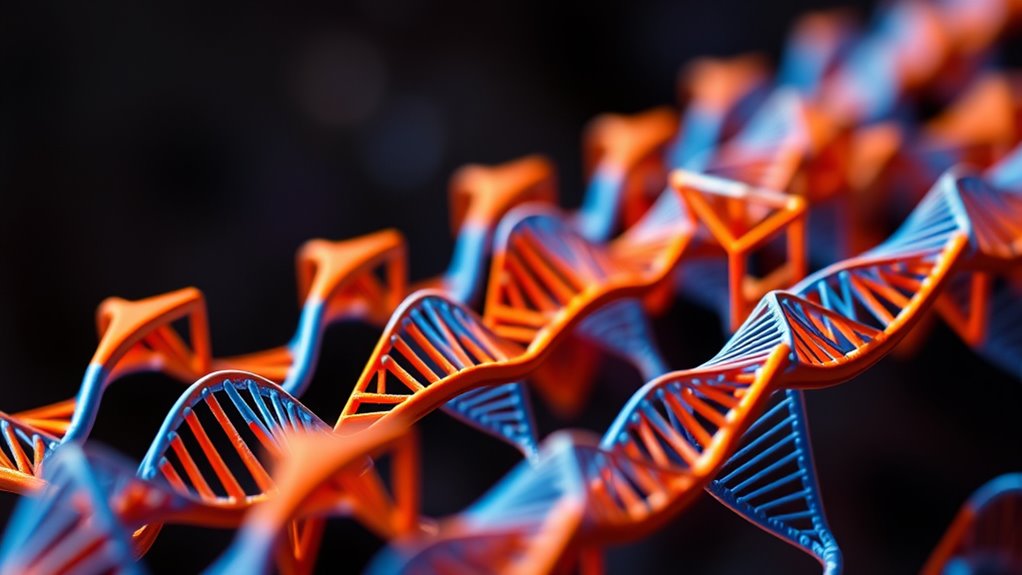
DNA self-assembly relies on the precise base-pairing rules of Watson–Crick complementarity to program the formation of complex nanostructures. You design specific sequences so that each staple strand binds accurately to its target region on the scaffold, guiding it into the desired shape. Long single-stranded scaffolds, like M13mp18, serve as the backbone, while hundreds of short synthetic staples fold it into 2D or 3D structures. Crossover points between helices add mechanical stability and enable intricate geometries. Computational tools such as caDNAno assist in routing the scaffold and designing staples, predicting folding outcomes. Proper thermal annealing and buffer conditions, especially magnesium ion concentrations, are critical to guarantee correct self-assembly and high yield. This approach combines sequence precision with controlled environmental factors to create reliable nanostructures. Color accuracy impacts the overall quality and fidelity of the assembled structures, ensuring precise formation of the intended designs. Additionally, understanding the net worth of key figures involved in DNA nanotechnology can influence funding and research priorities in the field.
DNA nanostructure assembly tools
As an affiliate, we earn on qualifying purchases.
As an affiliate, we earn on qualifying purchases.
Crafting Complex Shapes With Scaffold-And-Staple Techniques
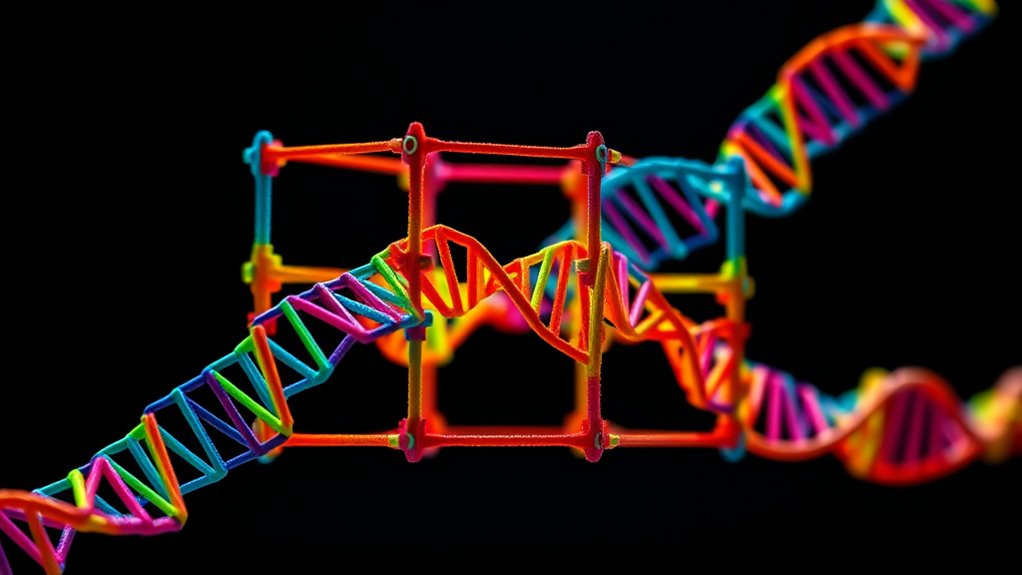
Creating intricate three-dimensional shapes with scaffold-and-staple techniques involves precise spatial design and strategic staple placement. You start by choosing a suitable scaffold strand, often derived from M13 bacteriophage DNA, then design complementary staple strands to fold it into your desired shape. Computational tools like caDNAno help route the scaffold and optimize staple binding sites, ensuring proper folding pathways. You control the assembly process through thermal annealing, gradually cooling the mixture to promote correct hybridization. To add complexity, you can incorporate crossover points, creating rigid, multi-helix junctions that define the geometry. Adjusting staple sequences and positions enables you to build structures ranging from simple two-dimensional patterns to complex three-dimensional objects, all with nanometer precision. Designing crossover points for structural stability enhances the overall rigidity of the nanostructure. Using multi-layer stacking for enhanced rigidity provides additional strength to complex assemblies. Incorporating flexible ssDNA linkers for movement allows dynamic functionalities within the nanomachines. Programming specific staple hybridization pathways ensures accurate folding and assembly. Employing computational models for strain minimization helps optimize the overall stability and fidelity of the designed structures, especially when integrating molecular dynamics simulations to predict folding behavior.
DNA scaffold and staple strands
As an affiliate, we earn on qualifying purchases.
As an affiliate, we earn on qualifying purchases.
Mechanical Components and Movement Control in DNA Devices
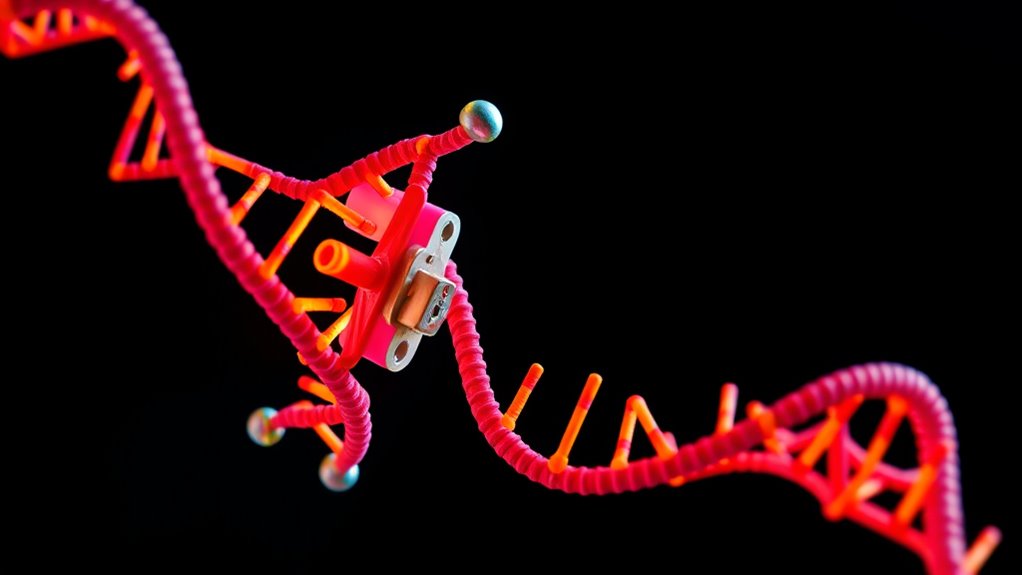
You can incorporate DNA joints and hinges to create controllable, flexible connections within your origami structures. Programmable motion control relies on strand displacement, environmental cues, or enzymatic triggers to switch between mechanical states. Designing mechanical rigidity involves optimizing crossover architecture and helix packing to balance flexibility and stability. Additionally, understanding Free Floating structures can help in designing more adaptable and resilient nanomachines. Recognizing the role of structural stability can further enhance the durability of DNA devices under various conditions. Incorporating mechanical flexibility through strategic design choices allows for more dynamic and responsive nanodevices. Careful consideration of design parameters can help in achieving the desired balance between flexibility and strength. Moreover, applying principles of mechanical design can improve the precision and functionality of DNA-based nanomachines.
DNA Joints and Hinges
How do nanoscale mechanical components achieve controlled movement within DNA nanostructures? You leverage the properties of DNA to create joints and hinges that enable precise motion. These components combine stiff double-stranded DNA segments with flexible single-stranded linkers, allowing rotation or linear displacement. By designing specific crossover points and flexible linkers, you control the range and stiffness of movement. Reversible actuation occurs through strand displacement or environmental triggers, enabling cyclical motions. Integration of bearings and rotors facilitates biased or Brownian rotation. You can fine-tune mechanical behavior by adjusting DNA sequence, linker length, and structural geometry. Additionally, AI tools can assist in simulating and optimizing these nanomechanical designs for desired movement patterns. Understanding the mechanical properties of DNA components helps in developing more reliable and efficient nanomachines. Moreover, analyzing the mechanical stability of these structures is essential for ensuring durability and functional performance over multiple cycles. Design strategies also play a crucial role in enhancing the robustness of DNA nanomachines under various conditions. Employing computational modeling can further improve the predictability and control of mechanical movements in DNA devices.
Programmable Motion Control
Programmable motion control in DNA nanodevices relies on designing specific mechanical elements that enable precise and reversible movements. You can create joints with a combination of stiff double-stranded DNA (dsDNA) segments and flexible single-stranded DNA (ssDNA) linkers, allowing controlled rotation or linear motion. By engineering devices with defined degrees of freedom, you achieve movements like hinges or sliders over 10–100 nm scales. Reversible actuation often involves toehold-mediated strand displacement, environmental cues, or aptamer binding, enabling cyclical operations. Incorporating bearings or rotors allows biased or Brownian rotation, facilitating complex mechanisms such as molecular ratchets. This programmability lets you develop dynamic nanodevices capable of molecular transport, cargo release, and nanoscale manipulation, all with high precision and control over motion at the molecular level.
Mechanical Rigidity Design
Designing mechanical rigidity in DNA nanodevices hinges on strategic choices in component architecture and packing. You control rigidity by selecting helix arrangements, crossover placements, and bundle configurations. These decisions influence bending, torsion, and overall stability, essential for device function. Optimizing crossover density and multilayer bundles enhances stiffness, enabling precise movements. Adjusting the spacing and length of DNA segments balances flexibility and rigidity, tailoring mechanical responses. Additionally, incorporating densely packed helices or multilayered structures increases load-bearing capacity. These design strategies ensure your nanodevices withstand external forces and maintain shape during operation. Material density and packing density are crucial factors that directly impact the mechanical stability and robustness of the structures, and understanding structural integrity helps in designing more resilient nanodevices. Furthermore, selecting appropriate component architecture influences the overall mechanical behavior of the DNA nanodevices.
DNA nanomachines components
As an affiliate, we earn on qualifying purchases.
As an affiliate, we earn on qualifying purchases.
Strategies for Actuating and Triggering Nanoscale Motion
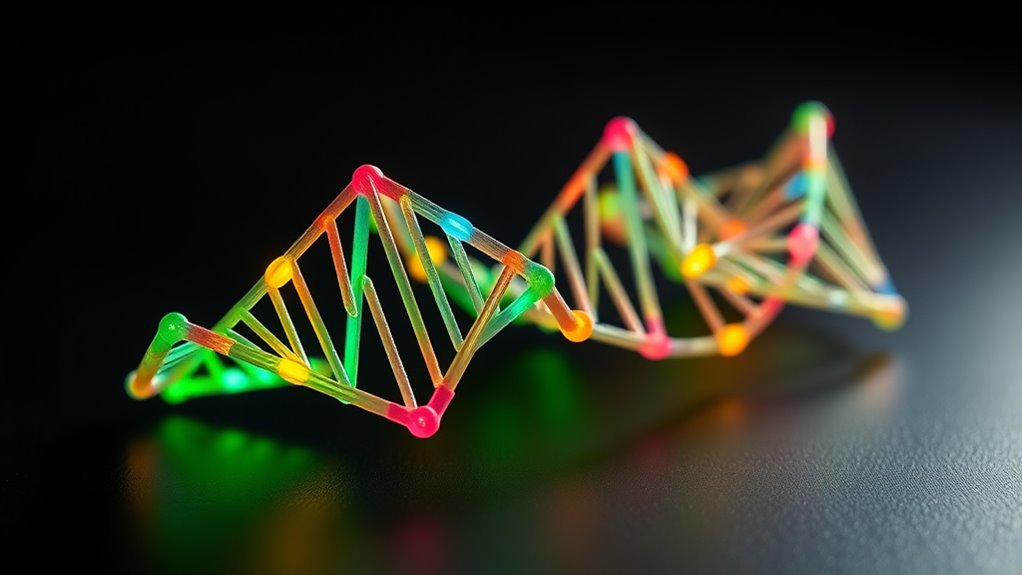
You can trigger nanoscale motion in DNA origami using strand-displacement mechanisms, where specific DNA strands are exchanged to switch shapes or functions. Environmental cues like pH, metal ions, or small molecules also serve as signals to control device states. External stimuli such as electric fields further enable rapid and precise actuation of DNA-based nanodevices.
Strand-Displacement Mechanisms
How do DNA nanodevices achieve precise and reversible motion at the nanoscale? Strand-displacement mechanisms enable this by using short, single-stranded DNA “toeholds” to initiate exchange reactions, allowing conformational changes. You can design these reactions to be highly specific, reversible, and programmable, making them ideal for actuation. When a complementary strand binds to a toehold, it displaces another strand through branch migration, triggering the device’s movement. This process can be finely tuned by adjusting toehold length, sequence, and environmental conditions. Strand-displacement reactions also support complex logic operations and multi-step cascades. They enable dynamic control over device states, powering functions like opening, closing, or switching configurations, all driven by programmable DNA interactions. Additionally, kinetic control of branch migration is crucial for achieving desired response times and efficiency in these nanodevices. Incorporating principles from biomolecular interactions, researchers can enhance the robustness and reliability of DNA-based nanomachines. Moreover, understanding wave and wind effects at the nanoscale can inform the optimization of these dynamic processes for better performance. Recognizing the importance of reaction kinetics helps in designing more efficient and predictable nanodevices. Furthermore, experimental studies on nanoscale forces provide valuable insights for refining the mechanical aspects of DNA nanomachines.
Environmental and External Cues
Environmental and external cues offer versatile strategies to control nanoscale motion in DNA nanodevices. You can harness changes in pH, metal ion concentrations, or small molecules to trigger conformational shifts or activate mechanical actions. For example, adjusting Mg2+ levels stabilizes or destabilizes DNA structures, enabling reversible folding and unfolding. External fields, such as electric or magnetic stimuli, can induce rotation or linear movement, increasing actuation speeds to tens of Hz. Enzymatic inputs, like nucleases or ATP, power biomimetic motors or facilitate cargo release. Strand-displacement reactions respond to specific molecular cues, allowing programmable state changes. These cues provide dynamic, reversible control over DNA devices, mimicking biological responsiveness and expanding their functionality for applications in sensing, actuation, and molecular robotics. Understanding environmental factors enhances the design of more responsive and adaptable DNA nanomachines, just as understanding credit card security is vital for protecting sensitive payment data. Additionally, the development of responsive materials enables more precise control of nanoscale motion in complex environments.
Functional Applications in Molecular Transport and Cargo Delivery

Have researchers harnessed the precise control offered by DNA origami to develop efficient molecular transport systems? Yes, they’ve created DNA walkers and motors that move along defined tracks, delivering cargos to specific locations. These nanomachines utilize strand-displacement and conformational changes to navigate complex pathways. You can explore how cargo is captured and released through aptamer locks or strand triggers, enabling targeted delivery. Additionally, origami-based nanorobots can transport therapeutic agents, such as drug-mimicking payloads, with high precision. To deepen your understanding, consider these aspects:
DNA origami enables precise molecular transport via programmable walkers, cargo release, and environmentally responsive nanorobots.
- Programmable step-by-step movement of DNA walkers
- Integration of cargo-binding sites for selective release
- Use of environmental cues for controlled operation
- Mechanical design for optimized transport efficiency
- Strategies to enhance stability during delivery processes
Constructing Single-Molecule Platforms and Nanoscale Manipulators
DNA origami provides a versatile framework for constructing single-molecule platforms and nanoscale manipulators by precisely positioning functional elements at the nanometer scale. You can design rigid scaffolds with movable joints, hinges, and sliders, enabling controlled single-degree motions. By integrating flexible ssDNA linkers and stiff dsDNA segments, you create mechanical elements that perform delicate manipulations. Reversible actuation is achieved through strand-displacement, aptamer binding, or environmental cues, allowing cyclical movements. These platforms can hold, orient, and manipulate individual molecules or nanoparticles with high precision. You might build robotic arms or tweezers capable of picking up, positioning, or assembling nanoscale components. Such devices serve as tools for single-molecule studies, enabling detailed observations, force measurements, and the construction of complex nanostructures with remarkable accuracy.
Building Nanoscale Circuits for Sensing and Computing
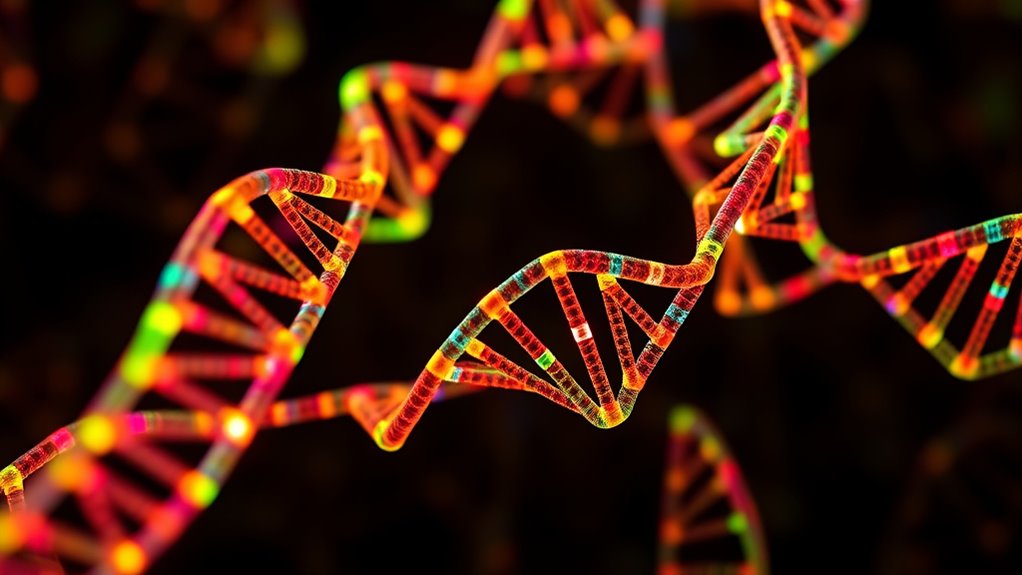
How can nanoscale circuits built from DNA origami enable advanced sensing and computing at the molecular level? By designing precise DNA structures that perform logical operations, you can create responsive systems that detect specific molecules, process information, and trigger actions. These circuits utilize strand-displacement reactions for signal transduction, enabling programmable responses. They can integrate multiple inputs, execute logic functions, and switch states reversibly. This allows for real-time molecular detection, decision-making, and controlled delivery of payloads. The modularity of DNA origami supports complex circuit architectures, while external stimuli like pH, ions, or enzymes fine-tune activity. These features make DNA-based circuits powerful tools for nanoscale sensing and computing applications, bridging biological functions with synthetic nanotechnology.
- Strand-displacement logic gates
- Signal amplification via cascades
- Integration with nanoscale sensors
- Environmental responsiveness control
- Multi-input, multi-output configurations
Assessing Performance: Precision, Stability, and Force Generation

Evaluating the performance of DNA origami structures requires careful measurement of their precision, stability, and force-generating capabilities. You can achieve nanometer-scale accuracy in fabricating features, with helix-level control around 2 nm. Force generation in DNA-based actuators reaches picoNewton levels, with some assemblies handling forces comparable to biological motors. Stability depends on ionic conditions; Mg²⁺ ions enhance structural integrity, but physiological environments can promote degradation without protection. Kinetics vary: strand-displacement events occur in seconds or minutes, while electric-field-driven rotations can reach up to 25 Hz. To guarantee consistent performance, you must consider folding yields, error rates, and mechanical robustness. These metrics help optimize designs for applications like molecular transport, sensing, and nanoscale manipulation, where precision and stability are vital for reliable operation.
Overcoming Challenges in Folding, Error Reduction, and Scalability
You need to improve folding fidelity to minimize misassemblies and achieve more reliable structures. Scaling assembly strategies requires innovative approaches to connect modules without increasing errors or complexity. By focusing on these points, you can develop more efficient and robust DNA origami systems for practical applications.
Enhancing Folding Fidelity
What are the key strategies to improve folding fidelity in DNA origami? You can enhance accuracy by carefully designing staple sequences to minimize misbinding and kinetic traps. Optimizing annealing protocols, such as gradual temperature ramps, helps ensure proper hybridization. Using computational tools to predict and reduce structural strain improves folding success. Incorporating redundant staples or error-correcting motifs can prevent misfolded structures. Additionally, controlling ionic conditions, especially Mg2+ concentrations, stabilizes the desired conformations.
- Precise staple sequence design to prevent off-target binding
- Gradual thermal annealing to promote correct folding pathways
- Computational modeling for strain and misfolding prediction
- Error-correcting motifs and redundancy in staple placement
- Ionic buffer optimization for structural stability
Scaling Assembly Strategies
Scaling DNA origami assembly to larger and more complex structures presents significant challenges, primarily due to increased potential for misfolding, structural errors, and reduced yields. To address this, you can utilize modular design approaches, connecting smaller origami units via sticky ends, blunt stacking, or scaffold concatenation. These methods help build larger structures while managing folding complexity. Improving routing algorithms with advanced computational tools ensures accurate scaffold pathing and staple placement, reducing errors. Optimizing annealing protocols—such as gradual temperature ramps and buffer conditions—enhances assembly fidelity. Additionally, incorporating error-correcting strategies like strand displacement or selective stabilization of correct folds can improve yields. Combining these strategies allows you to scale origami structures effectively, balancing complexity with precision and reliability.
Future Directions Toward Autonomous and In Vivo DNA Nanomachines
Advancing DNA nanomachines toward autonomous operation and in vivo applications requires overcoming significant challenges in energy sourcing, stability, and biocompatibility. To achieve this, you need to develop efficient, cell-compatible power sources, such as enzymatic or chemical fuel systems. Improving structural stability in physiological conditions is essential, which might involve chemical modifications or protective coatings. Ensuring biocompatibility demands minimizing immune responses and toxicity. You should focus on integrating energy-harvesting mechanisms, optimizing for stability within biological environments, and designing devices that can respond to native cellular signals.
Overcoming energy, stability, and biocompatibility challenges is key to autonomous, in vivo DNA nanomachines.
- Developing enzyme-driven fuel cycles for continuous movement
- Engineering protective coatings to enhance stability in vivo
- Incorporating natural cellular cues for autonomous control
- Creating biocompatible, non-immunogenic materials
- Scaling manufacturing for consistent, large-scale in vivo deployment
Frequently Asked Questions
How Durable Are DNA Origami Structures Under Physiological Conditions?
You’ll find that DNA origami structures can be quite sensitive under physiological conditions. They’re stabilized by ionic buffers like Mg2+, but without protective modifications, they may degrade or misfold over time in biological environments. To enhance durability, you might need to use chemical modifications, protective coatings, or optimized buffer conditions. Despite these measures, maintaining structural integrity long-term remains a challenge, especially in complex, in vivo settings.
Can DNA Nanomachines Operate Autonomously Without External Stimuli?
Yes, you can design DNA nanomachines to operate autonomously without external stimuli. By incorporating fuel molecules like enzymes or chemical energy sources, you enable these devices to self-propel, change states, or perform tasks independently. You can also use environmental cues, such as pH or ionic conditions, to trigger motion or function. This autonomy makes DNA nanomachines versatile for applications requiring continuous, self-driven operation at the nanoscale.
What Are the Main Limitations for in Vivo Applications of DNA Nanodevices?
You face major limitations for in vivo use of DNA nanodevices. Their stability in physiological fluids is a concern, as nucleases can degrade them quickly. Delivering these devices into cells is challenging, and immune responses may target them, causing possible toxicity. Additionally, error-prone folding and difficulty interfacing with other materials hinder their reliable function inside living organisms. Overcoming these issues is essential for therapeutic and biological applications.
How Scalable Are Current DNA Origami Assembly Methods for Mass Production?
You can scale up DNA origami assembly to produce structures in the micron range, but achieving high-yield, large-scale production remains a challenge. Currently, methods like connecting modules and scaffold concatenation help build bigger devices, but errors and misfolding increase with complexity. While some progress has been made, widespread, cost-effective mass production still requires improvements in automation, standardization, and error reduction to truly enable industrial-scale manufacturing.
Are There Ethical or Safety Concerns Associated With Deploying Dna-Based Nanomachines?
You should consider that deploying DNA-based nanomachines raises safety and ethical concerns, particularly around unintended interactions in biological systems. They could trigger immune responses, cause off-target effects, or disrupt natural processes. Ethical questions also emerge about environmental impact and dual-use potential for malicious purposes. It’s vital to thoroughly assess these risks, establish strict regulation, and develop safe, controlled methods before widespread application in medicine or technology.
Conclusion
You now know how DNA’s delicate design drives dynamic devices. By mastering meticulous methods, you can craft complex, controllable nanomachines. Embrace evolving expertise to enhance efficiency, accuracy, and application scope. As you push boundaries, breakthroughs beckon—bringing bold, brilliant breakthroughs in biological building blocks. With conviction and creativity, you can carve a curious course toward cutting-edge, controllable, and customizable DNA devices that redefine the domain of nanoscale innovation.